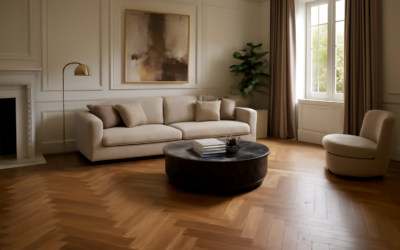
The color of a wooden floor defines a room more than any single piece of furniture you will buy. A pale blonde oak makes a tight Brooklyn apartment feel airy; a deep ebony walnut transforms a suburban great room into a hotel lobby. Wooden floor colors are not interchangeable, and the wrong choice can date a house within five years. After helping clients select hardwood for more than 800 projects, the same six color families show up over and over with clear winners by lifestyle and architecture. Here is the working contractor’s view on what to pick and why.
The Six Major Color Families
Real-world hardwood and engineered-wood selections cluster into six groups:
- Whitewashed and limed — pale, Scandinavian, on-trend since 2019
- Natural blonde — raw white oak, maple, ash; warm and timeless
- Honey and golden — classic red oak, hickory, Brazilian cherry
- Mid-brown — walnut, espresso-stained oak, weathered teak
- Dark espresso and ebony — fashion-forward, dramatic, harder to maintain
- Gray and greige — gray-stained oak, fumed oak, smoked finishes
Whitewashed and natural blonde tones currently lead my residential specs nationally, accounting for roughly 55 percent of new hardwood installations through 2025-2026.
How to Pick a Color for Your House Style
Architecture should drive color selection more than passing trends. Coastal homes, modern minimalist builds, and Scandinavian interiors favor pale, cool wooden floor colors. Traditional colonials, Craftsman bungalows, and farmhouse styles still look best in warm honey-to-mid-brown tones.
Mid-century modern homes pair beautifully with natural blonde white oak or amber-toned walnut. Industrial loft conversions accept dark and dramatic colors that would feel oppressive in lower-ceilinged suburban builds.
The Maintenance Reality of Each Color
Light wooden floor colors hide dust but reveal dark scuffs and pet stains. Dark colors hide dust poorly but mask pet accidents better. Mid-tones split the difference and remain the easiest to live with for most families.
Specifically, ebony and deep espresso floors show every shoe scuff, dog claw, and crumb. They require near-daily dust mopping in homes with kids or pets. If you love the look but hate cleaning, choose a satin or matte sheen rather than gloss; the lower sheen hides scratches better.
Stain Versus Natural Finish
White oak takes stain beautifully and is the workhorse species for designer-chosen colors. Red oak has stronger pink-red undertones that fight against gray and cool wooden floor colors, forcing you to layer stains to neutralize the natural tone.
Natural-finished hardwood (oiled or clear-sealed without stain) ages gracefully and develops patina over decades. For homeowners planning to stay 15+ years, natural finishes deliver the most timeless look. Stained finishes commit you to that specific color for the life of the floor unless you sand back to bare wood.
Realistic Prices by Color Tier
Color rarely changes the underlying material cost, but specialty finishes do add expense:
- Site-finished white oak with simple Bona stain: $6.50-$11.50 per sq ft installed
- Pre-finished engineered oak in standard colors: $7.50-$13.50 per sq ft installed
- Custom reactive stains (fumed, smoked, limed): $11.50-$18.50 per sq ft installed
- Wide-plank European oak in designer colors: $14.50-$26.50 per sq ft installed
- Hand-scraped or wire-brushed premium colors: $13.50-$22.50 per sq ft installed
Reactive stains and wire-brushed treatments add roughly 30 to 50 percent over standard pre-finished pricing but deliver a depth of color that cannot be replicated with surface stains alone.
Matching Wooden Floor Colors to Walls
Pair light walls with any floor color, but the most reliable combinations follow these rules:
- Warm white walls (Benjamin Moore Swiss Coffee) pair with honey to mid-brown floors
- Cool white walls (Sherwin-Williams Pure White) pair with whitewashed or gray floors
- Greige walls (Sherwin-Williams Agreeable Gray) pair with greige or warm mid-brown floors
- Deep accent walls (navy, forest green) pair with natural blonde floors to balance the contrast
Always sample paint chips against the actual floor sample, not against a Pinterest photo. Light reflectance values change the perception of both colors.
Resale Value of Different Colors
Buyers in 2026 respond best to neutral mid-tone wooden floor colors. Brokers and stagers consistently rank natural white oak, weathered oak (light gray-brown), and warm walnut among the highest-recovery hardwood choices.
Avoid extremely dark ebony or extremely pale whitewashed floors in homes priced for the broad market; buyers perceive them as polarizing. For homes priced in the top 10 percent of their submarket, polarizing colors can actually become a differentiator if executed well.
Sun Exposure and UV Color Shift
All wooden floor colors shift over time under UV exposure. Natural white oak ambers slightly, taking on a golden cast over 10 to 15 years. Brazilian cherry darkens dramatically within the first year of installation. Walnut lightens and softens with sun exposure.
Plan for furniture rearrangement every 12 to 18 months in heavily sun-exposed rooms to avoid permanent rug shadows. UV-blocking window film reduces but does not eliminate the color shift.
Final Color-Selection Advice
Bring large samples home (24 by 24 inches if possible), tape them down in the room they will occupy, and live with them for a full week. View at morning, noon, and evening light. Hold paint chips, cabinet samples, and fabric swatches against them. The right wooden floor color disappears into the architecture; the wrong one fights with everything around it. Take your time on this decision because hardwood floors typically outlive every other finish in the house.
Prefer to explore on your own?
See how new flooring looks in your actual room in seconds — free, no signup.
Try the free Floor Studio →