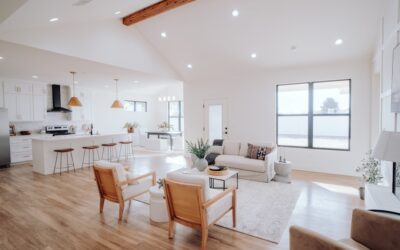
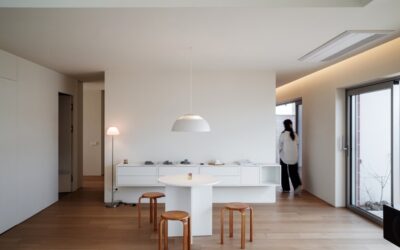
The wide-plank, rustic-finish floor look has dominated American home design for nearly a decade, and a half-dozen brands compete to deliver it at every price point. Woodland flooring has built a reputation in the mid-to-upper range by focusing on engineered hardwood with thick wear layers, long planks, and reactive finishes that mimic European farmhouse aesthetics. Whether the brand justifies its price tag depends on what you compare it to and what you value in a floor.
This guide breaks down the Woodland product range, real performance from installed homes, where it sits relative to competing brands, and the install considerations that determine whether you get 25 years of beauty or 5 years of frustration.
What Woodland Sells
Woodland’s product line centers on engineered hardwood with multi-ply hardwood cores rather than HDF or particleboard. The main categories:
- European White Oak: 7 to 12-inch widths, 6 to 8 foot plank lengths
- American Hickory: reactive smoke-cured finishes, 6 to 9-inch widths
- Maple: select grade and rustic grade in narrower 5 to 7-inch widths
- Walnut: typically 6 to 8-inch widths in matte oil finishes
The wear layers run 2 to 4 mm — substantial enough to refinish at least once during the floor’s life. Cheap engineered floors with 0.5 to 1 mm wear layers cannot be refinished and have to be replaced when the surface wears through.
Pros of Woodland Flooring
The brand’s strengths cluster around a few real differentiators:
- Genuine sawn-face textures: visible saw marks and brushed grain that reads authentic, not embossed-print fake.
- Long, wide planks: the visual impact in a great room is dramatically different from 3-inch oak strip flooring.
- Reactive finishes: smoke, fume, and fumed-tan finishes change color slightly with sunlight exposure, deepening the patina rather than fading.
- Multi-ply hardwood core: stability across humidity swings, less cupping in poorly conditioned homes.
- Refinishable wear layer: 2 to 4 mm sawn veneer accepts at least one full sand-and-refinish cycle.
For a homeowner who wants real wood character and plans to live with the floor for two decades or more, the refinishable wear layer alone justifies a premium over click-lock laminate.
Cons and Limitations
The trade-offs are significant enough to weigh carefully:
- Premium pricing: $7 to $14 per square foot for material alone, before installation.
- Installation is more demanding: wider planks require flatter subfloors and more skilled installers.
- Real wood limitations: dents from dropped objects, scratches from pet claws, susceptibility to standing water.
- Limited stain resistance compared to LVP: wine, dog accidents, and dropped grease leave marks if not cleaned promptly.
- Boutique distribution: stocked through specialty flooring stores rather than big-box retailers.
If you have three large dogs, a toddler in a high chair, and a busy household, real engineered hardwood — Woodland or otherwise — is going to show wear faster than rigid-core LVP. The wear is character to some homeowners and damage to others.
Subfloor and Install Requirements
Wide-plank engineered hardwood is unforgiving of subfloor problems. Requirements:
- Subfloor flat to 1/8 inch over 6 feet (tighter than standard 3/16 inch over 10 feet)
- Wood subfloor moisture content within 4% of the engineered hardwood
- Concrete subfloor moisture under 3 lb/1000 sq ft per CaCl test, or use vapor barrier
- Acclimation period of 5 to 14 days in the home before install
- Glue-down installation preferred for widths over 7 inches; floating install acceptable for narrower widths
Skip floating installation on planks wider than 7 inches in homes with dramatic seasonal humidity swings. The wider the plank, the more it expands and contracts, and unsecured wide planks can buckle or develop visible gaps.
Real Cost Per Square Foot
For a 600 square foot installation in 2026:
- Material at $9 per sq ft × 660 sq ft (10% waste): $5,940
- Premium urethane adhesive (glue-down): $300 to $500
- Underlayment if floating: $200 to $400
- Transitions and trim: $300 to $500
- Pro installation labor at $4 to $7 per sq ft: $2,400 to $4,200
Total installed cost ranges $9,000 to $11,500 for a 600 square foot project. That is real money, but compared to solid hardwood ($12 to $20 per square foot installed) it is competitive — and the wide-plank visual is hard to achieve in solid wood without prohibitive cost.
How It Compares to Competitors
Woodland flooring competes with several mid-to-upper engineered hardwood brands:
- Woodland vs Mirage: Mirage costs slightly more, has even thicker wear layers, longer warranty. Probably the gold standard in the category.
- Woodland vs Hallmark Floors: similar pricing, similar quality. Hallmark has more color options.
- Woodland vs DuChateau: DuChateau costs $4 to $8 more per sq ft. Designer pricing, more luxe finishes.
- Woodland vs Anderson Tuftex: Anderson is more widely distributed, slightly thinner wear layers, slightly lower price.
- Woodland vs Mohawk RevWood Plus: RevWood is laminate with a wood-look face. Half the price, no refinishability, very different product.
Within real engineered hardwood at $7 to $12 per square foot, Woodland competes well. Below $5 per square foot you cross into hybrid laminate territory; above $14 you cross into designer brands like Pravada and DuChateau.
Where Woodland Works Best
The product makes sense in specific scenarios:
- Open-concept main floors where wide planks elongate the visual
- Custom homes and high-end remodels where wood-look LVP would feel out of place
- Homeowners committed to gentle care — felt pads on furniture, prompt spill cleanup, no high heels
- Dry climates where humidity swings are modest
Skip Woodland and look at SPC or rigid-core LVP for kitchens with frequent cooking, basements with any moisture history, or homes with multiple large pets.
Long-Term Care
Engineered hardwood lasts decades when treated right. The basics:
- Sweep or vacuum (without beater bar) weekly
- Damp-mop with manufacturer-approved cleaner monthly
- Replace felt furniture pads annually
- Trim pet nails regularly
- Maintain indoor humidity 35 to 55% year-round
- Refinish at year 12 to 18 if wear shows on traffic paths
The refinish at the midpoint extends total floor life to 30+ years. For homeowners who plan to stay put, that math beats replacing $4-per-foot LVP every 12 to 15 years. Match the floor to the lifestyle and the long view, and a quality engineered hardwood becomes the floor that ages with the house rather than against it.
Prefer to explore on your own?
See how new flooring looks in your actual room in seconds — free, no signup.
Try the free Floor Studio →