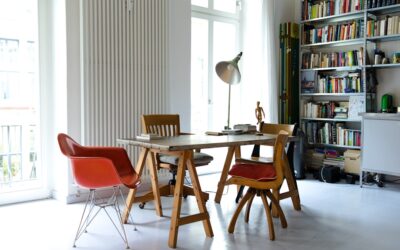
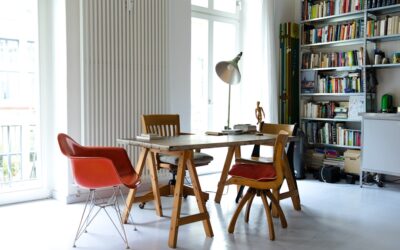
Run your hand across a polished concrete slab in a modern brewery and you’ll feel something glass-smooth without being slippery. That finish is not paint, wax, or epoxy — it is the natural result of mechanical grinding through progressively finer diamond grits. Polished flooring covers a family of mechanically refined surfaces: concrete, terrazzo, marble, granite, and porcelain. Each one cleans easily, reflects 60 to 90 percent of available light, and lasts decades. Each also has install rules you must follow or the result looks cheap.
What “Polished” Actually Means
True polishing is a four to nine step grinding process using metal-bond diamonds (30 to 200 grit) followed by resin-bond diamonds (400 to 3000 grit). The slab is ground flat, densified with lithium silicate or sodium silicate, then progressively refined until light reflects off a microscopically smooth surface. Sheen is measured on a gloss meter at 60 degrees: 30 to 50 reads matte, 50 to 70 satin, 70 to 90 high-gloss.
This is different from coatings. Epoxy, urethane, and wax sit on top of the substrate. Polished surfaces are the substrate itself, refined.
The Pros That Drive Specifications
Polished surfaces have stayed in the design vocabulary for decades because they deliver across categories. Maintenance is the headline benefit — a polished concrete floor in a 30,000-square-foot warehouse averages $0.06 per square foot per year in maintenance costs versus $0.42 for VCT.
- Light reflection 60-90 percent (cuts daytime lighting load 20-40 percent)
- Mohs hardness 7+ on densified concrete; 6-7 on polished granite
- No coatings to peel, scratch, or recoat
- Compatible with radiant heat — high thermal mass
- Lifespan 50+ years on properly placed concrete
- LEED contribution: regional materials, low VOC, recycled content
Cons You Should Plan For
Polishing exposes whatever you poured. Concrete that wasn’t placed flat and cured slowly will show cracks, crazing, hairline shrinkage, and color shift. Most issues surface during the first grinding pass, by which point you cannot un-pour the slab. Plan a sample 4-by-4-foot test area early in the project.
Slip resistance drops as gloss rises. A 70-gloss polished surface can hit SCOF 0.42 wet — below the OSHA 0.50 recommendation. Densifier-penetrating sealers like CreteCote PolyTraction restore traction without dulling the finish, but they have to be reapplied every 18 to 24 months.
Cracks happen. Concrete shrinks roughly 1/16 inch per 10 feet during cure. A polished slab will telegraph every saw cut, control joint, and hairline crack. Some homeowners love the patina; others see flaws.
The Five Polished Materials Compared
Each polished surface has a sweet spot:
- Polished concrete: $4-$12 per sq ft. Best for garages, retail, basements
- Terrazzo (epoxy or cementitious): $30-$70 per sq ft. Best for lobbies, public buildings
- Polished marble: $14-$35 per sq ft. Best for bathrooms, low-traffic foyers
- Polished granite: $12-$22 per sq ft. Best for entries, commercial
- Polished porcelain: $5-$14 per sq ft. Best for residential and commercial
For most homeowners with an existing concrete slab — basements, garages, walkout lower levels — polished concrete delivers the best dollar-per-finish ratio.
Concrete-Specific Requirements
Polished concrete works only if the slab is at least 4 inches thick at 3,000 to 4,000 psi, cured a minimum of 28 days, and free of curing compounds, sealers, or paint. Polishing existing 1970s slabs is possible but exposure of fly-ash blooms and crack patches is common. Set expectations with the homeowner before grinding.
Aggregate exposure is a design choice. Cream finish (no aggregate visible) keeps the surface uniform. Salt-and-pepper exposes fine sand. Full aggregate exposes 1/2-inch and larger stone, which reads as terrazzo-like. Specify the level you want before the first grinding pass.
Maintenance That Keeps the Sheen
Polished surfaces need only neutral pH cleaners — Prosoco Consolideck LSGuard or simple microfiber and water on most days. Avoid acidic cleaners (vinegar, citrus, CLR), aggressive alkaline degreasers, and any wax. The lithium-silicate densification is a chemical bond, not a coating; harsh chemistry breaks it down over time.
For high-traffic commercial sites, plan a re-burnish at 800-grit every 24 to 36 months using a high-speed propane burnisher. Cost is $0.18 to $0.30 per square foot. That single service restores 80 to 90 percent of original gloss without re-grinding.
Cost Realities for 2025 Projects
For a 1,000-square-foot polished concrete project on an existing slab in good condition, expect $4,500 to $9,500. Add $1,500 to $3,000 if heavy crack repair or grinder-required removal of old coatings is needed. Polished porcelain in the same square footage runs $9,000 to $14,000 installed, roughly double polished concrete but without the surprise factor of grinding into a 30-year-old slab.
Should You Polish or Coat?
Polish if your slab is in good condition, you want a 50-year solution, and you accept the patina of natural concrete. Coat (epoxy or polyaspartic) if your slab is damaged, you want a uniform color, or you need chemical resistance against automotive fluids. The two solutions look similar in photos but behave differently for the next two decades. Pick based on substrate, not Pinterest.
Color and Aggregate Options
Polished flooring offers more design flexibility than most homeowners realize. Concrete can be tinted with reactive stains (acid stains produce variegated colors) or water-based dyes for more uniform tones. Integral pigment added during the pour produces full-depth color that wears beautifully over decades. Aggregate exposure ranges from cream finish (no aggregate visible) through salt-and-pepper to full exposure of decorative glass, recycled stone, or specialty aggregates that read as terrazzo.
For commercial and luxury residential projects, custom blends of recycled glass and metal aggregates produce floor surfaces that double as design statements. A polished concrete floor with seeded mother-of-pearl and recycled brass adds 20 to 35 percent to base cost but creates surfaces that grace architecture magazines and showrooms.
Prefer to explore on your own?
See how new flooring looks in your actual room in seconds — free, no signup.
Try the free Floor Studio →