
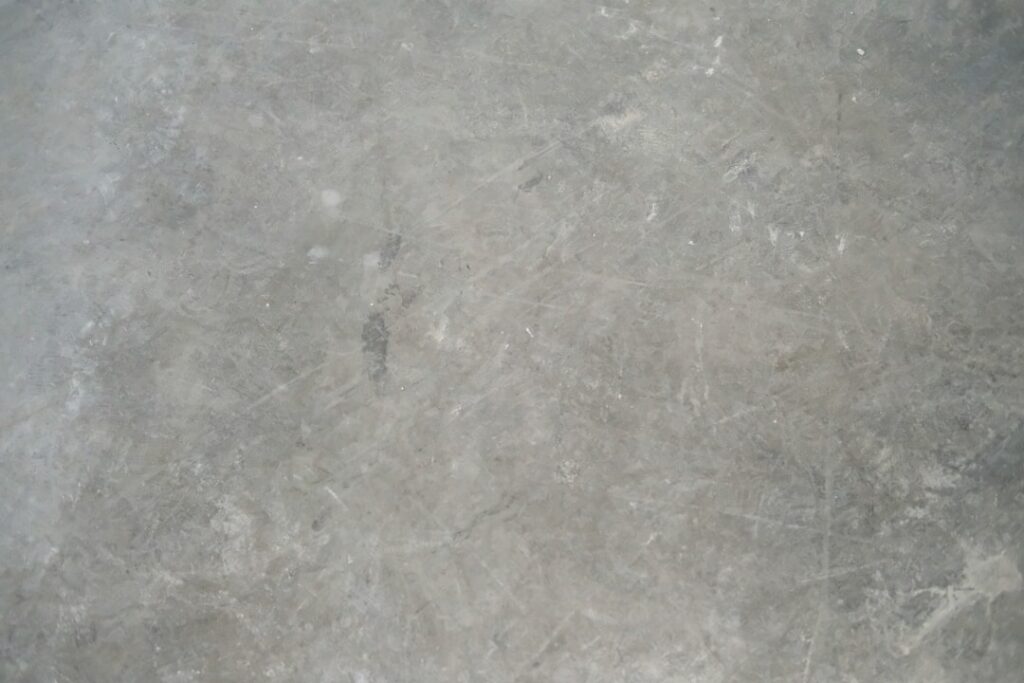
Walk into a Costco, a modern grocery store, or a converted-loft office and you are standing on the same finish: ground, densified, and polished concrete. Commercial polished concrete flooring has become the default hard floor for big-box retail and industrial space because it turns the slab you already own into the finished floor, at $3 to $8 per square foot, with no wax, no tile grout, and nothing to peel or delaminate. It is a genuinely excellent system, but the marketing around it oversells the maintenance-free part. This guide covers how the process works, the gloss levels you are actually choosing between, honest upkeep, and where polished concrete is the wrong answer.
Part of our Epoxy, Concrete & Garage Floors guide — explore the full guide →
What Polishing Actually Is
Polished concrete is not a coating. Crews run planetary grinders fitted with diamond abrasives across the slab in progressively finer steps, the same idea as sanding wood through finer grits. A typical sequence starts with metal-bond diamonds around 30 to 80 grit to cut the surface open, then transitions to resin-bond pads stepping through 100, 200, 400, 800, 1,500, and sometimes 3,000 grit.
Partway through the sequence, the installer applies a densifier, a lithium, sodium, or potassium silicate that reacts with free lime in the concrete to grow additional crystalline structure in the surface. Densification is what separates real polishing from mere grinding: it hardens the wear surface, reduces dusting, and lets the concrete take and hold a shine. Most spec jobs finish with a penetrating stain guard to buy resistance against oil and food spills.
Gloss Levels and Aggregate Exposure
Two specification choices define the look, and both affect price. The first is finished gloss, tied to the final grit level:
- Level 1 (flat, ~100-200 grit): matte, low-sheen; back-of-house and warehouse aisles
- Level 2 (satin, ~400 grit): soft sheen with some reflection; the workhorse spec for retail and industrial
- Level 3 (semi-polished, ~800 grit): clear reflection of overhead lights; showrooms, offices, grocery
- Level 4 (highly polished, 1,500-3,000 grit): mirror-like clarity; lobbies, flagship retail, anywhere image justifies the extra passes
The second choice is aggregate exposure: cream (polish the surface paste only, most uniform), salt-and-pepper (light grinding exposes fine sand, the most common commercial look), or full aggregate exposure (deep grinding reveals large stone, a terrazzo-like effect that costs the most). Each additional grinding depth and grit step adds passes, and passes are labor, which is why a Level 4 full-exposure floor can cost double a Level 2 cream polish.
The Pros: Why Big Facilities Standardized on It
Lifecycle economics drive adoption. There is nothing on the slab to wear out, chip off, or replace on a cycle. Comparable numbers explain why national retailers converted: VCT tile is cheap to install but demands stripping and rewaxing that costs more than the tile within a few years, while polished concrete skips that program entirely.
- Durability: the wear surface is the densified slab itself; forklifts and pallet jacks do not delaminate it
- Low material cost over time: no wax, no coatings, no grout to maintain
- Light reflectance: higher gloss levels measurably brighten interiors and can trim lighting loads
- No off-gassing or cure downtime: areas can often reopen the same day polishing finishes
- Slip performance: counterintuitively decent when clean and dry, and matte levels can be specified where wet traffic is expected
The Cons: Honest Limits Nobody Puts in the Brochure
Polished concrete is only as good as the slab underneath. Cracks, patched trenches, and old coating scars remain visible; polishing celebrates the slab rather than hiding it. Buyers expecting uniform gray tile-like perfection are the industry’s most disappointed customers. Joints stay too, and joint filler maintenance is a permanent line item in facilities with wheeled traffic.
Chemistry is the other weakness. The polish is a refined lime-rich surface, so acids etch it: vinegar, wine, citrus, many industrial cleaners, and even harsh degreasers dull the shine on contact. Stain guards slow penetration but do not make the floor immune, which is why polished concrete is a questionable pick for commercial kitchens and battery-charging areas. It is also hard and unforgiving underfoot, cold without radiant heat, and loud in big empty rooms.
What Maintenance Really Looks Like
The phrase maintenance-free deserves retirement. Realistic upkeep for a commercial polished floor is a routine, just a cheap one: daily dust mopping or auto-scrubbing with clean water or a pH-neutral cleaner, prompt cleanup of acidic spills, and walk-off matting at entrances to keep grit, which is airborne sandpaper, off the surface.
Beyond the daily routine, plan on periodic renewal. High-traffic lanes lose gloss first, and most facilities schedule a burnish or a light re-polish of traffic aisles every 1 to 3 years and a stain-guard reapplication on a similar cycle, at a fraction of the original cost. A grocery store checkout lane gets millions of footsteps a year; expecting the original 3,000-grit shine to survive that untouched forever is not realistic. Budget roughly $0.05 to $0.15 per square foot per year for maintenance, still far below waxed VCT or carpet replacement cycles.
Cost Breakdown
Installed pricing for commercial work generally runs:
- Level 1-2, cream or salt-and-pepper, large open areas: $3 to $5 per square foot
- Level 3, salt-and-pepper, retail spec with stain guard: $4 to $6.50 per square foot
- Level 4 or full aggregate exposure, dyed or decorative: $6 to $10-plus per square foot
Scale discounts are significant; 50,000 square feet of warehouse polishing can dip near $2.50 per square foot while a 2,000 square foot boutique pays boutique prices. Add-ons include integral dyes ($0.75 to $2 per square foot), crack and joint repair ($3 to $10 per linear foot), and heavy remediation on slabs with old glue or coatings ($1 to $3 per square foot to remove). New construction teams can cut costs by specifying a good steel-trowel finish and flatness (FF 50 or better) up front, since a flatter slab polishes with fewer passes.
Where It Fits and Where It Does Not
Ideal fits: warehouses, distribution centers, big-box and grocery retail, showrooms, schools, offices going for the industrial-modern look, and municipal buildings. Poor fits: commercial kitchens and food processing with acids and hot washdowns (urethane cement wins there), spaces demanding waterproofing or containment, badly cracked or contaminated slabs, and any owner who expects carpet-quiet acoustics or tile-perfect uniformity.
Vet installers by asking for the grit sequence in writing, the densifier product, gloss and DOI targets, and addresses of floors they polished five-plus years ago. A crew that resists specifying grit steps is planning to grind-and-coat, which is a different, cheaper product wearing polished concrete’s name.
The Verdict
Commercial polished concrete flooring earns its dominance: lowest lifecycle cost of any hard commercial floor, genuine durability, and a look that suits modern space. Go in with accurate expectations, visible joints and slab history, acid sensitivity, and a light but real maintenance program, and specify gloss level and aggregate exposure deliberately. Owners who treat it as a refined surface rather than a magic one are the ones still happy with the floor a decade in.


