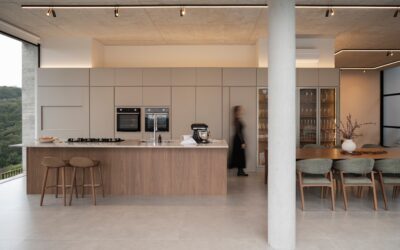
Polished concrete flooring has evolved from a purely industrial material into one of the most sought-after residential & commercial flooring options in 2026. Its combination of striking visual appeal, exceptional durability, low maintenance, & sustainability makes it a compelling choice for modern homes, retail spaces, offices, & restaurants.
Part of our Epoxy, Concrete & Garage Floors guide — explore the full guide →
In this comprehensive guide, we’ll cover everything you need to know about polished concrete flooring — from the polishing process & finish levels to costs, installation, & long-term maintenance.
- Table of Contents
- What Is Polished Concrete?
- Finish Levels & Sheen Options
- Pros & Cons of Polished Concrete Flooring
- Polished Concrete Costs in 2026
- The Polishing Process
- Design Options & Customization
- Best Applications for Polished Concrete
- Maintenance & Care
- Polished Concrete vs. Alternatives
- Frequently Asked Questions


What Is Polished Concrete?
Polished concrete is a multi-step process where a concrete floor is mechanically ground, honed, & polished with progressively finer diamond abrasives — similar to how rough stone is polished into a smooth, glossy surface. The process doesn’t apply a coating; instead, it physically refines the concrete surface itself, creating a permanent finish that becomes part of the slab.
How It Differs from Other Concrete Finishes
Polished concrete is often confused with other decorative concrete treatments, but they’re distinctly different processes.
Polished concrete is mechanically ground & polished — the finish is in the concrete itself.
Epoxy-coated concrete applies a thick resin layer on top of the concrete — it’s a coating, not a polish.
Stained concrete uses acid or water-based stains to color the concrete, often combined with sealing rather than polishing.
Stamped concrete is imprinted with patterns while wet — a completely different process used for new pours.
Finish Levels & Sheen Options
Polished concrete comes in several finish levels, each achieved by stopping the grinding process at a specific grit level.
| Finish Level | Grit Range | Appearance | Reflectivity | Best For |
|---|---|---|---|---|
| Ground/Flat | 50-100 grit | Matte, no sheen | None | Industrial, warehouse |
| Honed (satin) | 100-400 grit | Low sheen, smooth | Low | Residential, retail |
| Semi-polished | 400-800 grit | Medium sheen | Medium | Offices, showrooms |
| Highly polished | 800-1500 grit | High gloss, mirror-like | High | Luxury retail, galleries |
| Ultra-polished | 1500-3000 grit | Maximum gloss | Very high | Showpiece installations |
Aggregate Exposure Levels
In addition to sheen, polished concrete is categorized by how much of the underlying aggregate (gravel, stone) is exposed during grinding.
Cream finish: No aggregate exposed — only the smooth cement paste surface is polished. This creates the most uniform appearance.
Salt & pepper: Fine aggregate is lightly exposed, creating a subtle, speckled pattern. This is the most popular residential option.
Medium aggregate: Larger stones become visible, creating a terrazzo-like appearance with significant visual texture.
Full aggregate: Maximum grinding exposes large aggregate stones, creating a bold, dramatic look popular in commercial spaces.
Pros & Cons of Polished Concrete Flooring
Advantages
Exceptional durability: Polished concrete can handle the heaviest foot traffic, vehicle traffic, & impact without showing wear. It’s commonly used in warehouses & retail stores precisely because of its resilience.
Very low maintenance: Regular dust mopping & occasional damp mopping is all that’s required. No waxing, no sealing, no refinishing for years. This translates to significant long-term cost savings compared to other flooring types.
Sustainability: Polishing an existing concrete slab eliminates the need for additional flooring materials, adhesives, & underlayment. Concrete itself has a lower carbon footprint than many flooring alternatives, & polished concrete’s longevity means fewer replacements over a building’s lifetime.
Improved lighting: The reflective surface of polished concrete can increase ambient light levels by 30% or more, potentially reducing artificial lighting needs & energy costs.
Hypoallergenic: Unlike carpet, polished concrete doesn’t harbor dust, pollen, pet dander, or mold. It’s one of the healthiest flooring options for allergy & asthma sufferers.
Disadvantages
Hard underfoot: Concrete is unforgiving on feet, legs, & backs during extended standing. Anti-fatigue mats in kitchen & work areas help, but it’s a consideration for families with young children or elderly residents.
Cold surface: Without radiant heating, polished concrete feels cold underfoot, especially in winter. In-floor heating systems pair beautifully with concrete’s thermal mass but add to installation costs.
Moisture sensitivity: While polished concrete resists surface moisture, moisture migrating through the slab from below (vapor transmission) can cause problems. Proper moisture testing & vapor barriers are essential.
Cracking potential: Concrete can develop hairline cracks over time due to settling, shrinkage, or structural movement. While cracks can be filled & re-polished, they’re a natural characteristic of concrete flooring.
Noise: Hard surfaces reflect sound rather than absorbing it, potentially increasing noise levels in large, open spaces. Area rugs & soft furnishings help mitigate this effect.
Polished Concrete Costs in 2026
| Service | Cost per sq ft | Notes |
|---|---|---|
| Basic grinding & sealing | $3-$6 | Minimal polish, functional finish |
| Standard polishing (honed) | $5-$8 | Most popular residential option |
| High polish | $8-$12 | High-gloss mirror finish |
| Decorative (dyed/stained + polished) | $8-$15 | Custom colors & patterns |
| Overlay + polish (new surface) | $10-$20 | For slabs not suitable for direct polishing |
| Crack repair | $3-$5/linear ft | Epoxy fill & re-polish |
| Radiant heat integration | $6-$16/sq ft (additional) | In-floor heating system |
For a typical 500 sq ft living area, expect to pay $2,500-$4,000 for standard polishing, $4,000-$6,000 for high polish, or $4,000-$7,500 for decorative polished concrete.
The Polishing Process
Step 1: Surface Preparation
The existing concrete surface is assessed for cracks, patches, coatings, & overall condition. Any existing coatings (paint, epoxy, adhesive) must be removed. Cracks are filled with semi-rigid epoxy, & any uneven sections are ground level. Moisture testing determines if a vapor barrier is needed.
Step 2: Coarse Grinding
Heavy-duty grinding machines with diamond-impregnated segments (16-40 grit) remove the top layer of concrete, exposing the desired level of aggregate. This is the most aggressive phase & determines the floor’s basic character.
Step 3: Hardener/Densifier Application
A liquid chemical hardener (lithium silicate or sodium silicate) is applied to the ground surface. This penetrates the concrete & reacts chemically to create a harder, denser surface. The densifier fills microscopic pores, making the concrete more resistant to staining & wear.
Step 4: Progressive Polishing
The floor is progressively polished with finer diamond grits — typically 100, 200, 400, 800, & 1500 grit. Each pass creates a smoother surface with more reflectivity. The process requires multiple passes with each grit level & can take 2-4 days for a typical residential project.
Step 5: Final Burnishing & Protection
A final burnishing pass with a high-speed polisher brings out maximum sheen. An optional guard/sealer is applied to enhance stain resistance without affecting the finish’s appearance. The floor is ready for foot traffic within 24 hours of completion.
Design Options & Customization
Color Options
Polished concrete doesn’t have to be gray. Integral dyes can create virtually any color — from subtle earth tones to bold blues, reds, & greens. Acid staining produces unique, mottled color patterns that mimic natural stone. Water-based stains offer more uniform, predictable color application.
Scoring & Patterns
Decorative scoring uses diamond blades to cut patterns into the concrete surface before polishing. Grid patterns, geometric designs, borders, & custom logos are all possible. Scoring can simulate tile grout lines, creating the appearance of stone or tile flooring.
Aggregate Selection
For new pours, custom aggregate can be selected — colored glass, marble chips, recycled materials, or specific stone colors — to create unique terrazzo-style floors. This option adds cost but produces stunning, one-of-a-kind flooring. When paired with the right color palette, such as colors that go with orange, custom aggregate floors can be truly spectacular.
Best Applications for Polished Concrete
Residential
Polished concrete works in any room with a concrete slab — living rooms, kitchens, basements, entryways, & bathrooms. It’s particularly popular in open-concept homes, modern & industrial-style interiors, & homes with radiant floor heating. Use area rugs to add warmth & define spaces.
Retail & Commercial
Retail stores, restaurants, offices, & showrooms benefit from polished concrete’s durability, easy maintenance, & professional appearance. The reflective surface enhances product displays & creates a bright, clean atmosphere. It withstands heavy foot traffic, shopping carts, & display fixtures without wear.
Outdoor Spaces
Covered outdoor areas like patios, covered walkways, & garage floors are excellent candidates for polished concrete. For uncovered outdoor use, a honed (lower sheen) finish is recommended to prevent glare & reduce slip risk when wet. Enhance your outdoor polished concrete with outdoor solar lights for dramatic nighttime effects.
Basements
Basements with existing concrete slabs are ideal candidates for polishing. It transforms a cold, gray basement floor into an attractive living space without raising the floor height (important in basements with limited headroom). Ensure proper moisture mitigation before polishing — basements are particularly susceptible to vapor transmission.
Maintenance & Care
Daily Maintenance
Dust mop or sweep daily with a microfiber dust mop to remove abrasive grit that can dull the finish over time. This simple daily step is the single most important maintenance practice for polished concrete.
Regular Cleaning
Damp mop weekly with clean water & a pH-neutral cleaner designed for polished concrete. Avoid acidic cleaners (vinegar, citrus-based), alkaline cleaners (ammonia, bleach), & general-purpose floor cleaners — these can etch the surface, dull the polish, or leave residue. Automatic floor scrubbers work well for larger areas.
Periodic Maintenance
Apply a concrete floor protector (guard product) every 6-12 months to maintain stain resistance. Re-burnishing with a high-speed polisher every 2-5 years (depending on traffic) refreshes the sheen without the full polishing process. Heavy-traffic commercial floors may need annual re-burnishing.
Stain Response
Clean spills promptly — while polished concrete resists most stains, acidic substances (wine, coffee, juice) can etch or discolor the surface if left sitting. For stubborn stains, a poultice made with baking soda & water, left overnight, often draws out stains without damaging the finish.
Polished Concrete vs. Alternatives
| Feature | Polished Concrete | Natural Stone | Hardwood | Luxury Vinyl |
|---|---|---|---|---|
| Installed cost/sq ft | $3-$15 | $12-$88 | $8-$25 | $4-$12 |
| Lifespan | 100+ years | 100+ years | 25-75 years | 15-25 years |
| Maintenance | Very low | Medium-high | Medium | Very low |
| Comfort underfoot | Hard & cold | Hard & cold | Moderate warmth | Comfortable |
| Sustainability | Excellent | Good | Good (if certified) | Moderate |
| Design flexibility | High (colors, patterns) | Limited (natural) | Moderate (species, stain) | Very high (any look) |
Frequently Asked Questions
How much does polished concrete flooring cost?
Polished concrete costs $3-$15 per square foot depending on the level of polish & decorative options. A basic honed finish runs $5-$8/sq ft, while high-gloss decorative polishing with dyes or stains ranges from $8-$15/sq ft. For an average 500 sq ft room, expect $2,500-$7,500 total.
Is polished concrete slippery?
Polished concrete has a coefficient of friction comparable to other hard-surface flooring. While the glossy surface appears slick, it actually provides decent traction when dry. When wet, it can become slippery — use mats at entrances & clean up spills promptly. Adding a non-slip guard product improves wet traction.
Can you polish existing concrete floors?
Yes, most existing concrete slabs can be polished. The concrete should be at least 28 days old, in reasonable condition, & free of significant damage. Previous coatings (paint, epoxy, adhesive residue) must be removed before polishing. A professional can assess your specific slab’s suitability.
How long does polished concrete last?
Polished concrete can last the lifetime of the building — 100+ years. The polished surface itself may need periodic re-burnishing every 2-5 years in high-traffic areas, but the floor never needs replacement. This extreme longevity makes polished concrete one of the most cost-effective flooring options over time.
Is polished concrete cold?
Yes, polished concrete can feel cold underfoot, especially in cooler climates. Radiant floor heating solves this issue completely — concrete’s thermal mass actually makes it ideal for radiant heat, storing warmth & releasing it slowly for even, comfortable temperatures. Area rugs also add warmth in key living areas.
Does polished concrete crack?
Concrete can develop hairline cracks due to curing shrinkage, settling, or structural movement. While control joints minimize random cracking, some hairline cracks are natural & don’t indicate structural problems. Cracks can be filled with color-matched epoxy & re-polished, though many homeowners embrace them as part of concrete’s natural character.
Can polished concrete be done as a DIY project?
While technically possible, polished concrete is strongly recommended as a professional job. The process requires expensive, specialized equipment (planetary grinders, diamond tooling), significant expertise to achieve consistent results, & considerable physical effort. Mistakes in grinding are difficult or impossible to correct. Professional installation ensures the best results & is worth the investment.