
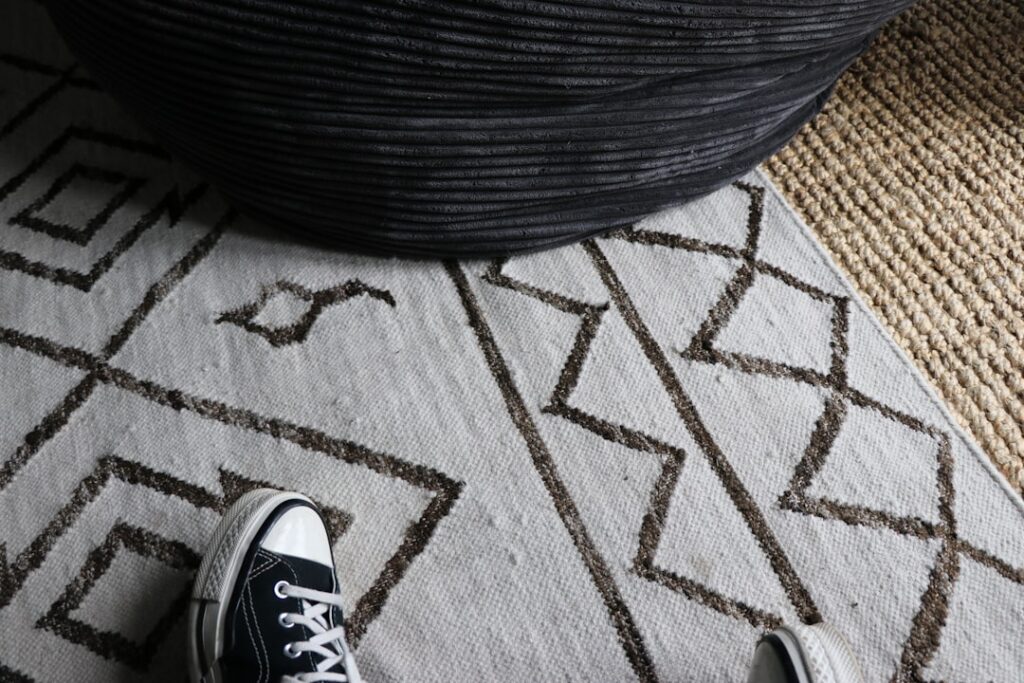
Designers reach for jute when a room feels flat and needs texture without more color, and homeowners love it because it costs a fraction of wool. A woven jute rug brings that organic, sandy-toned warmth that makes hardwood and painted walls look intentional, and it layers beautifully under a smaller patterned rug. But jute has real quirks, especially around water, that you need to understand before it lands in the wrong room. This guide walks through the fiber, the weaves, sizing, cleaning, and exactly where jute earns its keep.
What Jute Is and Why It Works
Jute is a plant fiber harvested from the stalks of the Corchorus plant, grown mostly in India and Bangladesh. It is spun into soft, ropy yarns that carry a natural golden-tan color and a subtle sheen you do not get from sisal or seagrass. Among the natural fibers, jute is the softest underfoot, which is why it works in living rooms and bedrooms where sisal feels too scratchy.
The trade-off for that softness is durability. Jute is less abrasion-resistant than sisal and considerably less than wool, so it belongs in low-to-moderate traffic areas rather than a busy entryway. Think of it as the natural fiber you choose when comfort and looks matter more than surviving a decade of muddy boots.
Weave Styles and What They Signal
The weave changes both the look and the performance:
- Boucle or looped weave — nubby and casual, hides crumbs well, the most common style
- Flatweave (herringbone or chevron) — lower profile, cleaner lines, works under furniture
- Braided — chunky rope-like coils, adds a cottage or coastal feel
- Chunky hand-woven — thick and plush, the softest option but the hardest to vacuum
Boucle and flatweave jute pair well with modern, farmhouse, and coastal interiors. Braided jute leans traditional and cottage. If you want the rug to disappear and simply add warmth, a natural flatweave in a herringbone pattern is the safest bet across almost any decor.
Sizing and Placement
Standard jute rugs come in the usual sizes: 5-by-8, 8-by-10, and 9-by-12 feet, plus 2-by-8 runners. In a living room, get the front legs of your sofa and chairs onto the rug; an 8-by-10 handles most seating groups. Under a dining table, size up to a 9-by-12 so chairs stay on the rug when pulled out, and understand that jute is a poor choice here if spills are frequent.
Jute is a fantastic base layer. Lay a large natural jute rug wall-to-wall in feel, then float a smaller 4-by-6 patterned wool or cotton rug on top. You get texture, warmth, and a defined pattern zone for a lower total cost than one large premium rug. Always use a felt or felt-and-rubber pad; jute sheds and creeps on hardwood without one, and the pad adds cushion to an otherwise firm fiber.
The Water Problem
Here is the single most important thing to know: jute and water do not get along. When jute gets wet it can develop brown watermarks, the fibers weaken, and prolonged dampness invites mildew and rot. That rules jute out of bathrooms, kitchens with heavy splash zones, mudrooms, covered patios, and any room where a pet has accidents.
It also changes how you handle spills. Blot immediately with a dry white cloth, never soak the area, and dry it fast with a fan. If you must spot-clean, use the barest minimum of moisture and dry the spot completely within an hour. A wet jute rug left overnight often develops a permanent stain ring that no cleaning removes.
Cleaning and Care
Dry care keeps jute looking its best for years. Vacuum weekly using suction only, with the beater bar off, because a rotating brush shreds the loose fibers and accelerates shedding. Expect some shedding for the first several weeks with any new jute rug; that is normal and slows down over time. Rotate the rug 180 degrees every six months so foot traffic and sun fading stay even.
For deeper cleaning, stick to dry methods. Sprinkle a dry carpet cleaning powder or plain baking soda, let it sit 15 to 30 minutes, then vacuum it out. Steam cleaning and wet extraction are off the table entirely. If a jute rug becomes genuinely filthy, a specialty rug cleaner who offers low-moisture or dry-cleaning service is your only safe professional option, typically at $4 to $8 per square foot.
Jute Versus Other Natural Fibers
It helps to see where jute sits among its cousins. Sisal is the toughest of the group, made from agave leaves, and it stands up to heavy traffic and even stair runners, but it feels coarse underfoot and can water-stain almost as easily as jute. Seagrass is nearly non-porous, which makes it the most spill-tolerant natural fiber and a decent choice for a kitchen edge, but its smooth surface can feel slick and it accepts almost no dye. Wool, though not a plant fiber, is the benchmark for softness and stain resistance, at three to five times the price.
Jute wins on softness and price, which is why it dominates the affordable natural-rug shelf. If your room sees light use and you want the warmest natural texture for the money, jute is the pick. If the space is a busy hallway or a stair run, sisal earns its keep. And if the room is prone to spills but you still want the woven look, seagrass or a washable synthetic imitation will save you the heartbreak of a permanent watermark.
Buying Tips and What to Check
When you shop, run your hand across the surface and check the backing. A quality jute rug has a tight, even weave and a latex or cotton backing that holds the fibers securely; loose, uneven weaves shed for months and flatten quickly. Ask about the pile height, since a chunky hand-woven rug feels wonderful but traps more dirt and is harder to vacuum than a low flatweave. Natural fiber color varies from bale to bale, so if you are buying two rugs to match, buy them at the same time from the same lot.
Watch the price signals too. Machine-made jute at the low end can feel stiff and look uniform, while a hand-woven piece shows small irregularities that read as character. Neither is wrong; just know what you are paying for. A felt-and-rubber pad is not optional with jute, so factor another $30 to $80 into the budget for a properly sized pad that keeps the rug flat and protects the floor beneath it.
Pros, Cons, and Cost
Weighing it out helps set expectations. On the plus side, jute is affordable at roughly $1 to $4 per square foot for machine-made pieces and up to $6 for hand-woven, it is renewable and biodegradable, it adds instant texture, and it works as a layering base almost anywhere. On the downside, it is water-sensitive, sheds initially, stains easily, and wears faster than sisal or wool in heavy traffic.
Put simply, a jute rug is a smart buy for a bedroom, formal living room, home office, or as a texture layer, and a poor buy for a bathroom, entryway with wet weather, or a home with un-housetrained pets. Match the fiber to the room’s reality, pad it well, keep it dry, and vacuum with suction only. Handled that way, a well-made jute rug holds its warm, organic good looks for 5 to 10 years and costs less than nearly any comparable natural-fiber option.


