Hallways and galley kitchens are the workhorses of a home, and they’re almost always the dullest, most neglected spaces in the floor plan. Injecting a little joy into them is easier than most people think. A yellow runner rug instantly brightens a long, narrow space, bouncing light down a dim corridor and adding a cheerful lift to a kitchen dominated by cabinets and stainless steel. Yellow is a bolder choice than gray or beige, but with the right shade and styling, it reads as warm and welcoming rather than loud. Here’s how to pull it off.
Why Yellow Works in Transitional Spaces
Yellow is the color of sunlight, and it does for a room what a window does. In a windowless hallway or an interior kitchen, a yellow runner tricks the eye into feeling brighter and more open. It’s an energizing, optimistic color that greets you the moment you walk in the door, which is exactly the tone you want in an entryway.
Yellow also pairs surprisingly well with the grays, whites, and woods that dominate modern homes. Against a neutral backdrop, it becomes the single spark of color that keeps a space from feeling sterile.
Choosing the Right Shade of Yellow
The shade you pick determines whether the runner feels sophisticated or overwhelming. Yellow ranges widely, and each version sets a different mood.
- Mustard and golden yellow: muted and earthy, these are the most versatile and forgiving. They lean vintage and boho and hide dirt better than bright shades.
- Butter and pale yellow: soft and subtle, great for adding warmth without a strong statement.
- Bright lemon or canary: bold and energetic, best used in small doses or playful spaces like a kids’ hallway.
- Ochre: a deep, warm yellow-brown that reads rich and grounded, excellent with terracotta and olive accents.
For most homes, mustard or ochre is the safest bet. It carries the warmth of yellow without the visual fatigue that a bright canary can cause in a small space.
Where to Use a Yellow Runner
Runners are made for long, narrow zones, and yellow’s brightening effect makes them ideal in the darker ones.
- Entryway: a warm welcome and a bright first impression the moment guests step inside.
- Hallway: guides the eye down the corridor and cures the dreaded dim-hallway problem.
- Kitchen: cushions your feet in front of the sink or along a galley and adds color to a hard-surfaced room.
- Laundry room: lifts the mood in a utilitarian space that rarely gets any design love.
Getting the Size and Placement Right
Runners typically measure 2 to 3 feet wide and 6 to 14 feet long. For a polished look, leave 4 to 5 inches of bare floor on each side so the runner frames the space instead of filling it edge to edge. In a hallway, stop the runner 18 to 24 inches short of each end rather than running the full length. If your corridor is longer than the available runners, two shorter ones placed end to end usually look better than one stretched thin and undersized. In a kitchen, measure the run and leave breathing room at the appliances and counters.
Material and Durability
Since runners live in high-traffic areas, durability and cleanability drive the material choice. In a kitchen or entryway, spills and grit are constant, so lean toward washable options.
- Cotton and washable blends: machine-washable and perfect for kitchens where drips and crumbs are a fact of life.
- Wool: durable, naturally stain-resistant, and holds golden and mustard tones richly, though it costs more.
- Polypropylene: budget-friendly, fade-resistant, and easy to wipe or hose off, ideal for busy entryways.
- Jute: adds earthy texture that flatters mustard and ochre, but it’s harder to clean and not for wet zones.
Styling a Yellow Runner
Yellow is a warm, dominant color, so surround it with tones that let it shine without competing. Gray is the classic partner; a mustard runner against a gray floor or gray walls is a timeless, modern combination. White and cream keep things bright and airy, while navy provides a striking, high-contrast backdrop that makes yellow pop.
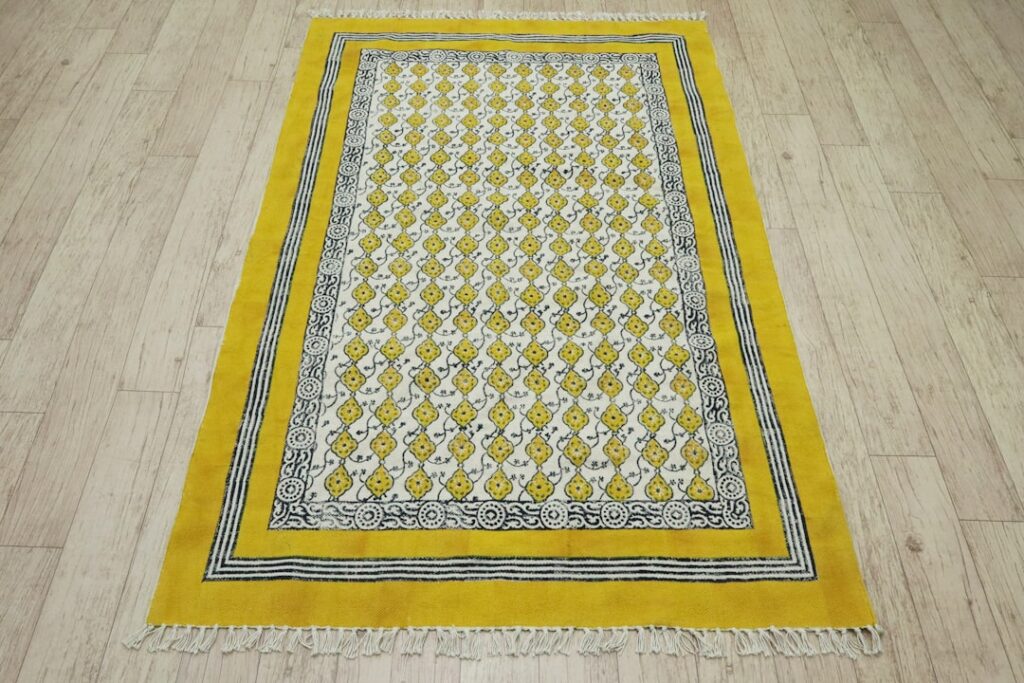
For a boho or eclectic look, choose a patterned yellow runner that mixes ochre with cream, black, and rust, then layer in woven baskets, plants, and natural wood. A patterned runner also camouflages the dirt and foot traffic that a solid color would show, which is a practical bonus in a hallway or kitchen. Pull the yellow into the space with a piece of art, a vase, or a dish towel so the runner feels connected to the room.
The Non-Slip Essential
A runner on a hard floor without a grip pad is an accident waiting to happen. In hallways and kitchens especially, a non-slip rug pad is non-negotiable. It keeps the runner from sliding underfoot, cushions each step, and protects both the rug and the floor from premature wear. For washable cotton runners, use a thin, low-profile pad that won’t add bulk when you take the runner off to launder it.
Cleaning and Maintenance
High-traffic runners need regular attention to stay bright. Vacuum weekly to pull out grit before it dulls the fibers. Blot spills immediately with a clean cloth, working from the outside in. For washable cotton runners, follow the label and wash in cold water on a gentle cycle, then air dry to avoid shrinkage. Wool runners should be spot-cleaned with a wool-safe cleaner and professionally cleaned periodically.
Yellow can fade in strong sunlight, so if your runner sits by a sunny door or window, rotate it end to end every few months to keep the wear and fading even. A mid-tone mustard or ochre disguises minor fading and daily dirt far better than a pale or bright yellow.
Common Mistakes to Avoid
A yellow runner is a bold move, and a couple of missteps can tip it from cheerful to jarring. The most frequent mistake is choosing a shade that’s too bright for the space; a vivid canary yellow in a small, enclosed hallway can feel intense and even a little grating over time. When in doubt, go a shade more muted with mustard or ochre, which delivers the warmth without the visual fatigue.
The second common error is scale. A runner that’s too wide crowds a narrow hallway and eliminates the frame of bare floor that makes it look intentional, while one that’s too short leaves awkward gaps at each end. Measure carefully and aim for that 4-to-5-inch margin on the sides. Finally, don’t forget to tie the yellow into the rest of the room with at least one or two supporting accents, or the runner can look like it wandered in from another house entirely. A single yellow element elsewhere, a piece of art, a vase, or a dish towel, is enough to make the whole scheme feel deliberate and cohesive.
Is a Yellow Runner Right for You?
If you have a dim hallway, a cold kitchen, or a drab entryway that could use a jolt of warmth and personality, a yellow runner rug is an easy, affordable fix. Choose a muted mustard or ochre for versatility, pick a washable material for high-traffic and spill-prone spots, anchor it with a non-slip pad, and pair it with gray, white, or navy for balance. Done right, a yellow runner turns your home’s most overlooked spaces into the ones that make you smile every time you pass through.