Lay a single plank of zebra wood flooring next to oak and the comparison ends within ten seconds. The high-contrast dark stripes against a creamy tan background look more like custom art than a flooring product, which is exactly the appeal and exactly the problem. This West African exotic from the Microberlinia genus rewards the right room with a centerpiece floor and overwhelms the wrong room within a year.
Where Zebrawood Comes From
Zebrawood, also called zebrano, comes primarily from Cameroon, Gabon, and the Congo basin. Two species supply most commercial product: Microberlinia brazzavillensis and Microberlinia bisulcata. The wood pulls darkness from interlocking grain that runs counter-direction across the heartwood, creating the signature striping pattern.
Most flooring is sold as engineered (3-8mm wear layer over plywood backing) rather than solid. The species is too unstable solid for most US climates, with high tangential shrinkage that causes cupping and gaps if humidity swings. Solid zebrawood does exist but works best in rigorously humidity-controlled spaces.
Hardness and Durability Numbers
- Janka rating: approximately 1,575 lbf
- Compare red oak (1,290), hard maple (1,450), Brazilian cherry (2,820)
- Density: 47-50 lbs per cubic foot dry
- Tangential shrinkage: 8-9% (high)
- Radial shrinkage: 4-5%
Hardness sits comfortably above oak, which means it handles foot traffic and pet claws better than most domestic species. The dimensional instability is the bigger story for installers and homeowners.
The Pros That Sell People
Visual impact is unmatched in the flooring world. No oak, walnut, or even tigerwood delivers contrast like zebrawood. In a modern interior with neutral walls and minimal furniture, the floor becomes the design statement, which can save thousands in art and accent furniture.
Density supports excellent durability for foot traffic. The 1,575 Janka rating outperforms hickory, maple, and red oak. Wear shows slowly in residential use, especially with a quality polyurethane or aluminum-oxide finish.
Engineered construction (when bought from reputable manufacturers) handles the dimensional movement that solid zebrawood cannot. A 4-7 ply plywood backer cuts movement by 60-70% compared to solid stock.
The Cons You Cannot Ignore
Cost is steep. Engineered zebrawood flooring runs $11-$18 per sq ft material, with premium hand-finished product reaching $22-$28. Compare that to white oak at $5-$8, walnut at $8-$11, and Brazilian cherry at $7-$10. The premium pays for visual rarity, not necessarily superior performance.
Source ethics are real. Microberlinia is listed on the IUCN Red List as Vulnerable. CITES Appendix III for Cameroon-sourced material adds documentation requirements for legal export. Buy only from suppliers with FSC chain-of-custody certification, and ask for the Lacey Act compliance paperwork.
Visual fatigue happens. The contrast that wows on day one can feel busy on year three, especially in smaller rooms. Open-concept main floors with strong sight lines amplify the pattern across an entire space, which can either look incredible or overwhelming depending on the surrounding palette.
Color shift over time is significant. UV exposure mellows the dark stripes within 18-36 months, sometimes blending the contrast into a more uniform brown-gold tone. Some homeowners prefer the aged look; others paid for the contrast and feel cheated when it fades.
Best Rooms and Design Contexts
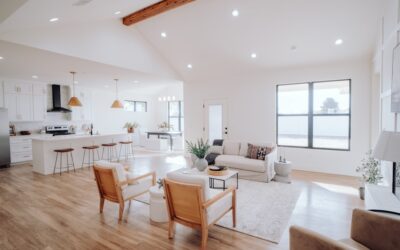
Modern minimalist interiors with white walls, low-profile furniture, and minimal pattern elsewhere are the natural fit. Mid-century modern also works because the warm tan tones the bold grain just enough.
Skip zebrawood in rooms with heavy patterned textiles, busy wallpaper, or competing wood species. The grain demands negative space to read correctly. Open kitchens with patterned tile backsplash compete poorly with zebra grain underfoot.
Bedrooms work if the room is large enough (12 by 14 feet or more) and the bed dressing stays calm. Small bedrooms can feel claustrophobic under aggressive grain.
Solid vs Engineered
Engineered zebrawood, 3/8 inch to 9/16 inch thick with a 3-6mm wear layer, is the right pick for 95% of US installs. The plywood backer counters tangential movement, and most products allow refinishing 1-3 times during a 25-30 year life.
Solid zebrawood, 3/4 inch thick, is appropriate only in tightly humidity-controlled spaces (35-55% RH year-round) on or above grade. Avoid solid in basements, bathrooms, or any room where dishwasher steam reaches the floor regularly.
Installation Realities
Acclimate planks 7-10 days minimum at the install room’s normal operating humidity. This is roughly double the time for domestic species because zebrawood’s higher density takes longer to equalize moisture content.
Engineered installs go over wood subfloors with cleat or staple nail-down, glue-down on concrete, or floating click-lock on either substrate. Subfloor flatness must be 3/16 inch over 10 feet, tighter (1/8 inch over 8 feet) for glue-down. Use polyurethane adhesive (Bostik Greenforce or similar) for glue-down installs.
Pre-drilling is necessary for solid stock at every fastener due to grain density. Skipping pre-drill splits boards within months. Engineered installs avoid this issue entirely.
Finishing Options
Most factory-finished zebrawood ships with 7-10 layers of UV-cured polyurethane and aluminum oxide, providing 20-25 year wear life under normal residential traffic. Site-finished installs use either oil-modified poly (Minwax Super Fast-Drying Polyurethane), water-based (Bona Traffic HD), or hardwax oil (Rubio Monocoat).
Hardwax oil deepens the dark stripes most dramatically and accentuates the grain contrast. Polyurethane preserves a more uniform sheen but slightly mutes the visual depth. Test finishes on offcuts before committing.
Cost Summary
- Engineered zebrawood (3-5mm wear layer): $11-$15 per sq ft material
- Engineered zebrawood (5-8mm wear layer): $14-$22 per sq ft material
- Solid zebrawood: $14-$28 per sq ft material
- Site-finished labor: $4-$7 per sq ft
- Pre-finished install labor: $3-$5 per sq ft
A 400 sq ft living room runs $7,200-$11,000 turnkey with engineered product and pro install.
Maintenance That Preserves the Look
Sweep or vacuum (no beater bar) twice weekly. Damp-mop monthly with Bona Hardwood Floor Cleaner or a manufacturer-approved alternative. Skip steam mops, oil soaps, and waxes because they degrade modern UV-cured finishes.
UV-blocking window film prolongs the contrast significantly. Without UV protection, expect the dark stripes to soften within 18-24 months in heavy-sun rooms. Rotate area rugs every 6 months to even out exposure.
Final Verdict
Zebra wood flooring is a statement product for the right home. Buy engineered (not solid) from FSC-certified sources, install only in humidity-controlled main living spaces, and accept that color will mellow within a few years. The premium price tag and ethical sourcing concerns are real costs worth weighing against the dramatic visual. For modern minimalist interiors with the budget and design discipline to support it, zebrawood delivers a one-of-a-kind floor. For everyone else, walnut or rift-and-quartered white oak gives 80% of the impact at half the cost.
Prefer to explore on your own?
See how new flooring looks in your actual room in seconds — free, no signup.
Try the free Floor Studio →