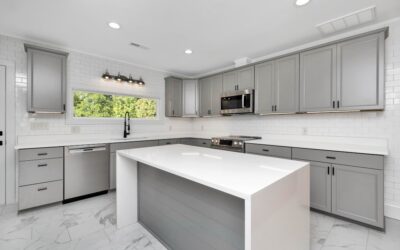
A long, uninterrupted counter run is a dream for serious cooks and busy families, but planning a 12 foot countertop raises real questions about slab sizes, seams, and cost. Twelve feet is a substantial span, longer than many standard stone slabs, so understanding how the material is sourced and joined matters before you commit. This guide walks through sizing realities, cost by material, seam considerations, and buying tips so your long counter comes out beautiful, functional, and within budget.
Part of our Countertops guide — explore the full guide →
Understanding a 12 Foot Countertop
Twelve feet equals 144 linear inches, a generous run that might form one side of a large kitchen, a long island, or a peninsula. To estimate area, multiply the length by the depth: a standard 25-inch-deep counter over 12 feet is roughly 25 square feet, while a wider island might push higher. That square footage, not just the length, drives your material cost. The length also introduces a practical challenge, because a single continuous 12-foot piece exceeds the size of many natural stone slabs, which means seams often come into play.
Will You Need a Seam?
This is the central question for a long counter. Natural stone slabs are limited by what the quarry produces and what fits on a truck. Typical granite and marble slabs run about 9 to 10 feet long, occasionally reaching 10 to 12 feet for jumbo slabs. That means a 12-foot granite or quartz run usually requires at least one seam where two pieces meet. Quartz slabs are also commonly around 10 to 12 feet, so a seam is likely there too. A skilled fabricator places seams strategically, often near a sink or cooktop, and color-matches the joint so it is minimally visible. Laminate and solid surface can be fabricated in longer continuous lengths, sometimes avoiding seams entirely.
Cost by Material
Material choice is the biggest cost lever for a 12-foot run. Rough installed ranges per square foot, and estimated totals for about 25 square feet, look like this:
- Laminate: $10 to $40 per square foot, or roughly $250 to $1,000 total. The budget choice, and often seamless at this length.
- Granite: $40 to $100+ per square foot, or about $1,000 to $2,500+ total.
- Quartz: $50 to $100 per square foot, or roughly $1,250 to $2,500 total.
- Marble: $40 to $100+ per square foot, or about $1,000 to $2,500+ total, with premium varieties higher.
- Butcher block: $30 to $75 per square foot, or roughly $750 to $1,875 total.
These are estimates; final pricing depends on the specific stone or product, edge profile, cutouts, and your local labor rates.
Extra Costs to Factor In
A long counter comes with a few added considerations beyond the base square-foot price. Each seam adds fabrication labor. Sink and cooktop cutouts each add cost. A more elaborate edge profile multiplied across 12 feet adds up quickly. If your 12-foot run includes a seating overhang, you may need countertop supports. And removal and disposal of an old counter, plus plumbing disconnection and reconnection, should be budgeted. Because the run is long, delivery and handling of large, heavy pieces can also factor in. Always request an itemized quote so these details are transparent.
Choosing the Right Material for a Long Run
Different materials suit different priorities:
- For durability and heat resistance: Granite handles hot pans and heavy use, ideal for a hardworking kitchen.
- For low maintenance: Quartz never needs sealing and offers consistent color, which helps mask seams on a long run.
- For budget: Laminate can span 12 feet affordably and often seamlessly.
- For warmth: Butcher block brings a natural, inviting look, though it needs oiling and care.
- For luxury: Marble delivers unmatched elegance but demands sealing and gentle use.
On a long counter where seams are likely, quartz’s uniform color often hides joints better than heavily patterned natural stone.
Planning Seam Placement
If your 12-foot counter will have a seam, plan where it lands. Fabricators typically place seams at a sink or cooktop cutout, since the break in the surface conceals the joint, or at an inside corner. A good seam is filled with color-matched epoxy, sanded flush, and nearly invisible. Discuss seam placement with your fabricator during templating and ask to see examples of their seam work. On busy patterns, matching the veining across a seam takes extra skill, so choose an experienced installer for a run this long.
Buying Tips for a 12 Foot Countertop
It is also smart to think about delivery and access before install day. A 12-foot run means large, heavy pieces that must be carried into your home, around corners, and up any stairs, so confirm the path is clear and wide enough. Ask the fabricator how the counter will be transported and whether your entryways pose any challenge, since a piece that cannot be maneuvered into place may need to be cut into more sections, adding a seam you did not plan for. Sorting this out early prevents an unwelcome surprise when the stone arrives.
A few habits lead to a better outcome. Measure carefully and confirm the exact linear length and depth so quotes are accurate. Get at least three itemized estimates from reputable fabricators. For natural stone, view the actual slabs and ask whether one jumbo slab can span your run seamlessly, or how many seams your length will require. Ask specifically how seams will be placed and finished. Confirm what is included, templating, fabrication, edge work, cutouts, sealing, and installation. Finally, plan for supports if your long run includes any seating overhang.
Measuring and Templating a Long Run
Accurate measurement is even more important on a long counter, because small errors compound over 12 feet. Start by measuring the full linear length along the back wall and the depth from wall to front edge, accounting for any overhang. Note the location of the sink, cooktop, and any corners or turns, since these affect both material layout and seam placement. Most fabricators will send a templater to create a precise physical or digital template before cutting, which is well worth it on a run this long. During templating, walls are rarely perfectly straight, so the template captures the real contours, ensuring the finished stone fits tightly against the wall without visible gaps. Never rely solely on your own rough measurements for an expensive long counter.
Edge Profiles and Overhangs
Two design details deserve attention on a 12-foot counter. The edge profile you choose is repeated across the entire length, so a labor-intensive ogee or mitered edge multiplies in cost compared with a simple eased edge; decide whether the upgraded look justifies the added expense over 12 feet. Overhangs are the other consideration. If part of your long run functions as a seating bar, the overhang beyond the cabinets will need proper support brackets to prevent cracking, especially on natural stone. Plan the overhang depth for comfortable knee room, typically around 12 inches for stools, and confirm with your fabricator that the chosen support hardware suits the slab thickness. Thinking through edges and overhangs early keeps the quote accurate and the finished counter both beautiful and safe.
Final Thoughts
Planning a 12 foot countertop is mostly about managing two realities: the square footage that drives your cost and the slab-size limits that usually make a seam necessary. Choose a material that matches your priorities for durability, maintenance, and budget, and lean toward uniform quartz or seamless laminate if hiding joints matters most. Get itemized quotes, view real slabs, plan seam placement with a skilled fabricator, and budget for cutouts and any needed supports. Do that, and your long counter run will deliver years of generous, beautiful workspace at a price you planned for.