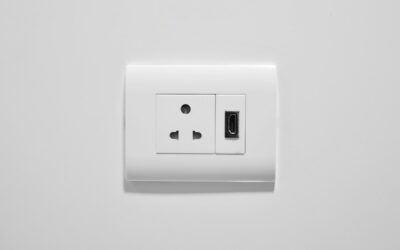
The North American electrical system runs most appliances on 120 volts, but a sizable list of tools and equipment, from shop air compressors to mini-split air handlers, expects 240 volts at a 20 amp circuit. The phrase 20 amp outlet 220v is technically slang for what the National Electrical Code calls a 240-volt, 20-amp receptacle, but the common usage is everywhere. Installing one correctly runs $150 to $400 for a licensed electrician, plus the cost of pulling new conductors from the panel.
- What 220V Actually Means in the US
- NEMA Receptacle Types
- Wire Gauge and Breaker Pairing
- Common Uses for the Circuit
- Installation Cost Breakdown
- Permit and Inspection Requirements
- Safety Considerations
- Mistakes That Trip Inspectors
- Difference From 30 and 50 Amp 240V Outlets
- Receptacle Quality and Brand Choices
What 220V Actually Means in the US
Residential US power arrives as 240 volts split into two 120-volt legs from a center-tapped transformer. When older equipment labels read 220V, they refer to the same circuit. The 220V naming is a holdover from the mid-20th century, when nominal voltage was lower. Modern panels deliver 240V at the breaker, and any equipment rated for 220, 230, or 240 volts works on the same outlet.
The 20-amp rating refers to the maximum continuous current the receptacle and circuit can carry. The actual draw of the connected device might be less, but the circuit must match or exceed the equipment nameplate.
NEMA Receptacle Types
The most common 240V, 20-amp residential receptacle is the NEMA 6-20R. It has two flat blades, one horizontal and one vertical, plus a round ground pin. NEMA 6-20P is the matching plug found on shop equipment, 240V welders under 200 amps, and many split system AC units.
Do not confuse the 6-20 with the 5-20R, which is a 120-volt 20-amp outlet with a T-shaped neutral. The two are physically incompatible by design, exactly to prevent plugging a 120V device into a 240V circuit.
Wire Gauge and Breaker Pairing
A 20-amp 240V circuit requires 12 AWG copper conductors, two hot legs and a ground, fed by a two-pole 20-amp breaker that occupies two adjacent slots in the panel. Aluminum is permitted at 10 AWG but rarely used in modern residential work because of connection-loosening concerns.
Romex 12-2 with ground works for circuits without a neutral, which is most 240V appliances. If the equipment needs both 240V and a 120V neutral, such as a stacked washer-dryer combo, run 12-3 with ground and a four-pole receptacle like the NEMA 14-20R.
Common Uses for the Circuit
Shop air compressors, 1.5 to 2 horsepower, draw 15 to 18 amps at 240V and are the single most common reason homeowners install this circuit. Ductless mini-split air handlers, particularly Mitsubishi and Daikin units serving 12,000 to 18,000 BTU zones, also land on a 20-amp 240V circuit.
European appliances brought into the US, including some Miele and Bosch washers, also expect 240V at 16 to 20 amps. Confirm the nameplate before installation. EV chargers usually need a 30 or 50 amp circuit, not this size.
Installation Cost Breakdown
Material cost for a typical 25-foot run is roughly $45 to $80, including 12-2 Romex, a NEMA 6-20R receptacle, a single-gang box, a cover plate, and a two-pole 20-amp breaker. A licensed electrician will charge $150 to $250 for a straightforward run in an unfinished basement, $250 to $400 if drywall fishing or attic work is involved.
Panel space matters. If your main panel is full, adding the breaker may require a tandem breaker, a sub-panel, or a service upgrade. A sub-panel install runs $800 to $2,000 added cost.
Permit and Inspection Requirements
Most US jurisdictions require an electrical permit for any new circuit. Pulling the permit usually costs $40 to $90 and triggers an inspection of the rough wiring before drywall and a final after the receptacle is installed. The inspection protects resale value and ensures the work meets NEC 210.21, which governs receptacle ratings on branch circuits.
Skipping the permit risks insurance denial after a fire and complications during home sale. Buyers’ inspectors flag unpermitted electrical work routinely.
Safety Considerations
240V at 20 amps delivers nearly 5,000 watts of power, more than enough to start a fire from a loose connection. Torque receptacle screws to manufacturer spec, typically 12 to 14 inch-pounds. Use a torque screwdriver, not a feel-good estimate. Loose connections heat up, char the receptacle, and eventually arc.
Garages and unfinished basements require GFCI protection for all 15 and 20 amp circuits in 2023 NEC jurisdictions. A two-pole GFCI breaker for 240V circuits runs $90 to $140, more than a standard breaker but cheap insurance.
Mistakes That Trip Inspectors
Using 14 AWG wire on a 20-amp breaker fails immediately, the wire cannot safely carry the rated current. Mixing receptacle types within the same gang box is also a fail. So is sharing a neutral between two 20-amp circuits without using a tied two-pole breaker, which violates NEC 210.4(B).
One more pitfall: skipping the marker label. Code requires a label at the receptacle for 240V to remind future homeowners. A handwritten note in marker on the inside of the cover plate satisfies the rule.
Difference From 30 and 50 Amp 240V Outlets
The 20-amp 240V circuit is the smallest of the high-voltage residential circuits. Larger appliances like electric dryers use NEMA 14-30 at 30 amps, ranges use NEMA 14-50 at 50 amps, and EV chargers typically use either of those depending on power demand. Each step up requires a heavier wire gauge, 10 AWG for 30 amps and 6 AWG for 50 amps in copper.
Stepping up the breaker without upgrading the wire is the single most dangerous mistake an unqualified worker can make. A 30-amp breaker on 12 AWG wire will not trip during a sustained overcurrent event, allowing the wire to overheat and ignite the insulation. This failure mode is the leading cause of electrical fires in DIY-modified homes.
Receptacle Quality and Brand Choices
Spec-grade receptacles from Leviton, Hubbell, and Pass and Seymour cost $9 to $25 and last 25 plus years under normal use. Cheap residential-grade receptacles from no-name brands at $4 to $6 work in low-cycle applications but loosen over time. For shop and welder use where the plug is inserted and removed daily, always choose hospital-grade or industrial-grade construction.
Avoid back-stab connections on 240V receptacles. Always use the side-screw terminals or the back-clamp terminals on premium receptacles. Side-screw is more secure for high-current applications and far less likely to develop a loose connection over time. Installing a 20 amp outlet 220v correctly is straightforward when the gauge, breaker, and receptacle all match the nameplate.