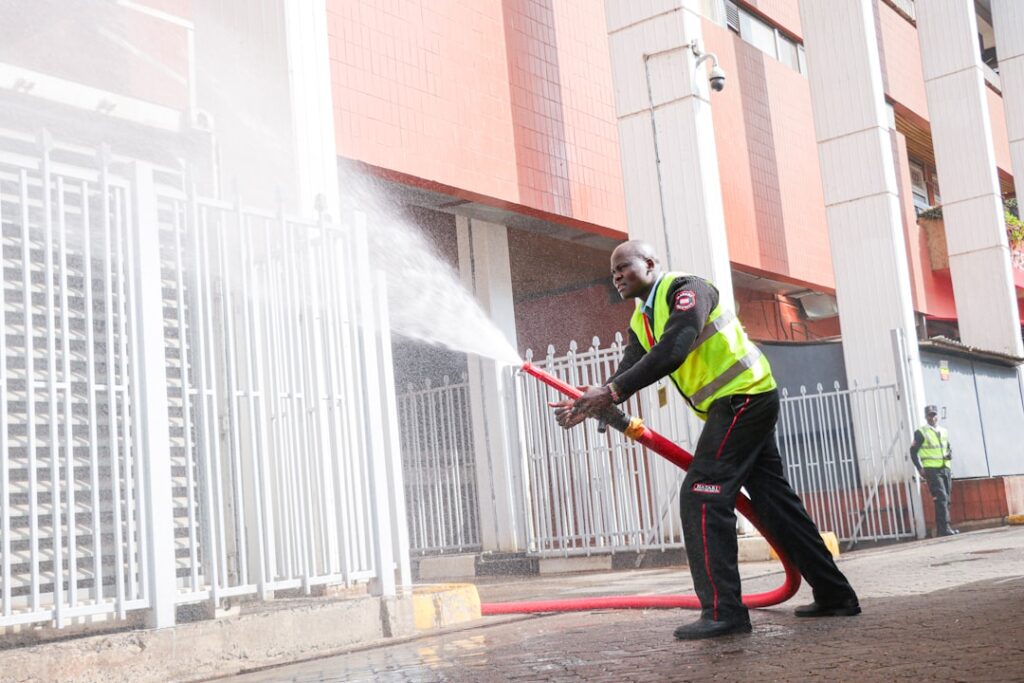
When ordinary washers just push dirt around, stepping up to serious pressure changes what you can clean. A 4000 PSI pressure washer sits in professional territory, stripping paint, blasting caked concrete, and cleaning large surfaces fast. This guide explains what this pressure level handles, why nearly all such units are gas-powered, how to choose one, and how to use it safely.
- What 4000 PSI Actually Cleans
- Why 4000 PSI Units Are Gas-Powered
- Don’t Forget GPM
- Pump Types Matter
- Typical Costs
- Understanding Nozzle Tips
- Surface Cleaner Attachment
- Safety Is Critical at This Pressure
- Maintenance
- Hoses, Fittings, and Extensions
- Gas Engine Care and Fuel
- Is It the Right Choice for You?
- Engine Size and Power
- Detergents and Two-Step Cleaning
- Avoiding Surface Damage
- Maintenance Schedule
- Final Takeaway
What 4000 PSI Actually Cleans
PSI (pounds per square inch) measures the force of the water stream. At 4,000 PSI you are firmly in commercial and prosumer territory, capable of:
- Stripping old paint and coatings from concrete and metal
- Removing stubborn oil stains, gum, and tire marks from driveways
- Cleaning heavy equipment, trailers, and farm machinery
- Prepping surfaces for sealing or repainting
This much power is overkill for washing a car or delicate siding, where it will strip paint and gouge wood. Reserve it for hard, durable surfaces and heavy grime.
Why 4000 PSI Units Are Gas-Powered
Electric pressure washers top out around 2,000 to 2,300 PSI because household circuits cannot supply enough power for more. To reach 4,000 PSI you need a gas engine, typically a 270cc to 420cc Honda, Kohler, or similar engine driving a triplex pump. That means fuel, oil changes, and outdoor-only operation because gas engines emit carbon monoxide.
Don’t Forget GPM
PSI grabs headlines, but cleaning speed depends just as much on GPM (gallons per minute). Cleaning power is often expressed as cleaning units, PSI multiplied by GPM. A 4,000 PSI machine typically flows 3.5 to 4.0 GPM, giving 14,000 to 16,000 cleaning units. Higher GPM rinses loosened dirt away faster and covers more area, so do not fixate on PSI alone.
Pump Types Matter
At this pressure, pump quality determines lifespan.
- Triplex plunger pumps: The commercial standard, with three ceramic plungers, rebuildable and rated for hundreds of hours of use.
- Axial cam pumps: Found on lower-cost units, adequate for occasional use but shorter-lived under heavy duty.
For frequent use, a triplex pump is worth the extra cost and pays off in durability.
Typical Costs
A quality 4,000 PSI gas pressure washer generally runs $600 to $1,500, with premium commercial units and hot-water versions climbing higher. Cheaper models with axial pumps exist but sacrifice pump life. Budget also for nozzles, a surface cleaner attachment ($60 to $200), and fuel and oil for maintenance.
Understanding Nozzle Tips
The nozzle shapes the stream and dramatically changes what the pressure does. Standard color-coded tips include:
- Red (0 degrees): A pinpoint jet, extremely aggressive and rarely needed; can damage surfaces and injure.
- Yellow (15 degrees): Stripping paint and heavy grime.
- Green (25 degrees): General cleaning of concrete and equipment.
- White (40 degrees): Wider, gentler fan for larger surfaces.
- Black (soap): Low-pressure detergent application.
Start with a wider tip and move closer or narrower only as needed to avoid damage.
Surface Cleaner Attachment
For flat concrete like driveways and patios, a rotating surface cleaner attachment is transformative. It houses spinning nozzles under a shroud, cleaning a wide swath evenly without the zebra-striping that a single wand leaves. On a 4,000 PSI machine, a surface cleaner turns an all-day driveway job into an hour.
Safety Is Critical at This Pressure
Four thousand PSI is powerful enough to cause serious injury. Injection injuries, where the stream punctures skin and drives water and debris inside, require immediate emergency care even if the wound looks small.
- Never point the wand at people, pets, or yourself, even briefly
- Never use the red 0-degree tip on painted surfaces or near people
- Wear eye protection, gloves, boots, and long pants
- Brace for the wand’s kickback, which is significant at high pressure
- Run gas engines outdoors only, never in a garage, to avoid carbon monoxide
Maintenance
Keep a high-pressure machine running with regular care. Change the engine oil per the manual, check and change the pump oil, use a pump saver before storage, and drain or winterize the pump in freezing climates to prevent cracking. Clean the inlet filter to protect the pump from grit, and inspect the high-pressure hose for wear since a burst hose at 4,000 PSI is dangerous.
Hoses, Fittings, and Extensions
At this pressure, the accessories must be rated to match the machine. Use only high-pressure hose rated well above 4,000 PSI, ideally with a steel-braided or wire-reinforced core, and inspect it before each use since a burst hose at this pressure is dangerous. Quick-connect fittings should be stainless or brass rated for the pressure. For reaching second stories or roofs, a telescoping lance or extension wand keeps you on the ground, but longer wands increase the kickback you must control. A hose reel keeps 50 feet of stiff high-pressure hose organized and extends its life by preventing kinks.
Gas Engine Care and Fuel
The engine needs the same attention as any small gas motor. Use fresh gasoline with no more than 10 percent ethanol, and add stabilizer if the machine will sit. Check the oil before every use and change it on schedule, since these engines run hard under continuous load. Keep the air filter clean so the engine breathes freely, and replace the spark plug annually. Before winter, either stabilize the fuel and run the engine briefly or drain the tank and carburetor, because stale fuel gumming the carburetor is the most common reason a stored pressure washer will not start in spring.
Is It the Right Choice for You?
Choose this power level if you regularly clean concrete, strip coatings, or wash heavy equipment. For typical homeowner tasks like cars, decks, and siding, a 2,000 to 3,000 PSI machine is safer and more appropriate. Buying more pressure than you need increases the risk of damaging surfaces and the cost of ownership.
Engine Size and Power
Reaching 4,000 PSI at usable flow demands a substantial engine. Expect a 270cc to 420cc gas engine, often a Honda GX series, Kohler Command, or comparable commercial engine producing 8 to 13 horsepower. Larger engines maintain pressure and flow without bogging under load, which matters when running a surface cleaner that demands high volume. Cheaper units may pair a smaller engine with an axial pump and struggle to hold rated pressure. Look for a reputable commercial engine, since it drives the pump thousands of times per minute and its reliability determines the machine’s working life.
Detergents and Two-Step Cleaning
High pressure alone does not lift grease; chemistry does much of the work. Apply detergent through the low-pressure black soap nozzle, let it dwell for several minutes without drying, then rinse with a higher-pressure tip. This two-step approach cleans faster and lets you use less pressure, protecting surfaces. Use detergents formulated for pressure washers, and choose a degreaser for oily concrete or a house-wash blend for siding. Never run bleach or harsh chemicals through the pump unless the manufacturer approves it, as they can attack seals.
Avoiding Surface Damage
At 4,000 PSI the risk of damage is real, so technique matters as much as power. Keep the nozzle moving and hold it at a consistent distance, usually 6 to 12 inches from hard surfaces and farther from anything delicate. Test in an inconspicuous spot first. Concrete can be etched, wood can be furred and gouged, mortar can be blasted out of brick joints, and vinyl siding can be cracked or driven full of water. When in doubt, back off, widen the nozzle angle, and increase distance rather than blasting at close range.
Maintenance Schedule
Treat a high-pressure machine like the commercial equipment it is. Check the engine oil before every use and change it per the manual, often after the first 20 hours then every 100. Change the pump oil on schedule, typically every 200 to 300 hours. Run a pump saver or antifreeze before any freezing weather, since a cracked pump is a costly repair. Clean the water inlet filter regularly to keep grit out of the pump, and inspect the high-pressure hose and quick-connects for wear, replacing any hose showing bulges or leaks.
Final Takeaway
A 4000 PSI pressure washer delivers professional-grade cleaning for concrete, paint stripping, and heavy equipment, and its power demands a gas engine, a quality pump, and real respect for safety. Balance PSI with GPM, use the right nozzle for each surface, add a surface cleaner for flat work, and winterize the pump. Used correctly, this level of pressure turns the toughest cleaning jobs into quick work.