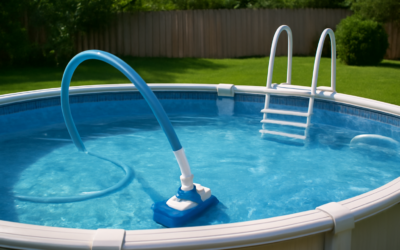
An above ground pool vacuum robot does the one chore nobody enjoys: scrubbing dirt, sand, and leaf debris off the pool floor without you standing there pushing a manual vac head around. Unlike suction- or pressure-side cleaners that tie into your filter and pump, a robotic cleaner runs on its own low-voltage motor, filters the water itself, and drops back into the pool when it is done. For a round or oval above ground pool, that independence is the whole point.
This guide covers how these robots work, the difference between cordless and corded units, what a good one costs in 2026, and the maintenance habits that keep the motor and filter running for years. If you have been vacuuming by hand every weekend, a robot pays for itself in reclaimed Saturdays.
- How a Robotic Pool Cleaner Works
- Cordless vs. Corded Models
- Runtime, Charging, and Coverage
- Matching a Robot to Your Pool Size and Shape
- Getting the Best Cleaning Results
- Robotic vs. Suction and Pressure Cleaners
- Battery Care for Cordless Models
- Choosing Between Budget and Premium Models
- Maintenance and Common Problems
- Is It Worth It?
How a Robotic Pool Cleaner Works
A robotic cleaner is a self-contained unit with its own drive motor and a pump that pulls water through an internal filter basket or cartridge. As it crawls the pool floor on rubber tracks or wheels, it traps sand, silt, algae flakes, and leaves inside the unit rather than sending them to your pool’s main filter. Because it does not rely on your pump, it does not add strain to your filtration system or shorten cartridge life.
Most above ground models are floor-and-cove cleaners. They scrub the flat bottom and the curved transition where the floor meets the wall, but unlike premium inground robots, many do not climb straight walls or handle the waterline. For a typical above ground pool, floor cleaning is 90 percent of the work anyway.
Cordless vs. Corded Models
The biggest decision is cord versus battery. Corded robots plug into a wall outlet through a low-voltage transformer, giving you unlimited runtime, but you have to manage a floating cord that can tangle in tighter pools. Cordless models run on a rechargeable lithium battery, drop in without any cord to snag, and have become the default choice for above ground owners.
- Cordless (e.g., Aiper Seagull SE, Beatbot): 60 to 90 minutes runtime, no cord, easy drop-in cleaning
- Corded (e.g., Dolphin E10): unlimited runtime, slightly stronger suction, cord management required
The Aiper Seagull SE is the value benchmark for above ground pools at roughly $250 to $350, cleaning pools up to about 860 square feet on a single charge. The Dolphin E10 is the corded standard at $400 to $500 and is a workhorse for pools that see heavy debris.
Runtime, Charging, and Coverage
Cordless runtime typically lands between 60 and 90 minutes, which is enough to cover a 24-foot round pool once or twice. Recharge time runs 2.5 to 5 hours depending on the battery. That cadence suits most owners: run the robot in the morning, and the pool is spotless by lunch.
Coverage depends on the navigation system. Cheaper units use random-pattern movement that eventually covers the floor through repetition. Higher-end models use gyroscope or path-planning navigation that maps the floor in efficient lanes, finishing faster and missing fewer spots. For a simple round pool, random navigation is perfectly adequate.
Matching a Robot to Your Pool Size and Shape
Above ground pools range from 12-foot round starter pools to 18-by-33-foot oval pools, and the robot needs to match. Check three specs before buying:
- Rated pool size: confirm the model covers your square footage on one cycle
- Floor type: soft vinyl liners need rubber tracks or brushes that will not scuff
- Depth: most above ground robots are rated to about 6.5 feet, which covers nearly all above ground pools
If you have a flat-bottom pool, almost any model works. Pools with a deeper center hopper benefit from a robot with stronger climbing traction so it does not get stuck in the transition.
Getting the Best Cleaning Results
A robot cleans debris that has already settled, so timing matters. Run it after the water has been still for a few hours, ideally in the morning before swimmers stir up the floor. Skim floating leaves first, because a surface skimmer handles those far better than a floor robot.
Keep your water chemistry balanced too. A robot removes physical debris but does nothing for cloudy water caused by chemistry problems. Maintain free chlorine at 1 to 3 ppm and pH between 7.2 and 7.6, and the robot handles the rest.
- Run the cleaner two to three times a week in swim season
- Empty the filter basket after every cycle for full suction
- Store the unit out of direct sun to protect the battery and seals
Robotic vs. Suction and Pressure Cleaners
Above ground owners have three cleaner types to choose from, and understanding the difference clarifies why robots have taken over. Suction-side cleaners tie into your skimmer and use the pool pump’s suction to crawl and collect debris, sending it to your filter. Pressure-side cleaners connect to the return line and use water pressure to drive the unit and trap debris in their own bag. Both depend entirely on your pump and plumbing.
Robotic cleaners are independent. They run on low-voltage power, filter debris internally, and add no load to your pump or filter. That independence is the whole appeal for above ground pools, where the plumbing is simpler and the pump is often smaller. A robot also does not shorten your cartridge life or force you to run the pump longer.
- Robotic: self-powered, filters internally, no pump strain, highest up-front cost
- Suction-side: cheaper, but loads your filter and needs adequate pump flow
- Pressure-side: good debris capture, but may need a booster pump
Battery Care for Cordless Models
If you buy a cordless robot, the lithium battery is the component that determines how many seasons you get. Treat it like any lithium tool battery. Never store it fully drained over winter, and never leave it baking in direct sun on a hot pool deck, since heat is the fastest way to degrade a cell.
Charge the unit after each cleaning cycle rather than letting it sit empty, and when you close the pool for the season, store the robot indoors with the battery at roughly half charge in a spot that stays between 40 and 75 degrees F. Under those conditions, expect three to five seasons before capacity drops enough to shorten cleaning cycles. When runtime falls noticeably, many models let you replace just the battery pack rather than the whole unit.
Choosing Between Budget and Premium Models
The price spread between a $250 entry robot and a $600-plus premium unit comes down to a few features. Cheaper models use random navigation and clean the floor only. Premium units add gyroscope path-planning for faster, more complete coverage, wall-climbing and waterline scrubbing, app control with scheduling, and larger batteries for bigger pools.
For a simple round or oval above ground pool with a flat vinyl floor, the budget tier is genuinely all most owners need, since floor debris is the main problem. Spend up only if you want wall and waterline cleaning, app scheduling, or coverage for a larger pool. Buying more robot than your pool requires is the most common way people overspend here.
Maintenance and Common Problems
The number one killer of pool robots is a neglected filter. When the basket clogs, suction drops and the motor works harder, which drains the battery and shortens its life. Rinse the filter with a garden hose after each run, and deep-clean it monthly to clear fine silt from the mesh.
For cordless units, battery care mirrors any lithium tool: do not store the robot fully dead over winter, and keep it out of freezing temperatures. Bring it indoors when you close the pool. If your robot stops climbing the cove or stalls in one spot, check the tracks for a trapped twig and inspect the brushes for wear; replacement brush kits usually run $20 to $40.
Is It Worth It?
For most above ground owners, yes. Hand-vacuuming a pool takes 20 to 40 minutes every weekend and still misses corners. An above ground pool vacuum robot does the same job better while you do something else, and a $250 to $500 unit typically lasts three to five seasons with basic care. Buy a model rated for your pool size, keep the filter clean, and store it properly in winter, and you will wonder how you ever managed the manual way.