An accent wall is the rare home upgrade that costs less than a nice pizza night and completely changes how a room feels. For the price of a quart of paint and an afternoon, you can add depth, define a space, or inject the color you have been afraid to commit to across a whole room. The best accent wall designs with paint go far beyond simply painting one wall a darker shade, from crisp geometric shapes to soft arches and painted “headboards.” This guide covers the standout designs, how to choose the right wall, and the techniques that separate a sharp result from a sloppy one.
Part of our Paint & Walls guide — explore the full guide →
Choosing Which Wall to Accent
Before you pick a design, pick the right wall, because the wrong one undercuts the whole effect. The strongest accent wall is usually the one your eye lands on first when you enter the room or the wall behind the room’s main feature: the bed, the sofa, the fireplace, or the TV. That natural focal point is what an accent wall is meant to amplify.
Avoid accenting a wall broken up by lots of windows, doors, or an irregular shape, since the interruptions fragment the design. A solid, unbroken wall gives paint the clean canvas it needs. In an open floor plan, an accent wall can also help visually separate a dining nook from a living area.
Classic Solid Color Block
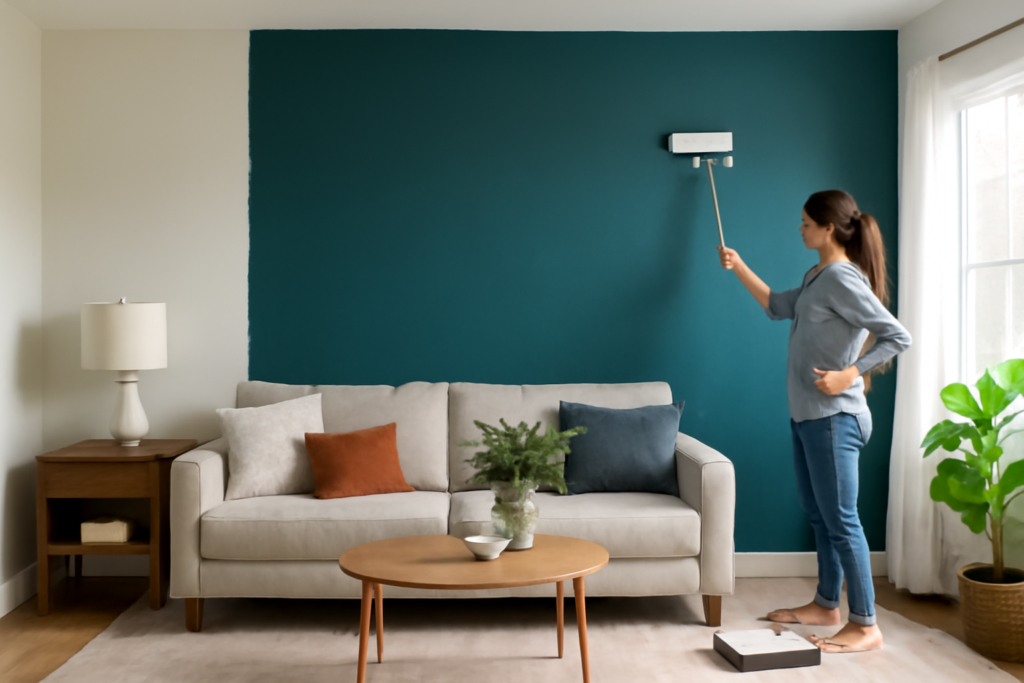
The simplest design is still one of the best. Painting one wall a bold or deep color while the others stay neutral creates instant contrast and depth. This works especially well with rich, saturated shades that would overwhelm a whole room, deep navy, forest green, terracotta, or charcoal.
The trick is choosing a color that relates to the rest of your palette rather than clashing with it. Pull the accent color from something already in the room, a throw pillow, a rug, artwork, so the wall feels intentional. Solid color blocking suits nearly any room and is the most beginner-friendly place to start.
Geometric and Color-Block Designs
For more visual interest, geometric designs use painter’s tape to create crisp shapes: triangles, diamonds, chevrons, or blocks of color. Two or three coordinating colors arranged in a pattern give a modern, custom look that reads far more expensive than the materials cost.
- Half-and-half color blocking paints the lower two-thirds of the wall one color and the top a lighter shade, grounding the room and raising the perceived ceiling.
- Geometric peaks use taped triangles or mountain shapes, popular in nurseries and playrooms.
- Grid or panel effects mimic wainscoting with nothing but paint and careful taping.
The entire success of a geometric design lives in clean lines, which comes down to your tape technique. More on that below.
The Painted Arch
One of the most popular modern designs needs no molding at all: a large painted arch. You paint a tall half-circle-topped shape on the wall, often behind a bed, a plant, or a console table, to frame the object like built-in art. It adds softness and a designer touch that photographs beautifully.
To lay out an arch, mark the width and height, then use a pencil tied to a string as a compass, or trace a large round object, to draw the curved top. Painter’s tape flexes enough to follow a gentle curve if you make small relief cuts. A painted arch is proof that a design can feel high-end while costing almost nothing.
Ombre and Textured Effects
If you want something softer than hard lines, an ombre wall blends one color gradually into another, from deep at the bottom to pale at the top, or between two hues. It takes patience and a large brush or sponge to blend the transition while the paint is still wet, but the dreamy gradient is worth the effort in a bedroom or nursery.
Other textured looks include a limewash or color-wash finish that leaves soft, cloudy movement, and a strié or dragged effect using a dry brush. These techniques hide wall imperfections well and add an artisanal, plaster-like depth that flat paint cannot match.
Getting Crisp, Professional Lines
No matter the design, the difference between amateur and professional results is bleed-free edges. Here is the pro method:
- Apply quality painter’s tape and burnish the edge firmly with a putty knife or your fingernail so no gaps remain.
- Seal the tape edge first by painting a thin coat of the base (wall) color over the tape line. Any bleed happens in the base color and stays invisible.
- Let that seal coat dry, then apply your accent color.
- Remove the tape while the final coat is still slightly wet, pulling slowly at a 45-degree angle for the cleanest release.
That seal-coat trick is the single best-kept secret for razor-sharp lines, and it works for geometric shapes, arches, and color blocks alike.
Color and Sheen Choices
Accent walls give you permission to go bolder than you would dare on a whole room, but keep the color connected to your palette. For a calming effect, choose deep blues and greens; for energy and warmth, reach for terracotta, mustard, or plum. In a small room, a dark accent wall on the far wall can actually add depth rather than shrink the space.
Sheen affects the mood. A flat or matte finish gives rich, velvety color that hides flaws, ideal for a moody bedroom accent. Eggshell adds a subtle glow and cleans up better for living areas. Reserve higher gloss for geometric details where you want the shapes to catch the light.
Accent Walls Room by Room
The best design depends heavily on the room. In a bedroom, the wall behind the headboard is the natural canvas, and a calming deep blue, green, or even a soft painted arch frames the bed like art. In a living room, accent the wall behind the sofa or the one holding the fireplace or TV, using a color pulled from your rug or artwork.
Home offices benefit from an accent wall behind the desk, which gives your eyes a resting point and looks sharp on video calls, just avoid making the wall your camera faces too dark. In a dining room, a moody accent adds intimacy for evening meals. Kids’ rooms and nurseries are where playful geometric peaks and cheerful color blocks shine, since the stakes are low and the look is easy to repaint as tastes change. Match the ambition of the design to how the room is used.
Tools and Materials You’ll Need
An accent wall is a low-cost project, and the supply list is short. Gathering everything before you start keeps the momentum going:
- Quality painter’s tape for crisp lines, plus a putty knife to burnish the edges.
- A sample pot or quart of your accent color, one quart covers most single walls in two coats.
- A short-nap roller and an angled sash brush for cutting in corners and edges.
- A level, a pencil, and a tape measure for laying out geometric shapes or an arch.
- A string and pencil to swing a clean curve for arches.
Because you are only painting one wall, the whole project usually costs $15 to $40 in paint and supplies and takes an afternoon, which is what makes accent walls such a satisfying, low-risk upgrade.
Making It Feel Intentional
The final step is styling. An accent wall looks best when the room supports it: art, a headboard, shelving, or a piece of furniture that anchors the wall and confirms it as the focal point. A bare accent wall in the wrong spot can look accidental, while the same color behind a well-styled bed looks designed.
Whether you keep it simple with a single bold color or tape out a striking geometric pattern, accent wall designs with paint deliver more transformation per dollar than almost any other project. Pick the natural focal wall, tie the color to your existing palette, master the seal-coat tape trick, and you will have a custom-looking feature wall by the end of a single weekend.