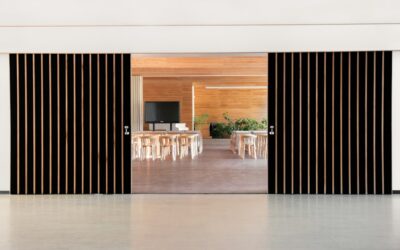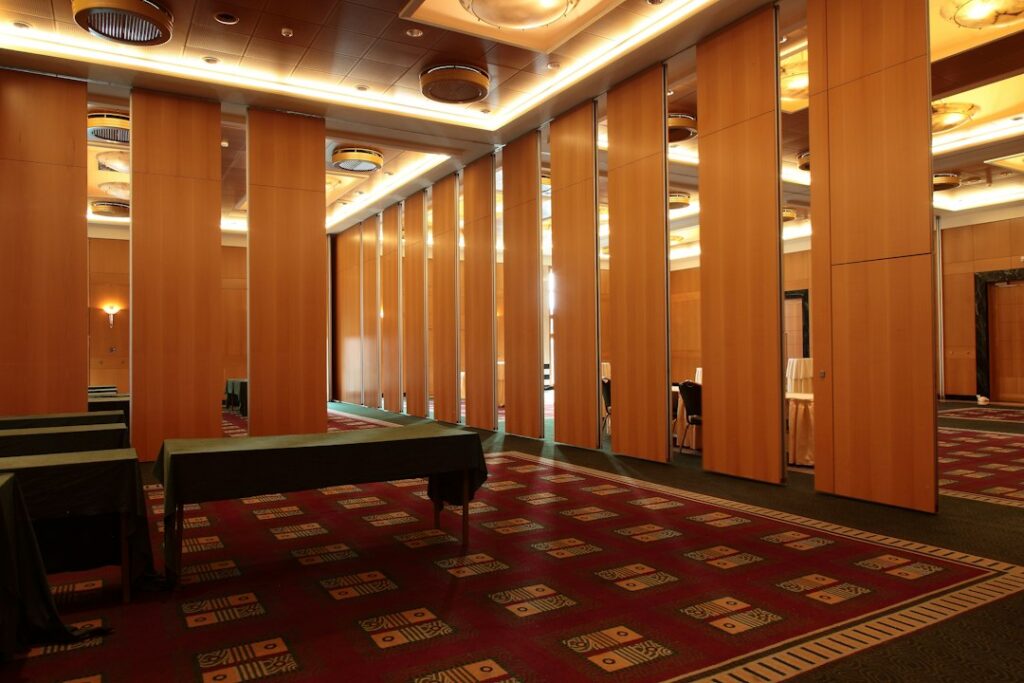
The ability to split one large room into two on demand, then open it back up in seconds, is the kind of flexibility every adaptable home craves. Accordion partition walls deliver exactly that: panels that fold and glide along a ceiling track to divide a space, then collapse compactly against a wall when you want the room whole again. From home offices and playrooms to dining areas and basements, these folding dividers let a single space do double duty without permanent construction.
How Accordion Partition Walls Work
Most accordion partitions hang from a track mounted to the ceiling, with panels connected by hinges that fold like a fan. You slide the wall open or closed along the track, and it stacks neatly at one end when retracted. Floor-supported systems also exist, but top-hung designs are most common in homes because they keep the floor clear.
Panels range from lightweight vinyl and fabric for simple visual separation to heavier wood, laminate, or insulated cores when sound control matters. The track quality and panel weight largely determine how smoothly the wall operates and how well it blocks noise.
Main Types to Consider
- Vinyl/PVC accordion doors: The most affordable, lightweight, and easy to install. Good for visual privacy and budget projects.
- Fabric or vinyl folding partitions: Soft, flexible dividers for offices and casual room splits.
- Wood and laminate panels: More substantial and attractive, suited to dining rooms and living spaces.
- Operable/acoustic partition walls: Heavy, insulated panels with sound seals, used where serious noise blocking is needed.
- Glass accordion walls: Fold-away glass systems that divide while preserving light and sightlines.
What They Cost
Pricing spans a wide range based on material and acoustics. A basic vinyl accordion door costs $100 to $400 and is a true DIY install. Quality folding room dividers in wood or laminate run $500 to $2,000.
Acoustic operable partition walls are a different category entirely, often $50 to $150 per square foot installed, because of their insulated cores, sound seals, and heavy-duty tracks. A 10-foot-wide by 8-foot-tall acoustic wall could land between $4,000 and $12,000 professionally installed.
Soundproofing Reality
Don’t expect a budget accordion door to block much noise, lightweight vinyl panels stop sightlines but let conversation pass right through. Sound attenuation is measured by an STC (Sound Transmission Class) rating, where higher numbers mean better blocking.
A simple vinyl partition might rate STC 20 to 25 (you’ll hear normal speech clearly through it), while a true acoustic operable wall can reach STC 40 to 50, comparable to a solid interior wall. If privacy and quiet matter, such as separating a home office during calls, invest in an acoustic-rated system with floor sweeps and perimeter seals.
Installation Considerations
The ceiling track is the heart of the system, so it must anchor into solid framing, joists or blocking, not just drywall, to carry the panel weight. For heavier wood and acoustic walls, you may need a structural header, which is where professional installation becomes worth the cost.
- Measure the opening width and height precisely; track length and panel count depend on it.
- Confirm the ceiling can support the panel weight and locate framing for anchoring.
- Mount the track level; even a slight slope makes panels drift open or closed.
- Hang and align the panels, then test the glide and any latching hardware.
Common Uses Around the Home
The flexibility of accordion partitions makes them useful in rooms that need to flex throughout the day. In an open-plan home, they can carve a quiet office out of a corner of the living room during work hours, then fold away for evening family time. Basements often use them to separate a media zone from a play area or laundry.
- Home office: Acoustic panels create call privacy in a shared space.
- Guest room conversion: Section off part of a den when visitors stay over.
- Playroom: Contain toys and noise without a permanent wall.
- Dining and entertaining: Open the wall for parties, close it for everyday use.
- Closet and storage screening: Hide a pantry, laundry nook, or open shelving.
Because they’re removable and often renter-friendly (lighter models need only a track), they suit apartments and homes where permanent walls aren’t practical or allowed.
Maintenance and Longevity
An accordion partition lasts for years with minimal upkeep, but the track and hardware need occasional attention. The most common issue is a panel that drags or sticks, usually from a dirty track or worn rollers. Vacuum the track regularly and apply a dry silicone lubricant to the glides once or twice a year for smooth operation.
Wipe vinyl and laminate panels with a damp cloth and mild cleaner; avoid harsh solvents that can cloud or crack the surface. For acoustic walls, inspect the floor sweeps and perimeter seals periodically, since worn seals are the first thing to degrade sound performance. Tighten any loose track fasteners, and check that the anchoring into framing remains solid, especially on heavier wood and acoustic systems. With this light routine, even a frequently operated partition glides reliably for a decade or more.
Choosing the Right Partition for Your Space
Start with your real goal. If you only need to visually separate a play area or hide clutter, an inexpensive vinyl folding door does the job. If you’re carving a guest room or quiet office out of an open plan and need genuine acoustic separation, budget for an STC-rated operable wall and professional installation.
Measure carefully, match the panel material to how often the wall will move and how much noise it must block, and confirm your ceiling can carry the load. Chosen well, accordion partition walls give a single room the versatility of two, opening and closing your floor plan to fit whatever the day demands.
One final consideration is how often the wall will actually move. If you’ll open and close it daily, invest in quality rollers and a smooth track so the operation stays effortless and quiet over years of use. If it’s mostly going to stay closed and only open occasionally, you can prioritize panel appearance and acoustics over the smoothest possible glide. Measure twice, confirm your ceiling can carry the load, and match the panel material to both your privacy needs and your decor, and a folding partition becomes one of the most flexible upgrades you can make to an open floor plan.