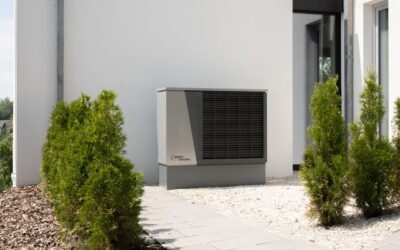
Here’s the counterintuitive part that trips people up: an air source heat pump can pull usable heat out of freezing outdoor air. It doesn’t burn fuel to make warmth; it moves existing heat from outside to inside, then reverses in summer to cool your home. That single machine replaces both a furnace and an air conditioner, which is why homeowners across the country are switching.
An air source heat pump can deliver two to four units of heat for every unit of electricity it consumes, a level of efficiency no gas furnace can touch. But the payoff depends on picking the right model, sizing it correctly, and understanding how it behaves in your climate. Let’s dig in.
How an Air Source Heat Pump Moves Heat
Inside the outdoor unit, refrigerant absorbs heat from the surrounding air, even at low temperatures, because the refrigerant boils at a temperature well below freezing. A compressor pressurizes that vapor, raising its temperature, and the indoor coil releases the heat into your home. A reversing valve flips the cycle in summer so the same equipment rejects heat outdoors and cools the house.
Because it’s transferring heat rather than generating it, the process is remarkably efficient. Modern variable-speed compressors ramp up and down to match demand instead of cycling on and off, which keeps temperatures steady and quiet.
Ducted, Ductless, and Mini-Split Options
You have three main configurations depending on your home. Match the system to your existing infrastructure and layout:
- Ducted central: Uses your existing ductwork, replacing the furnace and AC with a single system. Simplest swap for a home already ducted.
- Ductless mini-split: Wall-mounted indoor heads connect to an outdoor unit via small refrigerant lines. Perfect for additions, garages, or homes without ducts.
- Multi-zone mini-split: One outdoor unit feeds several indoor heads, each with its own thermostat, so you heat only the rooms in use.
Ductless systems avoid the 20 to 30 percent energy loss that leaky ducts cause, which is a real advantage in older homes. Ducted systems keep the clean look of hidden vents if you already have good ductwork.
Reading SEER2, HSPF2, and COP Ratings
Three numbers tell you how efficient a unit really is. Don’t buy on brand alone; buy on the ratings.
- SEER2: Seasonal cooling efficiency. Look for 16 or higher; premium units hit 20 to 30.
- HSPF2: Seasonal heating efficiency. Aim for 8.1 or higher, with top cold-climate models above 10.
- COP: Coefficient of performance at a given outdoor temperature. A COP of 3 means three units of heat per unit of electricity.
ENERGY STAR certification is the easiest shortcut. A certified unit meets minimum thresholds and usually qualifies for rebates, which matters when you’re chasing incentives.
Cold-Climate Performance
The old knock on heat pumps was that they quit in the cold. That’s outdated. Cold-climate models with variable-speed inverter compressors now maintain full heating capacity down to 5°F and keep producing usable heat at minus 15°F or lower. Manufacturers like Mitsubishi Hyper-Heat, Fujitsu, and Daikin publish capacity curves showing exactly what they deliver at 5°F.
In genuinely brutal climates, many homeowners run a dual-fuel setup: the heat pump handles most of the season, and a gas furnace or electric backup kicks in below a set balance point, often around 25 to 35°F. It gives you efficiency for 90 percent of the winter and a safety net for the deep freeze.
Installation Costs and What Drives Them
A ductless single-zone mini-split runs $3,500 to $6,000 installed. A multi-zone system with three or four heads lands between $8,000 and $16,000. A ducted central heat pump for a whole house typically costs $8,000 to $18,000, more if you need duct repairs or an electrical upgrade.
Cost drivers include the number of zones, the SEER2/HSPF2 rating, cold-climate capability, and whether your electrical panel can handle the load. Get at least three bids and confirm the installer runs a Manual J load calculation rather than sizing by rule of thumb. An oversized unit short-cycles and wastes the efficiency you paid for.
Rebates and Tax Credits
The financial case improved sharply with recent federal incentives. The Energy Efficient Home Improvement Credit returns 30 percent of the cost of a qualifying heat pump, up to $2,000 per year. On top of that, state and utility rebates frequently add $1,000 to $8,000, and income-qualified households may access point-of-sale rebates through the Home Energy Rebates programs rolling out state by state.
Stack these correctly and a $12,000 system can net out closer to $6,000 to $8,000. Check the ENERGY STAR product finder to confirm your exact model qualifies before you sign, because ineligible units leave thousands on the table.
Operating Costs, Maintenance, and Lifespan
The purchase price gets the attention, but the money that matters most over a heat pump’s life is what it costs to run and keep running. This is where the technology earns its reputation, and where a little routine care pays off in years of reliable service. Weigh the monthly operating savings and the modest upkeep against your current system before you decide, because the long-term math often looks very different from the up-front sticker.
Operating Costs Versus Furnaces and AC
The reason utilities and states push heat pumps so hard is the operating math. Because the machine moves heat rather than burning fuel, its effective efficiency, expressed as a COP of 2 to 4, means it delivers two to four times the heat energy per dollar of electricity compared to electric resistance heating, which sits at a COP of 1.
Against fossil fuels, the picture depends on local rates, but the trend is clear. Homes replacing electric baseboard, propane, or heating oil almost always see lower bills, sometimes cut in half. Homes with cheap natural gas may see roughly comparable heating costs, but they still gain high-efficiency cooling from the same unit that replaces a separate AC.
- Replacing electric resistance: Typical heating cost drops 50 to 60 percent.
- Replacing propane or oil: Often 30 to 50 percent savings depending on fuel prices.
- Replacing natural gas: Roughly break-even on heating, with efficient cooling as a bonus.
Run the numbers with your actual electricity rate in cents per kilowatt-hour and your current fuel cost before deciding. The fastest payback goes to homes escaping expensive delivered fuels like oil and propane, where annual heating costs can drop by a thousand dollars or more. Track your first full year of bills against the prior year to see the real number for your home, since local rates and your envelope matter more than any general estimate.
Maintenance and Expected Lifespan
A heat pump asks for modest but real upkeep to hit its 15-to-20-year lifespan. Because it runs year-round for both heating and cooling, it logs more hours than a furnace or AC that each work half the year, so staying on top of maintenance matters.
The homeowner tasks are simple: change or clean the filters every one to three months, keep the outdoor unit clear of leaves, snow, and shrubs by at least 18 to 24 inches, and gently rinse the outdoor coil each season. Beyond that, an annual professional service checks refrigerant charge, electrical connections, and the defrost cycle, and typically runs $100 to $200.
- Monthly: Inspect and clean or replace air filters.
- Seasonally: Clear debris and snow from the outdoor unit; rinse the coil.
- Annually: Professional tune-up of refrigerant, electrical, and defrost function.
Neglecting the filters is the single most common cause of poor performance and premature compressor wear. A clogged filter starves airflow, forcing the system to work harder for less output, so that $20 filter is the cheapest insurance you can buy.
Is It Right for Your Home?
An air source heat pump makes strong sense if you’re replacing aging AC and heating equipment at the same time, want lower operating costs, or are electrifying to cut carbon. Homes with high electricity rates and cheap natural gas see slower payback, while homes heating with oil, propane, or electric resistance see the fastest returns, often three to seven years.
Before committing, insist on a proper load calculation, verify cold-climate specs if you have real winters, and line up your rebates. Also think about backup and controls from the start. In colder regions, decide whether you want a dual-fuel setup or electric-resistance backup heat, and pair the system with a compatible smart thermostat that manages the balance point automatically. A well-sized, well-installed air source heat pump quietly heats and cools your home for 15 to 20 years while cutting energy use, and that combination is hard to beat.