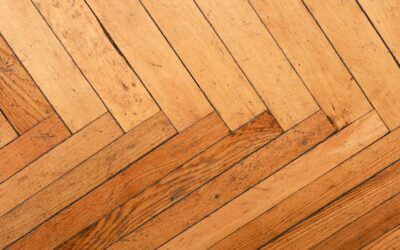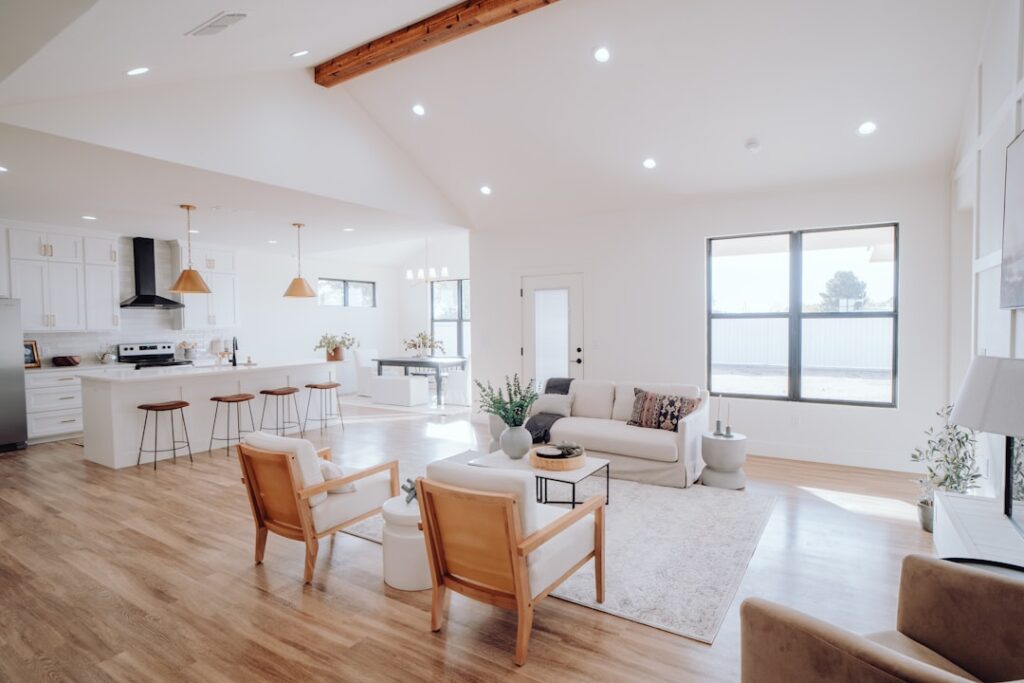
Strip away the marketing language and “allwood” means exactly what it sounds like — a flooring product that’s solid wood from top surface to bottom, with no plywood layers, plastic cores, or engineered substrates. Allwood flooring includes traditional 3/4-inch solid hardwood, wide-plank reclaimed timber, and the European-import-style 5/8-inch and 1-inch solid planks that have surged in popularity over the last decade. It’s the original flooring product, refined over 150 years, and it remains the gold standard when budget and conditions allow.
What Counts as Allwood
The category strictly means solid wood throughout — no veneer or plywood layers. Common formats include 3/4-inch by 2 1/4-inch traditional strip flooring, 3/4-inch by 3 1/4 to 5-inch plank flooring, and wide-plank 3/4-inch by 6 to 12-inch boards. European specifications also produce 5/8-inch by 7 to 9-inch and 1-inch by 8 to 12-inch solid oak. All are nailed or glued directly to wood subfloors.
Engineered flooring with a hardwood veneer on plywood backing is sometimes confusingly called “allwood” by marketers — technically the entire product is wood, but the multi-ply construction performs differently and shouldn’t be confused with true solid plank.
Species Selection and Hardness
The species drives almost everything: appearance, durability, dimensional stability, and price. Common picks ranked by Janka hardness:
- Brazilian walnut (ipe): 3,684 Janka — extremely hard, dark, dense
- Brazilian cherry (jatoba): 2,350 — very hard, deep red-brown
- Hickory: 1,820 — hard, dramatic color variation
- Hard maple: 1,450 — uniform, light, slightly cool tone
- White oak: 1,360 — workhorse, neutral, stains beautifully
- Red oak: 1,290 — open grain, warm undertone
- Black walnut: 1,010 — soft, rich brown, dents easily
- Black cherry: 950 — soft, warm, ambers dramatically with age
- White pine: 380 — softest, character-rich, country aesthetic
Pricing Across the Category
Budget allwood at the Home Depot or Lumber Liquidators tier runs $3.50 to $5.50 per square foot in material for 3/4-inch red oak or maple strip in 2 1/4-inch or 3 1/4-inch widths. Mid-market specialty products from Bruce, Bellawood, Carlisle, and Mullican run $5.50 to $9.50 per square foot for white oak and hickory in plank widths up to 7 inches. Premium European-import wide plank from Lauzon, Provenza, Hallmark, and Mirage lands $8.50 to $14.50 per square foot.
Installation labor: $3.50 to $6.50 per square foot for nail-down install over plywood subfloor. Site-finishing with stain and three coats of Bona Traffic HD adds $3 to $5 per square foot. Reclaimed and exotic species push installed totals to $18 to $35 per square foot.
Why Allwood Still Wins on Longevity
Solid hardwood is the only flooring category that can be sanded and refinished 4 to 6 times over its service life. Each sanding removes 1/32 to 1/16 inch of surface, allowing dent repair, stain refresh, and total color changes. A well-built solid oak floor installed in 1925 can still be in service today after 5 sanding cycles — engineered products typically allow 1 to 2 refinishes before the veneer wears through.
This refinishing capability is the structural argument for spending more upfront. A solid hardwood floor that lasts 100 years at $8.50 per square foot installed amortizes at $0.085 per year per square foot. Any other category will be replaced 3 to 5 times in the same period.
Where Solid Wood Cannot Go
Two non-negotiable limitations. First, below-grade installations. Solid hardwood cannot tolerate the moisture environment of basements regardless of how well the basement is finished — even small moisture cycling causes cupping, crowning, and gapping. Engineered hardwood or LVP belongs below grade.
Second, slabs at grade. While theoretically you can glue solid plank to a slab, the failure rate is high enough that most manufacturers void warranties for slab installations. The slab transmits moisture vapor in volumes that solid wood can’t accommodate. Engineered hardwood with appropriate moisture-rated underlayment is the right product for any concrete subfloor.
Nail-Down Installation Specifics
Standard install method is blind-nailed through the tongue with a Powernail 50P or Bostitch MIIIFN cleat gun using 2-inch nails at 8 to 10 inches on center. Planks 5 inches wide and above benefit from a glue-assist with Bostik BEST or Sika AcouBond polyurethane adhesive to control seasonal movement. Planks 8 inches and wider almost always require full glue plus nailing.
Subfloor: 3/4-inch tongue-and-groove plywood or OSB over joists 16 inches on center. Tolerance: 3/16 inch over 10 feet. Acclimate planks 7 to 14 days at room temperature and 35-55 percent RH before install. Expansion gaps: 3/4 inch at all perimeter walls, covered by shoe molding or quarter-round.
Finish Options for Site-Finished Floors
Three finish families dominate. Waterborne polyurethane (Bona Traffic HD, Loba 2K Supra, Pallmann Pall-X 96) is the modern standard — fast curing, low VOC, excellent durability, slight color enhancement. Oil-based polyurethane (DuraSeal Quick Dry, Minwax Super Fast-Drying) builds more amber color over time and offers slightly deeper grain enhancement but takes longer to cure and emits significant VOCs.
Hardwax oils (Rubio Monocoat, Pallmann Magic Oil 2K, Osmo Polyx) penetrate the wood rather than building a surface film. The look is matte, natural, and easy to spot-repair, but requires more frequent maintenance — a fresh coat every 3 to 5 years in living areas.
Climate and Care Realities
Solid hardwood moves with humidity. A 100-foot run of 5-inch oak plank can expand and contract over 1 inch between dry winter (25 percent RH) and humid summer (65 percent RH). Without climate control maintaining 35-55 percent RH year-round, expect cupping in summer and gapping in winter. A whole-house humidifier in heating season and HVAC dehumidification in cooling season are basically required.
Care is straightforward: sweep or vacuum twice weekly, damp-mop monthly with Bona Pro Series cleaner. Felt pads on every furniture leg. Walk-off mats at exterior doors. Avoid water-soaked mops, steam mops, and acrylic floor polishes that build up haze over time.
Choosing the Right Allwood Floor
Match species to the use case: white oak for general living spaces, hickory for high-traffic homes with dogs and kids, walnut for formal rooms where you want depth and warmth, maple for clean modern aesthetics, reclaimed for character-rich historic homes. Choose plank width to match the room — 3 to 4 inches in small rooms, 5 to 7 inches in larger spaces, 8 inches plus in great rooms with high ceilings.
Allwood flooring rewards homeowners who plan to stay 10 or more years and who want a floor that can be refinished and refreshed rather than replaced. Done right, it outlasts everything else in the house.
Prefer to explore on your own?
See how new flooring looks in your actual room in seconds — free, no signup.
Try the free Floor Studio →