The flooring industry has spent two decades selling alternatives — laminate, vinyl, hybrid, engineered — that mimic the look of wood at lower price points. There is a reason real timber flooring commands a premium and still gets specified in $2 million homes: nothing else delivers the same depth of grain, repairability, and 100-year lifespan. After twenty years installing every flooring category, here is when solid timber is worth the extra spend and when an alternative makes more sense.
What Counts as Real Timber
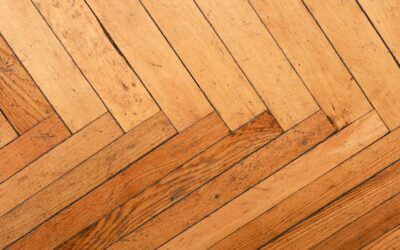
Real timber flooring is solid wood — typically 18 to 22mm thick, machined from a single piece of lumber, with tongue and groove edges. It is not engineered (which has a thin wood veneer over plywood core), not laminate (which is photo-print over HDF), and not LVP (which is vinyl). Real timber is what your grandparents installed: oak, maple, hickory, pine, walnut, planks or strips, nailed to plywood subfloor and finished on site or pre-finished from the mill.
The category includes domestic hardwoods (red and white oak, maple, hickory, cherry, walnut), domestic softwoods (Douglas fir, southern yellow pine, hemlock), and exotic species (Brazilian cherry, mahogany, teak, ipe). Each has its own hardness, color, and finishing characteristics.
Where Real Timber Outperforms Everything
Solid hardwood has unique advantages no alternative can replicate:
- Refinishability — solid timber can be sanded and refinished 5 to 8 times over its life. A 100-year-old oak floor can look new again
- Lifespan — properly maintained solid hardwood lasts 75 to 150 plus years. The original floors in colonial-era American homes are still in service
- Authenticity — natural variation in grain, color, and figure that no photo print can replicate
- Patina development — improves visually over decades as it ages and oxidizes
- Resale value — buyers consistently pay premiums for solid hardwood over alternatives
- Repairability — individual boards can be replaced; scratches can be sanded out
Where Real Timber Falls Short
Solid hardwood is not the right answer for every space. The product has clear weaknesses:
- Moisture sensitivity — cups, warps, or rots when exposed to standing water. Not for bathrooms or basements
- Humidity movement — expands and contracts seasonally. Requires climate-controlled environment
- Installation complexity — needs proper subfloor, nailing pattern, acclimation. Not DIY-friendly
- Higher cost — runs 50 to 200 percent more than premium LVP
- Slab installation challenges — generally needs plywood subfloor or special engineered substrates over concrete
- Maintenance over time — requires occasional refinishing, careful cleaning, and protection from pet claws
Species Comparison and Hardness
The Janka hardness scale measures resistance to denting. For high-traffic homes, harder species hold up better. For homes prioritizing warmth and traditional aesthetics, softer species may be appropriate:
- Brazilian Walnut (Ipe) — Janka 3680. Extremely hard, dark, dense. Premium price
- Hickory — Janka 1820. Excellent for high-traffic family homes
- Hard Maple — Janka 1450. Light, modern, durable
- White Oak — Janka 1360. The American standard. Tannins create rich color over time
- Red Oak — Janka 1290. Classic American look, lower cost than white oak
- Black Walnut — Janka 1010. Soft but luxurious. Better for low-traffic spaces
- Cherry — Janka 950. Develops beautiful patina but dents easily
- Douglas Fir — Janka 660. Traditional Pacific Northwest choice, dents under heavy use
Site-Finished vs Pre-Finished
This decision affects appearance, durability, install time, and cost. Pre-finished boards arrive from the mill with factory-applied UV-cured aluminum oxide finish (typically 7 to 10 coats) and microbeveled edges. Site-finished boards arrive raw and are sanded, stained, and sealed on site over 3 to 5 days.
Pre-finished installs faster (no drying time), has tougher factory finish, and the microbeveled edges hide minor subfloor imperfections. Site-finished produces a perfectly smooth surface with no bevels, allows custom stain colors, and can be refinished more times. Cost is similar; choose based on aesthetic preference and tolerance for the dust and time of site-finishing.
Realistic Cost Breakdown
Real timber flooring runs more than alternatives, but lifecycle cost can be competitive. 2026 US pricing:
- Domestic red oak, pre-finished: $4 to $7 per square foot material
- White oak, pre-finished: $5 to $9 per square foot material
- Hickory or maple, pre-finished: $5 to $9 per square foot material
- Wide-plank white oak (5 inches plus): $7 to $14 per square foot
- Exotic species (Brazilian cherry, ipe): $8 to $14 per square foot
- Installation labor: $3 to $6 per square foot
- Site-finishing (sand and finish): $3 to $6 per square foot
A 600 sq ft living room and hallway in white oak typically runs $7,200 to $12,000 all-in.
Subfloor Requirements
Real timber needs the right substrate. The standard is 3/4 inch plywood or OSB over engineered floor joists. Particleboard subfloors do not hold nails reliably. Concrete slabs need either a sleeper system (plywood over treated 2×4 sleepers) or specialized engineered solid timber rated for direct glue-down.
Subfloor moisture content must be below 12 percent for wood, 4 percent for concrete (CaCl test) before installing. Skip the moisture testing and you will see cupping within the first humid season.
Common Mistakes to Avoid
The most expensive mistakes I see with real timber installs:
- Insufficient acclimation — bring lumber to job site 7 to 14 days before install, in the conditioned space
- Wrong subfloor moisture content — test before, not after
- Installing over inadequate substrate — particleboard, OSB below 5/8 inch, or out-of-flat plywood
- No expansion gap at perimeter walls — 3/4 inch minimum hidden under baseboards
- Skipping the underlayment paper — rosin paper or building felt between subfloor and timber
- Installing in unconditioned new construction — wait until HVAC has run for 2 weeks first
Long-Term Care
Real timber rewards consistent care. Sweep or vacuum (no beater bar) daily in high-traffic homes. Damp-mop with a hardwood-specific cleaner (Bona, Bruce, manufacturer-recommended). Avoid water, vinegar, and ammonia which damage finishes over time. Add felt pads under furniture legs. Trim pet claws. Use rugs at entries to catch grit. Refinish every 15 to 25 years depending on traffic. Done right, real timber flooring is the only floor your grandchildren will inherit looking better than the day it was installed.
Prefer to explore on your own?
See how new flooring looks in your actual room in seconds — free, no signup.
Try the free Floor Studio →