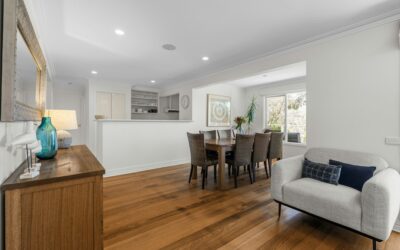
Homeowners fell in love with wide-plank oak floors, then discovered kitchens, basements, and laundry rooms are the worst places to put real hardwood. Manufacturers answered with timber vinyl flooring — waterproof luxury vinyl planks printed and embossed to imitate wood convincingly enough that most visitors cannot spot the difference at normal viewing distance. The category has exploded in the last decade, and the best products genuinely rival engineered hardwood in visual realism while solving every water-related durability problem at once.
What Sets Timber Vinyl Apart
The term “timber vinyl” covers any LVP or rigid-core plank printed to imitate wood. What separates premium from budget is the detail resolution of the print, the depth and accuracy of the embossing, and the construction of the core. Budget products use flat 2D printing and random embossing that does not align with the grain. Premium products scan real wood boards at 1200 dpi and use registered embossing that follows each grain line through the surface.
The result: a floor that looks, feels, and even sounds different at each point because no two planks are identical, just like real wood. Brands leading this quality tier include Karndean, Amtico, COREtec Plus Premium, and Shaw Floorte Premier.
Construction Types Within the Category
Flexible LVP: 2-5 mm PVC planks with a backing layer and wear coat. Traditional luxury vinyl plank, glue-down or loose-lay. Best for commercial and retrofit over existing floors. Rigid SPC timber: 4-7 mm stone-plastic composite core with wood-look top layer. The dominant residential product in 2024-2026. Rigid WPC timber: 6-8 mm wood-plastic composite core (softer and warmer than SPC) with wood-look top layer. Premium residential pick. Magnetic LVT: newer product category using a magnetic underlayment that planks stick to; lifts for repair.
Each format targets a different install context. For most residential projects today, rigid SPC is the default.
Where Timber Vinyl Beats Real Wood
- Waterproof. Kitchens, baths, basements, and laundry rooms are all fair game without special prep.
- Cost. $2-$6 per sq ft versus $7-$15 per sq ft for engineered hardwood at similar visual quality tiers.
- Installation speed. A DIY homeowner can install 300 sq ft in a weekend with click-lock systems.
- Dent and scratch forgiveness. Premium products with 20-30 mil wear layers outlast engineered wood under family traffic.
- Pet-friendly. Dog claws that damage even ipe hardwood barely mark rigid-core vinyl.
- Sound and warmth options. Attached cork or IXPE backings soften acoustics and warm the feel underfoot.
Where Real Wood Still Wins
Resale value in high-end markets: appraisers and luxury buyers recognize real hardwood on sight and discount vinyl-floor homes accordingly. Refinishability: a real wood floor sands and refinishes 3-6 times; vinyl cannot be refinished at all. Repairability: a damaged hardwood board can be lifted and replaced indefinitely; vinyl floors become obsolete when the product line discontinues, typically 5-8 years after purchase.
Longevity: premium hardwood lasts 80-100 years. Premium rigid-core vinyl lasts 20-30. For a forever home with stable humidity and no water-risk rooms, real wood remains the long-horizon value pick.
Wear Layers Decoded
Wear-layer thickness is the single most important spec, and the most commonly misrepresented. Residential light-use: 6-12 mil (0.15-0.3 mm). Residential medium-use: 12-20 mil. Residential heavy-use and light commercial: 20-30 mil. Commercial: 40+ mil. Anything below 12 mil is a bad choice for kitchens, pet households, or any active family.
Always verify wear-layer thickness on the manufacturer’s data sheet, not on the packaging or salesperson’s claim. Mil and mm can be easily confused, and some import products list overall plank thickness as if it were wear-layer thickness.
Popular Timber Vinyl Visuals
Wide-plank oak (6-9 inch widths, 48-72 inch lengths) dominates the 2024-2026 market. European white oak, French oak, and Baltic washed oak variations drive the color trends. Walnut planks have quiet demand in mid-century and contemporary interiors. Hand-scraped hickory and distressed oak suit farmhouse and rustic designs. Herringbone and chevron timber vinyl patterns command a 30-50 percent price premium over straight planks.
Rare and exotic looks (teak, wenge, Brazilian cherry) appear in niche premium product lines; most buyers stick with oak variants that match standard trim and cabinet color palettes.
Subfloor Requirements
Timber vinyl tolerates more subfloor imperfection than thin LVT, but flatness still matters: 3/16 inch over 10 feet for rigid-core products, 1/8 inch over 10 feet for flexible LVP. Grind high spots, fill low spots with self-leveling compound like Ardex K-15 or Mapei 2. Concrete moisture must test below 4-5 lbs per 1,000 sq ft per 24 hours.
Install a 6 mil poly vapor barrier over concrete. Leave 3/8 inch expansion gaps at every wall and fixed feature. Rigid-core products move less than LVT but still expand enough in summer to buckle without proper spacing.
Cost Tiers
Budget timber vinyl (4 mm SPC, 6-8 mil wear): $1.29-$2.29 per sq ft material, installed $3.29-$5.29. Mid-grade (5-6 mm SPC, 12-20 mil wear): $2.79-$4.99 material, installed $4.79-$8.99. Premium (6-7 mm WPC or SPC, 20-30 mil wear, realistic embossing): $5.49-$8.99 material, installed $8.49-$13.99. Designer brands (Karndean, Amtico Signature): $8-$14 material, installed $12-$22.
Budget 8-10 percent material overage for cuts, plus allowance for transition strips ($250-$600 for a typical home).
Installation Process Walkthrough
Acclimate boxes 48 hours in the installation space. Install vapor barrier and/or underlayment if not attached. Start along the straightest wall with 3/8 inch spacers. Click each plank into the previous at a 20-degree angle, then tap flat with a rubber mallet and tapping block. Stagger end joints 8-12 inches to avoid visible repeating patterns. Cut end pieces with a miter saw or score-and-snap utility knife.
A skilled DIYer completes 300 sq ft per day; professional crews hit 500-700 sq ft per day. Full cure and ready for furniture: 24 hours after installation.
Maintenance Over a 20-Year Lifespan
Sweep or vacuum daily in high-traffic rooms — grit is the enemy of the wear layer. Damp-mop weekly with a pH-neutral cleaner like Bona Hard-Surface Floor Cleaner or Shaw R2X. Avoid steam, wax, polish, vinegar, and abrasive powders. Use felt pads under every furniture leg and walk-off mats at exterior doors.
Keep 5 percent of the original material as boxed overage labeled with the dye-lot number. Spot repairs require matching boards, and manufacturers change color lots annually. With proper maintenance and matching overage, timber vinyl delivers 20-30 years of residential service without refinishing or major repairs.
Prefer to explore on your own?
See how new flooring looks in your actual room in seconds — free, no signup.
Try the free Floor Studio →