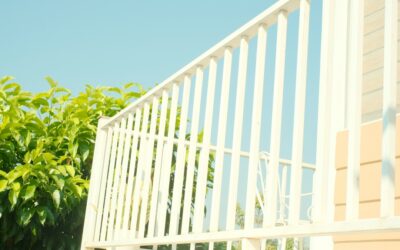
Aluminum deck railing systems hit the sweet spot for most homeowners: they never rot, never need repainting, and install faster than almost any other railing because the parts arrive pre-cut and powder-coated. Wood railings need re-staining every couple of seasons, so aluminum makes sense simply because it is the one railing you can forget about. The systems come as kits, mixing and matching posts, rails, and infill so you can build anything from a solid privacy panel to an airy picket guard. The buying decision comes down to matching the right system to your deck height, your view, and your budget.
Part of our Decks & Outdoor guide — explore the full guide →
This guide walks through code, infill choices, load ratings, and real 2026 pricing so you buy the right kit the first time.
Why Choose Aluminum
Aluminum’s biggest advantage is that it is engineered as a complete system. Unlike wood, where you cut and assemble every joint, aluminum kits give you matched brackets, pre-drilled posts, and rails cut to standard lengths. The powder-coat finish is baked on, so it resists fading and chalking for 15 to 20 years and carries warranties to match. It will not rust like steel, will not rot like wood, and weighs a fraction of either, which makes it easier to handle on a second-story deck.
The trade-off is a lighter, more manufactured feel than solid steel or thick wood, and a fixed menu of colors, usually black, white, bronze, and a few bronzes in between. For most decks, that is a fair exchange for a railing that stays looking new with a hose-down.
Code Heights and Requirements
Aluminum systems are built to code, but you still have to install them to code. Under the IRC, a guard is required anywhere the deck surface sits more than 30 inches above the grade below. Residential guards must be at least 36 inches tall; many jurisdictions and commercial projects require 42 inches. Manufacturers sell both heights, so order the right one for your locale.
The 4-inch sphere rule applies to the infill: no gap may pass a 4-inch ball. Factory aluminum baluster spacing is designed to meet this, but if you cut a rail to fit an odd bay, keep your baluster gaps under 4 inches. There is also a triangle rule at stairs, where the opening formed by the tread, riser, and bottom rail cannot pass a 6-inch sphere. Good stair kits handle this automatically with an angled bottom rail.
Infill Options
The infill is where aluminum systems get flexible. Common choices:
- Aluminum balusters: The classic look, vertical pickets spaced under 4 inches. Simple, affordable, and view-friendly.
- Glass panels: Tempered glass for maximum view and wind protection, at the highest price.
- Cable infill: Horizontal stainless cables in an aluminum frame, blending the invisible-view benefit with a maintenance-free frame.
- Horizontal rails: Wide aluminum bars for a modern, ranch-style horizontal line.
- Mesh or perforated panels: Contemporary screening with airflow and privacy.
Balusters remain the most popular for cost and simplicity, but a mix, such as glass on the view side and balusters elsewhere, lets you spend where it counts.
Load Ratings and Structural Connection
A code-compliant guard must resist a 200-pound concentrated load in any direction at the top rail, and the infill must handle a 50-pound load over a square foot. Quality aluminum systems are tested to these standards, but the rating only holds if the post connection is right. The post base must bolt securely to solid framing, not just decking boards. Use the manufacturer’s specified base plate and hardware, and add blocking beneath the deck surface so the bolts land in structure.
Post spacing typically runs 4 to 6 feet on center, and you must not exceed the maximum span the manufacturer lists, usually 6 feet, or the rail loses its rating. Closer spacing feels sturdier underhand, so setting posts at 5 feet even when 6 is allowed is worth considering.
Popular Systems and What Sets Them Apart
Several brands dominate the residential market, and they differ mainly in finish quality, infill range, and connection design. Some systems use a stiffer, thicker-walled extrusion that feels more solid at the top rail. Others focus on tool-light assembly with snap brackets that speed installation. When comparing kits, look at wall thickness of the posts and top rail, the length of the finish warranty, and whether stair kits and mixed infills are offered. Do not buy on color alone; a thin-walled bargain system will flex under a lean in a way a heavier extrusion never does.
Installation Overview
Aluminum railing installs faster than any other type because the engineering is done at the factory. The typical sequence:
- Mount the posts to the deck framing with the specified base plates and bolts, checking each for plumb.
- Cut rails to length for each bay if not pre-cut, using a fine-tooth blade to keep edges clean.
- Attach bottom and top rails to the posts with the bracket hardware.
- Insert the infill, balusters or panels, into the pre-drilled rails.
- Cap the posts and check the whole run for level and secure connections.
A handy DIYer can do a straight 40-foot run in a day. Stairs and multiple corners add time, mostly in careful measuring.
Cost per Foot in 2026
Aluminum sits in the middle of the railing price range, which is a big part of its popularity. In 2026, expect:
- Baluster kits, materials: $30 to $60 per linear foot.
- Cable or mesh infill: $45 to $80 per linear foot.
- Glass panel systems: $75 to $150 per linear foot.
- Professional installation: add $20 to $40 per linear foot.
A 40-foot deck in baluster form typically runs $1,200 to $2,400 in materials. That is more than a wood or hog panel railing but less than most cable systems, and you recoup the difference by never buying stain or paint again.
Colors, Finishes, and Style Matching
Aluminum railing comes in a fixed but well-chosen palette, and the finish quality is a big part of what you are buying. The powder-coat colors that dominate the residential market are black, white, bronze, and a few sand or clay tones, with black being far and away the most popular because it recedes visually and lets the view take over. The powder coat itself is baked on at the factory, which is why it resists chipping, fading, and chalking so much better than a painted-on finish. When you choose a color, think about how it reads against your house: black and bronze disappear into a landscape and pair well with composite decking, while white pops and suits traditional and coastal homes. Because the finish is engineered to last 15 to 20 years, this is a long-term commitment, so pick a color you will still like a decade from now rather than chasing a trend.
Maintenance and Warranty
The whole reason many homeowners choose aluminum is that it asks almost nothing of them, and that promise largely holds. There is no staining, sealing, or repainting; a rinse with a hose and an occasional wipe-down with mild soap and water is the entire maintenance routine. Aluminum will not rust the way steel does, and the powder coat protects it from the elements, so even in coastal air it holds up far better than an iron railing would. The one thing worth doing periodically is inspecting the post-base connections to confirm the bolts are still tight into the framing, since any railing can loosen over years of use. Quality aluminum systems back their finish with substantial warranties, often 15 years to lifetime on the coating and structure, so read the warranty terms when you compare brands. A strong warranty is a good proxy for build quality, because a manufacturer confident in its extrusion and finish is willing to stand behind it for the long haul.
Is Aluminum the Right Call?
Choose an aluminum deck railing system when you want a maintenance-free, code-ready railing that installs fast and lasts 20 years without fuss. It is the practical default for the majority of decks. Spend up for a thicker extrusion and, if the view matters, mix in glass or cable infill on the key side. Order the correct height for your local code, bolt the posts into real framing, and keep your spans within spec. Do that and you get a railing you can genuinely install once and stop thinking about.