An arcade rug is a quick way to turn a plain basement, bonus room, or home office corner into a space that actually feels like a retro game room. Whether you are building a dedicated entertainment zone or just want to tie a few consoles and a couple of cabinets together visually, the right rug anchors the room and protects your floor at the same time.
This guide walks you through what an arcade rug actually is, the materials and sizes worth considering, how to place one under heavy equipment, and how to keep it looking sharp through years of snacks, sneakers, and late-night tournaments.
What Counts as an Arcade Rug
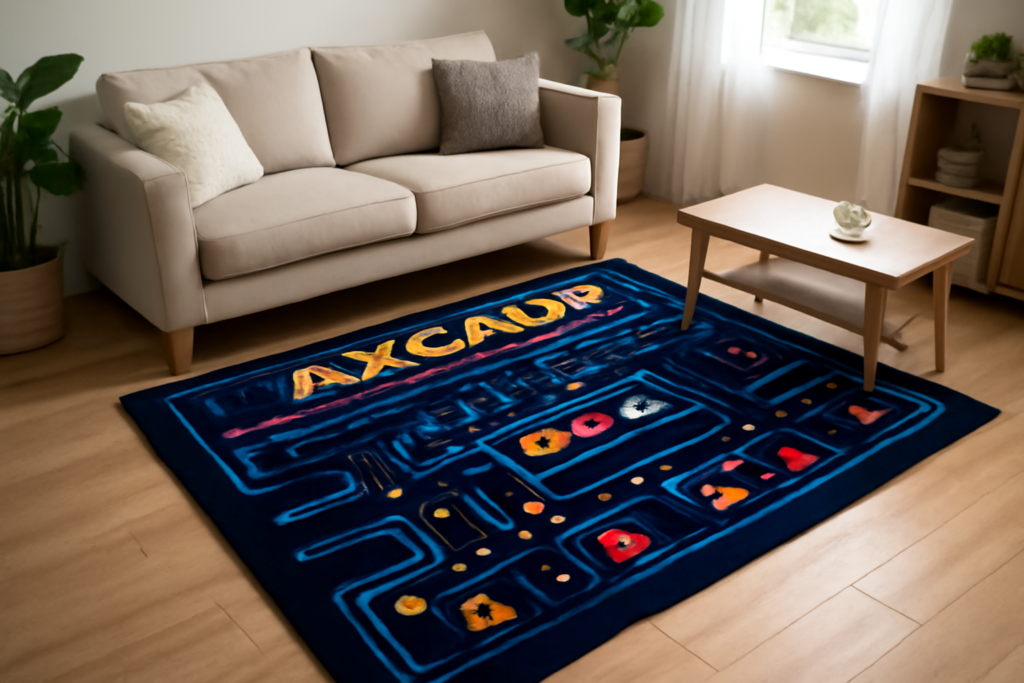
The term covers two loosely related categories. The first is a rug printed with arcade-themed graphics: pixel art, joystick and button motifs, neon geometric patterns, or a stylized “Player 1” layout. These lean into the aesthetic and are the obvious pick for a themed game room. The second category is any durable, low-pile area rug used specifically under or around arcade cabinets, pinball machines, and gaming chairs. It does not have to be themed at all; plenty of homeowners use a solid dark rug simply because it hides wear and frames the equipment.
Both serve the same practical functions. They define a zone in an open floor plan, dampen the noise and vibration that hard floors amplify, and shield laminate, vinyl, or hardwood from the constant foot traffic and dragged furniture that game rooms see.
Choosing the Right Size
Size is where most people get it wrong. A rug that is too small floats in the middle of the room and makes the whole setup look like an afterthought. As a rule, you want the rug large enough that the front legs of seating and the base of any cabinet sit on it.
- 5 ft x 7 ft: Good for a single gaming chair and a small console stand, or under one arcade cabinet with a stool.
- 8 ft x 10 ft: The most versatile size for a typical game room, comfortably covering a sofa, coffee table, and a couple of standing machines along one edge.
- 9 ft x 12 ft and larger: Best for finished basements where you want most of the seating and several cabinets grouped on one continuous surface.
- Runners (2.5 ft x 8 ft or longer): Useful along a row of cabinets against a wall.
Measure your space first, then leave roughly 12 to 18 inches of bare floor between the rug edge and the walls so the room does not feel cramped.
Materials That Hold Up to Heavy Use
Game rooms are high-traffic, so material matters more than it would in a guest bedroom. Synthetic fibers dominate this category for good reason.
Polypropylene (often labeled olefin) is the workhorse. It resists stains, shrugs off spills, and is easy to spot-clean, which matters when soda and pizza grease are part of the routine. Nylon is more resilient underfoot and bounces back from the compression of heavy cabinet feet better than most fibers, making it a strong choice if you have hundreds of pounds of equipment sitting in one spot. Polyester offers rich, saturated colors at a lower price, which suits bold arcade graphics, though it is slightly less durable over many years.
Avoid high-pile shag or delicate wool for this application. Long fibers trap crumbs, make rolling chairs awkward, and are far harder to vacuum. A low-pile or flatweave construction rolls and cleans easily and gives wheels and cabinet bases a stable surface.
Placement Under Cabinets and Equipment
Heavy machines change how you should think about placement. A full-size arcade cabinet can weigh 200 to 300 pounds, and that load concentrated on four small feet will permanently dent a soft, thick rug.
- Choose a firm, low-pile rug so cabinets sit level and stable rather than rocking on compressed fibers.
- Consider furniture coasters or wide glides under cabinet feet to spread the weight and prevent deep impressions.
- Position cabinets so their weight is distributed across the rug rather than all clustered in one corner, which helps the rug wear evenly.
- Leave clearance behind machines for ventilation and power cords; never trap a power strip under the rug, since covered cords can overheat.
Run cords along the rug edge and secure them with cord covers rather than tucking them beneath the pile.
The Case for a Rug Pad
A quality rug pad is one of the cheapest upgrades you can make and it pays off in three ways. It keeps the rug from sliding when people pivot in gaming chairs or lean on a machine, it adds a layer of cushion that reduces fatigue when you are standing at a cabinet for an hour, and it protects the floor underneath from dye transfer and abrasion.
For hard floors such as vinyl, laminate, or hardwood, pick a felt-and-rubber pad rather than a cheap PVC-mesh pad, which can break down and leave residue over time. Match the pad to your rug size minus an inch on each side so it stays hidden.
Cleaning and Long-Term Care
Game rooms are messy, so plan to maintain the rug rather than baby it. Vacuum at least weekly to pull crumbs and dust out of the pile before they grind in and dull the fibers. For a synthetic rug, address spills immediately: blot, never rub, with a clean cloth, then use a mild soap-and-water solution for most messes.
Always test any cleaner on an inconspicuous corner first, and follow the manufacturer’s care label, since some printed graphics can fade with harsh chemicals. Rotate the rug 180 degrees every few months so foot traffic and sun exposure wear it evenly. Once or twice a year, a deeper clean with a carpet machine or a professional service keeps colors bright.
Styling Your Game Room Around the Rug
Let the rug set the palette. A bold neon-on-black graphic rug becomes the focal point, so keep walls and seating relatively neutral and let LED strips or framed game art echo the rug’s colors. If you prefer a subtler look, a solid charcoal or deep-blue rug grounds colorful cabinets and posters without competing with them.
Coordinate practical touches too: dark colors and busy patterns hide the inevitable spots and wear far better than light solids. For an open basement, use the rug to carve out the gaming zone and pair a second, smaller rug elsewhere to define a lounge or bar area, giving the whole space rhythm without feeling like one giant room.
Final Thoughts Before You Buy
An arcade rug is a small purchase that does a lot of heavy lifting: it protects your floor, quiets the room, defines the play zone, and sells the retro atmosphere. Prioritize a durable low-pile synthetic in a size large enough to anchor your seating and equipment, add a good rug pad, and commit to regular vacuuming. Get those basics right and the rug will outlast several console upgrades while keeping your game room looking exactly the way you imagined it.