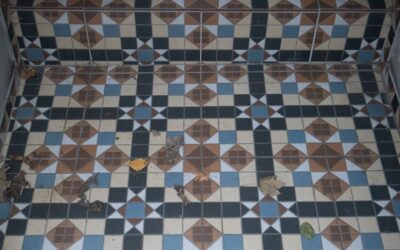
If your home was built before 1985, there is a real possibility you have an asbestos tile floor somewhere in the house. Asbestos was widely used in vinyl floor tiles, sheet flooring, and the black mastic adhesive underneath from the 1920s through the early 1980s. We encounter asbestos flooring regularly on renovation projects, and while it sounds alarming, the situation is manageable when you understand the facts. This guide covers how to identify asbestos tiles, get them tested, and decide the safest path forward.
Part of our Tile & Grout guide — explore the full guide →
- How to Identify Asbestos Floor Tiles
- Getting Your Floor Tested
- Understanding the Health Risks
- When to Leave Asbestos Tiles in Place
- Encapsulation: Covering Asbestos Safely
- Safe Removal Process
- Regulations and Legal Requirements
- Installing New Flooring Over Asbestos
- Cost Guide
- Frequently Asked Questions
How to Identify Asbestos Floor Tiles
You cannot confirm asbestos by visual inspection alone, but certain characteristics are strong indicators that your floor may contain asbestos.
Tile size: The most telling sign is 9×9-inch tiles. This size was the standard for asbestos-containing vinyl tiles (VAT) from the 1930s through 1970s. While 12×12-inch tiles from this era can also contain asbestos, the 9×9 size is the most reliable visual clue.
Installation date: If the tiles were installed between 1920 and 1985, they may contain asbestos. Homes built or renovated during this period should be treated with caution. Asbestos was not formally banned in floor tiles in the United States until the late 1980s, and some products manufactured before the ban were still being installed into the early 1990s.
Black mastic adhesive: The black, tar-like adhesive (called cutback adhesive) used to glue down vinyl tiles during this era often contained asbestos fibers, even if the tiles themselves did not. If you see thick black adhesive underneath old tiles, assume it is asbestos-containing until tested.
Tile appearance: Asbestos vinyl tiles typically have a through-body color pattern (the color goes all the way through the tile) rather than a printed surface layer like modern vinyl. They are often 1/8 inch thick, brittle rather than flexible, and may show a slightly chalky texture when broken.
Common colors and patterns: Asbestos tiles were commonly produced in solid colors (dark green, brown, beige, gray), marbled patterns, and speckled designs. However, color alone is not a reliable identifier since non-asbestos tiles were produced in similar patterns.
Multiple layers: It is common to find newer flooring installed directly over an asbestos tile floor. If you peel back a corner of carpet, newer vinyl, or other flooring and discover old 9×9 tiles underneath, treat them as potentially containing asbestos.
Getting Your Floor Tested
The only way to confirm whether your floor contains asbestos is through laboratory analysis. Visual identification is not sufficient for any decision-making.
Professional inspection: Hire a certified asbestos inspector to collect samples. Inspectors are trained in safe sampling techniques and know where to collect samples for accurate results. An inspection typically costs $200 to $500 and includes sample collection and laboratory analysis.
DIY sampling: Some states allow homeowners to collect their own samples for personal (non-commercial) properties. If you choose this route:
- Wear an N100 or P100 respirator (not a basic dust mask)
- Wear disposable gloves and clothing
- Mist the area with water to suppress dust
- Use a utility knife to cut a 2×2-inch piece of the tile
- Also sample the black adhesive underneath separately
- Place each sample in a separate sealed plastic bag
- Label each sample with location and material type
- Send samples to an accredited laboratory (NVLAP accredited)
Laboratory analysis: Labs use polarized light microscopy (PLM) to identify asbestos fibers. Results typically take 3 to 10 business days. Rush results are available for an additional fee. Testing costs $25 to $75 per sample. Send at least 2 to 3 samples from different areas for reliable results.
Important: Do not sand, grind, break up, or aggressively remove tiles before testing. These actions release asbestos fibers into the air, which is the primary health hazard.
Understanding the Health Risks
Asbestos in floor tiles is classified as non-friable, meaning the fibers are bound within the vinyl matrix and do not become airborne during normal use. An intact asbestos tile floor that is in good condition poses minimal health risk to occupants.
The risk increases dramatically when tiles are disturbed. Cutting, sanding, grinding, breaking, or removing asbestos tiles releases microscopic fibers into the air. Once airborne, these fibers can be inhaled and become lodged in lung tissue, potentially causing serious diseases including:
- Asbestosis: Chronic scarring of lung tissue from prolonged fiber inhalation
- Mesothelioma: A rare cancer of the lung or abdominal lining directly linked to asbestos exposure
- Lung cancer: Risk increases significantly with asbestos exposure, especially combined with smoking
These diseases typically develop 10 to 40 years after exposure. Brief, low-level exposure (such as accidentally breaking a single tile) carries very low risk. The danger comes from sustained or repeated exposure to airborne fibers, which is why improper removal is so hazardous.
The bottom line: asbestos tiles on your floor are not an emergency. They become a problem only when disturbed. The safest approach in many cases is to leave them in place and install new flooring over them.
When to Leave Asbestos Tiles in Place
The EPA’s official position is that undamaged asbestos materials are best left undisturbed. For floor tiles specifically, leaving them in place is often the safest and most cost-effective option.
Leave tiles in place when:
- Tiles are intact, well-bonded, and in good condition
- No tiles are cracked, crumbling, or lifting at the edges
- You can install new flooring directly over the existing tiles
- The floor is in an area that will not be demolished or heavily renovated
Consider removal or encapsulation when:
- Tiles are crumbling, heavily damaged, or releasing dust
- Major renovation requires removing the floor down to the subfloor
- Moisture issues are causing tiles to lift and break
- The floor height needs to stay at the current level (no room for overlay)
Living with an asbestos tile floor is perfectly safe as long as the tiles are intact. Do not drill into them, sand them, or aggressively scrape them. If a tile cracks during normal use, mist the area with water, carefully pick up the pieces with a damp paper towel, seal them in a plastic bag, and dispose of them according to your local regulations.
Encapsulation: Covering Asbestos Safely
Encapsulation means sealing the asbestos tiles in place and covering them with a new surface. This is the most common approach for residential asbestos tile floor situations and what we recommend for the majority of homeowners.
Methods of encapsulation:
Encapsulating sealer: A thick coating applied directly over the tiles that bonds the asbestos fibers in place and creates a barrier. Products like Fiberlock ABC or Encapsulation Technologies’ offerings are designed specifically for this purpose. This is useful when you plan to install new flooring over the sealed tiles.
Self-leveling compound: Pour self-leveling cement over the asbestos tiles to create a new, flat substrate for new flooring. This buries the tiles completely and provides an excellent surface for tile, hardwood, or vinyl installation. Costs $2 to $4 per square foot for materials and application.
Direct overlay: Install new flooring directly on top of the asbestos tiles without removing them. This is the simplest approach when the existing tiles are flat and well-bonded. Luxury vinyl plank, laminate, engineered hardwood, and new tile can all be installed over existing asbestos tiles.
Encapsulation keeps asbestos fibers permanently sealed beneath the new floor. It eliminates health risks, avoids the high cost of abatement, and allows you to install the new floor of your choice.
Safe Removal Process
If removal is necessary, it must be done safely and in most cases by licensed professionals.
Professional abatement process:
- The work area is sealed with plastic sheeting and negative air pressure is established
- Workers wear full personal protective equipment including respirators, disposable coveralls, and gloves
- Tiles are wetted thoroughly to suppress dust
- Tiles are carefully pried up using hand tools, not power tools
- Black mastic adhesive is removed using low-risk methods (chemical solvents, wet scraping) rather than sanding or grinding
- All debris is double-bagged in labeled asbestos waste bags
- The area is HEPA-vacuumed and wet-wiped
- Air monitoring confirms fiber levels are within safe limits before the containment is removed
- Waste is transported to an approved disposal facility
DIY removal: Some states allow homeowners to remove asbestos from their own single-family residence. Check your state and local regulations before proceeding. If DIY is permitted and you choose this route:
- Wear a P100 half-face respirator minimum
- Wear disposable Tyvek coveralls, gloves, and shoe covers
- Keep all tiles wet during removal
- Never sand, grind, or use power tools on asbestos tiles
- Double-bag all waste in 6-mil poly bags and label as asbestos
- Contact your local waste authority for proper disposal locations
- Never put asbestos waste in regular trash
Even where DIY removal is legal, we strongly recommend professional abatement. The health risks of improper handling are severe, and the cost difference between professional and DIY removal is not large enough to justify the risk.
Regulations and Legal Requirements
Asbestos removal and disposal are regulated at the federal, state, and local levels. Understanding these rules protects your health, your finances, and your legal standing.
Federal regulations: The EPA regulates asbestos under the Clean Air Act (NESHAP) and the Toxic Substances Control Act (TSCA). Commercial and multi-family buildings must use licensed abatement contractors. Single-family homeowners may have more flexibility, but disposal regulations still apply.
State regulations: Most states require asbestos abatement contractors to be licensed. Many states require a professional inspection before any renovation that might disturb asbestos-containing materials. Fines for improper handling can reach $25,000 or more per violation.
Disclosure requirements: If you are selling a home with known asbestos, most states require disclosure to the buyer. Encapsulated asbestos still needs to be disclosed. Proper documentation of professional encapsulation or abatement protects you during a sale.
Disposal: Asbestos waste must be transported to an approved landfill that accepts asbestos-containing materials. Regular landfills and trash services do not accept asbestos waste. Disposal fees typically run $50 to $150 per cubic yard.
Before starting any project that involves an asbestos tile floor, contact your state’s environmental or health department for current regulations specific to your area.
Installing New Flooring Over Asbestos
Installing new flooring over intact asbestos tiles is the safest, fastest, and most cost-effective approach for most homeowners.
Luxury vinyl plank (LVP): Click-lock LVP floats directly over asbestos tiles with an underlayment. No adhesive touches the asbestos surface. This is the easiest overlay option and costs $3 to $7 per square foot installed.
Laminate: Another floating floor that installs over an underlayment on top of existing tiles. Costs $3 to $8 per square foot installed.
Engineered hardwood: Can be floated over asbestos tiles using click-lock planks and an appropriate underlayment. Costs $5 to $12 per square foot installed.
New tile: Porcelain or ceramic tile can be installed directly over asbestos tiles using a modified thin-set mortar. The new tile and mortar encapsulate the asbestos completely. Costs $8 to $15 per square foot installed.
Carpet: Carpet with padding can be stretched over asbestos tiles using tack strips nailed into the subfloor around the room perimeter. The tiles are fully covered and undisturbed. Costs $3 to $8 per square foot installed.
Considerations:
- Each overlay adds height to the floor. Check clearances at doors, transitions to other rooms, and appliance openings.
- Ensure the asbestos tiles are flat and well-bonded. Loose or damaged tiles need to be addressed before overlaying.
- Document the presence of asbestos tiles underneath the new floor for future reference and disclosure.
Cost Guide
Costs for dealing with an asbestos tile floor vary significantly based on whether you choose encapsulation or removal.
Testing:
- Professional inspection and sampling: $200 to $500
- Lab analysis per sample: $25 to $75
Encapsulation/overlay:
- Encapsulating sealer: $0.50 to $1.50 per square foot
- Self-leveling compound: $2 to $4 per square foot
- New flooring installation over asbestos: Same cost as standard installation (no premium for the asbestos tiles underneath)
Professional removal (abatement):
- Tile removal: $5 to $15 per square foot
- Mastic removal: $3 to $8 per square foot additional
- Air monitoring: $300 to $800 per project
- Disposal fees: $50 to $150 per cubic yard
Total project comparison for a 500-square-foot area:
- Encapsulation with new LVP overlay: $1,750 to $4,250
- Professional abatement only (no new flooring): $4,000 to $12,000
- Professional abatement plus new flooring: $5,500 to $18,000+
The cost difference makes encapsulation the clear winner for most residential situations. Removal is only worth the expense when the floor must be brought back to the original subfloor level or the tiles are too damaged to cover safely.
Frequently Asked Questions
Are all 9×9 tiles asbestos?
Not all 9×9 tiles contain asbestos, but this size is the strongest visual indicator. Non-asbestos 9×9 tiles were also produced, particularly in the late 1970s and 1980s as manufacturers transitioned away from asbestos. The only way to confirm is laboratory testing. Treat any 9×9 tiles in a pre-1985 home as potentially containing asbestos until tested.
Can I just paint over asbestos floor tiles?
You can apply an encapsulating paint or sealer over intact asbestos tiles as a temporary measure. However, floor paint wears off quickly under foot traffic. A proper overlay with new flooring is a much better long-term solution. If you paint, use a product specifically designed for asbestos encapsulation, not regular floor paint.
Is it safe to live in a house with asbestos floor tiles?
Yes. Intact, undisturbed asbestos floor tiles pose minimal health risk. The asbestos fibers are locked within the vinyl matrix and do not become airborne during normal daily use. The risk only increases when tiles are damaged, broken, or disturbed by renovation work.
How do I dispose of asbestos floor tiles?
Asbestos waste must go to an approved landfill that accepts asbestos-containing materials. Double-bag the material in 6-mil polyethylene bags, label them as asbestos waste, and contact your local waste management authority or state environmental agency for approved disposal sites. Never put asbestos waste in regular household trash or dumpsters.
Does homeowner’s insurance cover asbestos removal?
Most standard homeowner’s insurance policies do not cover asbestos abatement or remediation. Asbestos is considered a pre-existing condition of the home. Some policies may cover costs if asbestos is disturbed by a covered event (like a fire or storm), but voluntary removal for renovation is almost never covered. Check your specific policy and consult your agent.
Prefer to explore on your own?
See how new flooring looks in your actual room in seconds — free, no signup.
Try the free Floor Studio →