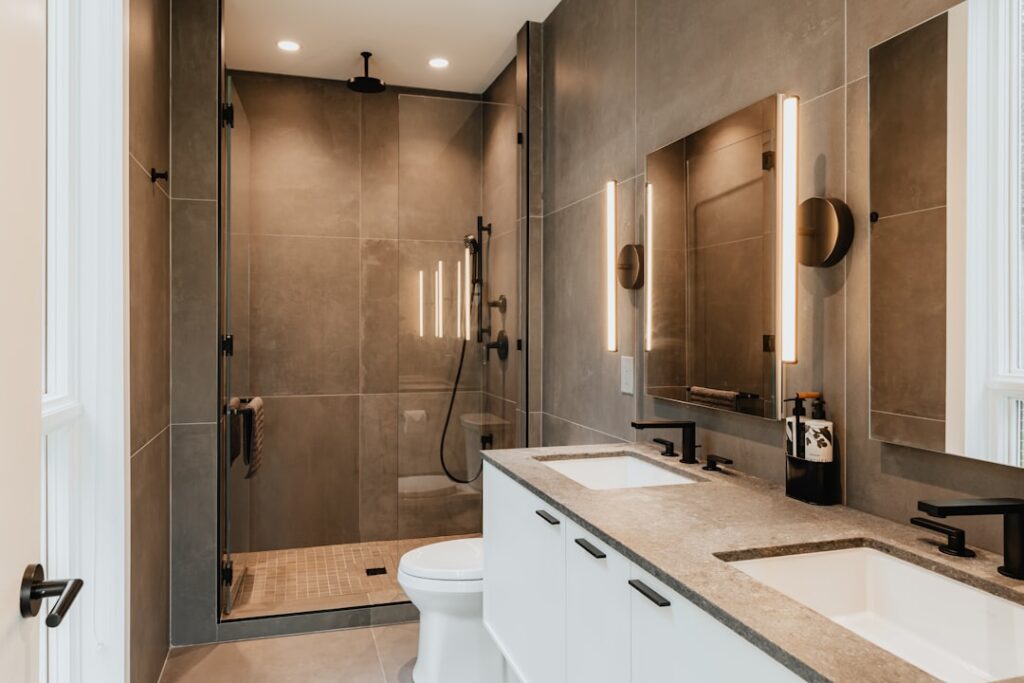
The average shower curtain size in the United States is 72 inches wide by 72 inches long, a square dimension that fits the majority of standard bathtub-shower combinations found in American homes. That single measurement covers most situations, but the moment you have a stall shower, a curved rod, an extra-tall ceiling, or a clawfoot tub, the standard square no longer applies, and buying the wrong size leads to water on the floor and a curtain that either drags or floats.
Part of our Bathroom Remodeling & Flooring guide — explore the full guide →
At D and G Flooring we see the consequences of poorly fitted curtains all the time: water escaping the tub onto bathroom flooring causes warping, mildew, and costly damage. Getting the curtain size right is a small detail that protects your floors and finishes the room. This guide breaks down every common size and shows you how to measure for a perfect fit.
The Standard Size and Why It Exists
The 72 by 72 inch curtain became the default because the typical American bathtub measures around 60 inches long, and a standard shower rod sits roughly 75 to 77 inches above the floor. A 72-inch-wide curtain provides enough fabric to gather slightly and seal the opening, while 72 inches of length reaches from the rod to just below the tub’s edge, keeping water inside without pooling on the floor in folds.
If you walk into any home-goods store, the overwhelming majority of decorative curtains on the shelf will be this square 72 by 72 dimension. It is the safe default when your setup is conventional.
Common Shower Curtain Sizes at a Glance
Beyond the standard, several other sizes exist to handle different configurations:
- Standard: 72 by 72 inches, for typical tub-shower combos.
- Stall shower: 54 by 78 inches, narrower for compact stand-alone showers.
- Long or extra-tall: 72 by 84 inches, for higher rods or taller ceilings.
- Extra-long: 72 by 96 inches, for very tall ceilings, raised rods, or a dramatic floor-length look.
- Wide: 108 by 72 inches, for double-wide tubs, walk-in showers, or curved rods that need extra fabric.
- Extra-wide: 144 by 72 inches, for large clawfoot tubs or wraparound rod setups.
Don’t Forget the Liner
Most decorative curtains are paired with a waterproof liner that does the actual job of keeping water in the tub. The liner should match or slightly differ from your curtain dimensions:
- A standard liner is typically 72 by 72 inches, matching the standard curtain.
- Some liners run 70 by 72 or 70 by 71 inches so the liner sits just inside the decorative curtain and hangs slightly shorter, letting water drip into the tub rather than wicking onto the floor.
- For stall showers, look for a 54 by 78 inch liner to match the narrower curtain.
The key rule: the liner’s bottom edge should hang inside the tub or shower base, never outside it. If your liner is too long and pools, trim it or choose a shorter one to prevent water from tracking out.
How to Measure for the Right Shower Curtain
Measuring takes only a few minutes and saves you the frustration of returns and water damage.
Measuring Width
Measure the full length of your shower rod from end to end. For a flat rod, add 12 to 24 inches to that number so the curtain has enough fabric to gather and close fully without stretching flat. A curtain that is too narrow will gap at the edges and let water escape.
Measuring Length
Measure from the rod, or from where the curtain hooks will sit, down to about 1 to 2 inches above the floor for a standard look, or to the inside edge of the tub for the liner. For tub installations, you want the curtain to reach just past the tub’s outer lip.
Accounting for the Rings
Remember that hanging rings or hooks add roughly 2 to 3 inches between the rod and the top of the curtain. Factor this into your length calculation so the hem lands where you intend.
Special Situations
Curved Shower Rods
Curved rods bow outward to create more elbow room inside the shower. Because the rod follows a longer arc, you generally need a wider curtain and liner to span the extra distance, so size up to a 108-inch width if the curve is significant.
Clawfoot Tubs
Freestanding clawfoot tubs use a wraparound oval or rectangular rod, which can require an extra-wide curtain of 144 inches or more, sometimes split into two panels. Measure the full perimeter of the rod and add gathering room.
Tall Ceilings and Raised Rods
Hanging the rod higher than standard creates a longer, more elegant line but requires an 84 or 96 inch curtain so the fabric still reaches the tub. Pair it with an extra-long liner so waterproofing is not compromised.
Material and Style Considerations
Once you have the size, the material affects both function and look. Fabric curtains in cotton or polyester blends offer a soft, upscale appearance but always need a waterproof liner. Vinyl and PEVA curtains are inexpensive and water-resistant on their own. Heavier fabrics hang straighter and resist billowing, while lightweight liners can be prone to the annoying inward suction during a hot shower. A weighted hem or magnets at the bottom helps keep any liner in place.
Common Mistakes to Avoid
- Buying a curtain the exact width of the rod, which leaves it stretched flat and gapping at the sides.
- Letting the liner hang outside the tub so water tracks onto the floor.
- Forgetting that rings add a few inches of height when calculating length.
- Using a standard curtain on a curved or wraparound rod that needs extra width.
- Ignoring ceiling height and ending up with a curtain that floats well above the tub.
Final Thoughts
The average shower curtain size of 72 by 72 inches fits most American bathrooms, but the smart move is always to measure your specific rod and tub before buying. Add gathering room to the width, plan the length around your rings and tub edge, and make sure the liner hangs inside the basin. A correctly sized curtain not only looks better but actively protects your bathroom flooring from the water damage that turns a small purchase into a major repair.