Hickory cabinets are one of the boldest choices in a kitchen, full of dramatic grain, wide color swings from creamy blond to deep brown, and a rustic energy that no other wood quite matches. That personality is exactly why choosing a backsplash with hickory cabinets trips up so many homeowners. Pick the wrong tile and you get visual chaos; pick the right one and the backsplash calms and frames those busy cabinets beautifully. The key is understanding hickory’s strong character and choosing a backsplash that complements rather than competes with it.
- Understanding Hickory's Character
- The Safest Rule: Keep It Simple
- Best Backsplash Colors for Hickory
- Material Options That Complement Hickory
- Coordinating With Your Countertops
- Styles That Work With Hickory Kitchens
- What to Avoid
- Bringing It All Together
- Layout and Pattern Considerations
- The Bottom Line
Understanding Hickory’s Character
Before choosing tile, you have to respect what makes hickory unique. It has the widest natural color variation of any common cabinet wood, with individual boards ranging from pale, almost white sapwood to rich, reddish-brown heartwood, often within the same door. The grain is bold, wavy, and full of character marks. This means hickory cabinets are already doing a lot of visual work. Your backsplash’s main job is usually to provide a resting place for the eye, a quieter surface that lets the wood shine without adding more visual noise to an already busy palette.
The Safest Rule: Keep It Simple
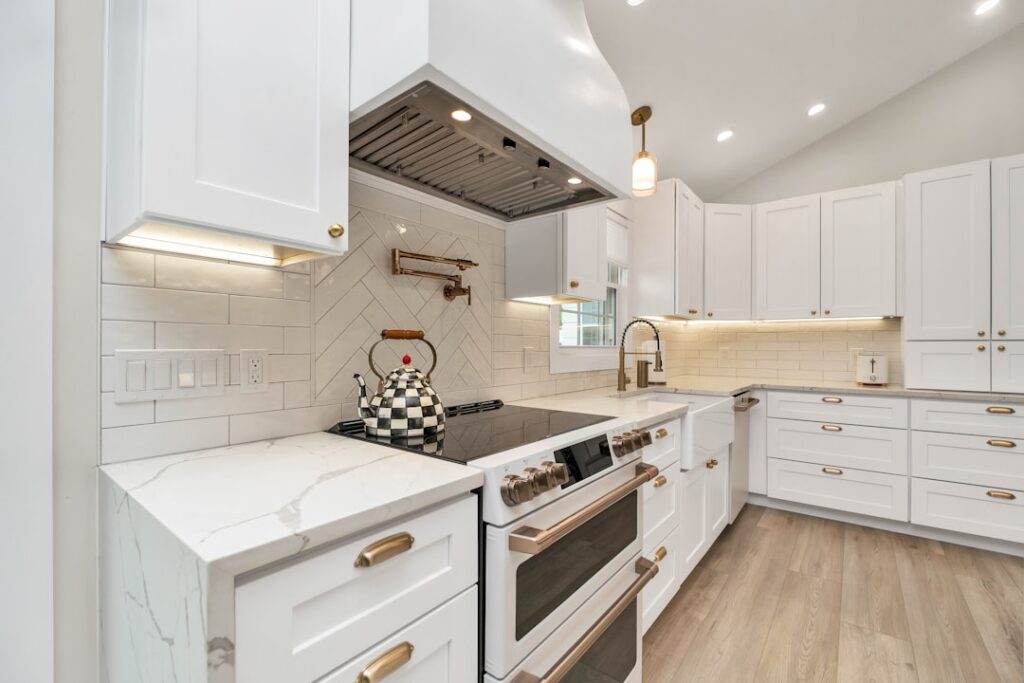
When cabinets are this busy, restraint wins. The most reliable strategy is a backsplash with a calm color and minimal pattern, letting the hickory be the star. Solid or subtly textured tiles in neutral tones, cream, warm white, soft gray, greige, or beige, give the eye a break and make the wood grain pop by contrast. A classic subway tile, a large-format neutral, or a softly variegated stone-look porcelain all work because they add surface without adding competing pattern. Save the bold, busy, or highly patterned tiles for kitchens with plain cabinets that need the extra interest.
Best Backsplash Colors for Hickory
Certain palettes consistently flatter hickory’s warm, variable tones.
- Creamy white and off-white: brightens the space and provides clean contrast against the wood’s darker streaks.
- Warm gray and greige: a modern neutral that bridges hickory’s warm and cool variations without clashing.
- Soft beige and tan: harmonizes with the lighter tones in the wood for a cohesive, cozy look.
- Slate and charcoal: a bolder choice that grounds pale hickory and adds contemporary contrast.
Cool, stark whites can sometimes fight hickory’s warmth, so lean toward warmer or balanced neutrals unless you are deliberately going for a high-contrast modern look.
Material Options That Complement Hickory
Beyond color, the material sets the mood. Ceramic and porcelain subway tile in a soft neutral is the safe, versatile default and suits everything from farmhouse to transitional kitchens. Natural stone like travertine or a tumbled marble echoes hickory’s organic, rustic character and works especially well in country and craftsman kitchens. Large-format porcelain in a marble or concrete look gives a cleaner, more modern backdrop that calms the busy wood. For a warmer, textured feel, a handmade zellige-style tile in cream adds subtle artisan variation without loud pattern. Match the material’s formality to your cabinets and countertops.
Coordinating With Your Countertops
The backsplash does not exist in isolation; it has to work with the counter too. If you have a busy granite or a heavily veined quartz, keep the backsplash extra simple so the three surfaces, cabinets, counter, and backsplash, do not all shout at once. If your countertop is a calm solid color, you have a little more room to add gentle texture or a soft pattern to the backsplash. A reliable formula: let only one surface be busy. With hickory cabinets already providing drama, choose either a quiet counter or a quiet backsplash, ideally both, and let the wood lead.
Styles That Work With Hickory Kitchens
Hickory reads differently depending on the design direction, and the backsplash reinforces the style. For a rustic or farmhouse kitchen, natural stone, tumbled travertine, or a warm handmade subway tile plays up hickory’s country roots. For a transitional kitchen, a clean neutral porcelain or classic white subway strikes a timeless balance. For a modern take on hickory, large-format tile in gray, greige, or a concrete look pairs the wood’s warmth with contemporary simplicity. The wood is flexible enough to swing rustic or modern; your backsplash and hardware choices tip it in the direction you want.
What to Avoid
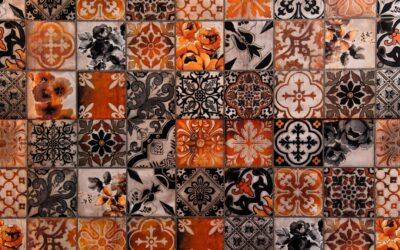
A few combinations reliably backfire. Highly patterned or multicolored mosaic backsplashes fight hickory’s grain and create a restless, cluttered wall. Very glossy, stark bright-white tile can clash with hickory’s warm undertones and feel disjointed. Matching the backsplash too closely to the wood tone, a brown tile against brown cabinets, muddies everything and loses definition. And busy backsplash plus busy granite plus busy hickory is the classic overload that makes a kitchen feel chaotic. When in doubt, subtract: a simpler backsplash almost always looks better against these characterful cabinets.
Bringing It All Together
Start by pulling the tones you love out of the hickory itself. If you want to emphasize the light, creamy boards, choose a warm white or beige backsplash. If you want to ground the darker heartwood, a slate or charcoal tile adds contrast. Bring home large samples and set them right against the cabinet doors and countertop under your kitchen’s actual lighting, because hickory’s color shifts noticeably in different light. Look for a combination where the backsplash recedes and the wood grain becomes the focal point. That is the sign you have found the right pairing.
Layout and Pattern Considerations
With hickory cabinets, the backsplash layout should stay as calm as the color. A classic horizontal subway pattern or a clean stacked layout keeps the wall quiet and lets the wood grain lead. Save busier patterns like herringbone or basketweave for kitchens with plain cabinets that need the extra energy, because a busy layout plus busy hickory quickly tips into visual overload. If you want a little movement without chaos, a vertical stack or a subtle large-format tile adds interest while staying restrained. The goal is a backsplash that provides a smooth, restful backdrop against the cabinets’ natural drama.
Grout choice reinforces that calm. A grout that closely matches the tile keeps the backsplash seamless and understated, which is usually the right move against characterful hickory. A contrasting grout sharpens the grid and adds a graphic element, but it also adds visual busyness, so use it only if the rest of the kitchen is simple. Extending the backsplash all the way to the underside of the upper cabinets, or running it full-height behind a range, creates a clean, built-in look that frames the hickory nicely. Keep the layout and grout quiet, and the cabinets stay the undisputed star of the kitchen.
The Bottom Line
Choosing a backsplash with hickory cabinets comes down to one principle: let the wood lead. Hickory’s dramatic grain and wide color range mean your backsplash should usually be a calm, warm neutral that frames the cabinets rather than fighting them. Favor creamy whites, greige, soft beige, or grounding charcoal in simple ceramic, porcelain, or natural stone, keep at least the backsplash and counter quiet, and always test samples in your own light. Get that balance right and the result is a kitchen where hickory’s bold character feels intentional and beautifully framed. Resist the temptation to add a second dramatic element; with cabinets this expressive, the surrounding surfaces should support rather than compete. When the backsplash quietly does its job, guests notice the beautiful wood first, which is exactly the effect you paid for when you chose hickory in the first place.