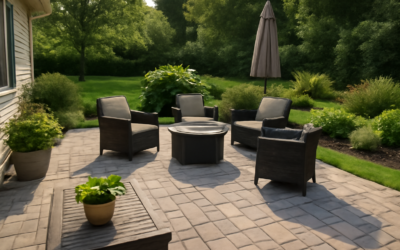
A patch of unused lawn can become the most-used room in your house, and pavers are how smart homeowners get there. The best backyard paver patio ideas blend durable materials with a layout that fits how you actually live outdoors, whether that’s hosting summer dinners, gathering around a fire, or carving out a quiet reading nook. Pavers give you nearly limitless pattern, color, and shape options, and unlike a poured slab, a cracked or stained one lifts right out. This guide walks through design concepts, patterns, and practical tips to help you plan a patio you’ll enjoy for decades.
Part of our Decks & Outdoor guide — explore the full guide →
- Start With How You'll Use the Space
- Classic Layout Patterns That Never Age
- Add a Border for a Finished Look
- Build a Focal Point With a Fire Pit
- Play With Color, Texture, and Shape
- Blend the Patio Into the Landscape
- What a Paver Patio Costs
- Small-Space and Budget Patio Ideas
- Maintenance to Keep Pavers Looking New
- Bringing Your Patio Vision Together
Start With How You’ll Use the Space
Before you fall in love with a paver color, decide what the patio is for. A dining patio needs enough clearance for a table plus pulled-out chairs, roughly 12 by 14 feet at minimum. A lounge area with sofas and a coffee table wants a similar footprint. If you’re planning both, sketch out zones so each has room to breathe.
Traffic flow matters just as much. Leave clear walking paths between the house, the patio, and the yard so people aren’t squeezing behind seated guests. Mapping usage first keeps you from building a patio that looks great but feels cramped the moment furniture goes down.
Classic Layout Patterns That Never Age
The pattern you lay pavers in sets the entire tone of the patio. Some read formal, others casual, and a few add serious visual movement.
- Running bond: Simple offset rows, like a brick wall laid flat. Clean, modern, and the most forgiving to install.
- Herringbone: Pavers set at 45 or 90 degrees in a zigzag. Extremely strong under weight, which is why it’s used on driveways too.
- Basketweave: Pairs of pavers alternating direction for a traditional, cottage-garden feel.
- Random or ashlar: Mixed paver sizes fit together like flagstone, ideal for a natural, informal look.
- Circular: Pavers radiating from a center point create a striking focal patio or fire-pit surround.
Herringbone and running bond suit contemporary homes, while basketweave and random layouts lean rustic. When in doubt, running bond is the safest starting point and the easiest for a first-time DIYer to execute cleanly.
Add a Border for a Finished Look
Nothing separates a professional-looking patio from an amateur one like a border. A contrasting soldier course, pavers set on end around the perimeter, frames the field, locks the pattern in place, and hides the transition to the surrounding grass or beds.
Try a charcoal border around tan pavers, or a red-brick edge around gray. Beyond looks, the border acts as structural containment, holding your interior pavers tight so they don’t creep and spread over the years. It’s a small material upcharge that pays off in both durability and curb appeal.
Build a Focal Point With a Fire Pit
Few features extend outdoor season like a fire pit, and pavers are the perfect partner. A round paver fire-pit kit, roughly 3 to 4 feet across, anchors a circle of Adirondack chairs and instantly makes the patio a destination.
Position it at least 10 to 15 feet from the house and any overhanging branches, and set it on the paver surface rather than the surrounding lawn to keep sparks off dry grass. Ring it with a wider paver apron so chairs sit on a stable, level surface. Gas fire pits skip the smoke and cleanup, while wood burners deliver that classic crackle and aroma.
Play With Color, Texture, and Shape
Modern pavers come in far more than plain gray. Manufacturers like Belgard, Techo-Bloc, and Unilock offer tumbled, smooth, and textured finishes in warm tans, cool grays, charcoals, and multi-tone blends that mimic natural stone.
- Large-format pavers: 24-inch squares with grass or gravel joints create a sleek, modern courtyard vibe.
- Tumbled pavers: Softened edges and a weathered surface suit traditional and cottage homes.
- Permeable pavers: Open joints let rainwater drain through, easing runoff and often satisfying local drainage codes.
- Mixed sizes: Combining two or three paver dimensions in one pattern adds custom-looking depth.
Pull your color from something permanent, your home’s brick, siding, or roof, so the patio feels connected to the house rather than tacked on.
Blend the Patio Into the Landscape
A patio shouldn’t feel like an island. Soften the edges with planting beds, ornamental grasses, or low retaining walls that double as extra seating. A pergola overhead defines the space, provides shade, and gives climbing plants somewhere to grow.
String lights, low-voltage path lighting, and a few large planters turn a bare paver field into an outdoor room. Curved patio edges tend to feel more organic and inviting than hard rectangles, though straight lines suit modern architecture. Repeating a plant or color from your existing garden ties everything together.
What a Paver Patio Costs
Budget helps narrow your ideas fast. Installed paver patios typically run $15 to $30 per square foot, depending on paver quality, pattern complexity, and site prep. A 300-square-foot patio therefore lands roughly between $4,500 and $9,000 professionally installed.
DIY slashes labor and can bring costs down to $6 to $12 per square foot in materials, but proper base preparation is non-negotiable. Plan on 4 to 6 inches of compacted gravel plus an inch of bedding sand under the pavers. Cutting corners on the base is the number one reason patios sink and heave, so this is the step to get right whether you hire out or do it yourself.
Small-Space and Budget Patio Ideas
You don’t need a sprawling yard or a five-figure budget to enjoy a paver patio. A compact 10-by-10-foot square tucked into a corner comfortably fits a bistro table and two chairs, creating a morning-coffee nook that feels intentional. In a narrow side yard, a strip of pavers becomes a charming garden path or a slim lounge area.
To stretch a budget, choose a single standard paver in a simple running-bond pattern, which minimizes cuts and waste. Skip the elaborate curves and multi-color blends, and put your money into a proper base instead. Gravel and a modest paver selection deliver a durable patio for far less than natural stone. You can always expand or add a border course later as funds allow. Even a small, well-built paver pad dramatically upgrades how you use and enjoy your yard.
Maintenance to Keep Pavers Looking New
One of the quiet advantages of pavers over poured concrete is how easy they are to maintain and repair. A little upkeep keeps them looking sharp for decades.
- Sweep and rinse: Regular sweeping and an occasional hose-down prevent dirt and organic buildup.
- Refresh joint sand: Top off polymeric sand in the joints every few years to lock pavers and block weeds.
- Seal periodically: Applying a paver sealer every 2 to 3 years enhances color and resists stains.
- Pull weeds early: Address any joint weeds promptly before they establish.
- Swap damaged pavers: If one stains or cracks, lift it out and drop in a replacement, no jackhammer required.
That last point is the real payoff of pavers. A stained or cracked concrete slab means an ugly patch or a full tear-out, while a single bad paver pops right out and gets replaced in minutes, keeping your patio looking flawless for the long haul.
Bringing Your Patio Vision Together
The strongest backyard paver patio ideas all start with function and finish with personality. Nail the size and zones for how you’ll actually use the space, choose a pattern that matches your home’s style, and frame it with a crisp border. Then layer in the features that make it yours, a fire pit for cool evenings, warm-toned pavers pulled from your brick, plantings that blur the edges, and lighting for after dark. Invest in a solid compacted base, and your patio will stay level, beautiful, and endlessly useful season after season.