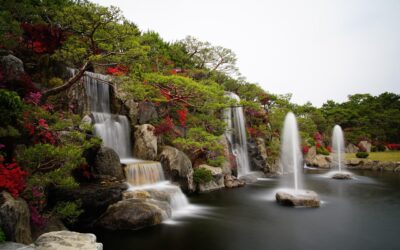
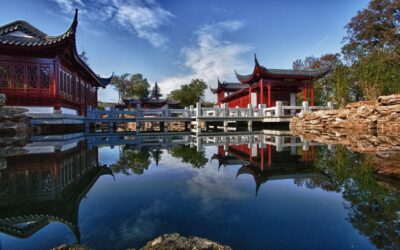
A backyard pond with waterfall is the single feature that changes how a yard feels the moment you step outside. The sound of moving water pulls you toward it, masks street noise, and turns a flat lawn into a destination. Built right, it also runs itself, staying clear and balanced with beneficial bacteria doing most of the work.
Built wrong, it becomes a green, leaking headache. The difference is in the planning: correct depth, a properly sized pump, real filtration, and a waterfall that sends water over the rock instead of behind it. Below is the full build, with numbers you can order from.
- Planning the Pond Before You Dig
- Sizing the Liner and Calculating Volume
- Choosing the Pump and Waterfall Flow
- Filtration: Skimmer and Biofilter
- Step-by-Step Build
- Planting and Adding Fish
- Costs, Timeline, and Maintenance
- Keeping the Water Clear Year-Round
- Pro Tips to Avoid Common Failures
- Landscaping With Ponds: Blending the Water Into the Yard Safely
Planning the Pond Before You Dig
Location decides everything downstream. Pick a spot you see from a patio or kitchen window so you actually enjoy it. Avoid the lowest point in the yard, where runoff carries lawn fertilizer and mud straight into the water and feeds algae. Half a day of sun is ideal; full-day sun accelerates algae and heats the water, while deep shade starves water lilies.
Call 811 before any digging to mark buried utilities. Then decide scale. A good starter size is 8 by 11 feet with a maximum depth of 24 inches. If you want koi, go to 30 inches minimum so fish can overwinter and duck herons. Sketch a natural, irregular outline. Straight lines read artificial.
Sizing the Liner and Calculating Volume
Use 45-mil EPDM liner. It is fish-safe, flexes into any shape, and lasts 20-plus years. Size it with a simple formula so you buy once.
- Liner length = pond length + (2 × max depth) + 2 feet of overlap
- Liner width = pond width + (2 × max depth) + 2 feet of overlap
For an 8 by 11 foot pond at 2 feet deep: length is 11 + 4 + 2 = 17 feet, width is 8 + 4 + 2 = 14 feet. Order a 14 by 17 foot sheet. Put geotextile underlayment or old carpet beneath it to stop roots and stones from puncturing the rubber.
To find volume for pump and treatment sizing, use length × width × average depth × 7.48. That 8 by 11 pond averaging 1.5 feet deep holds roughly 990 gallons. Round to 1,000 gallons for planning.
Choosing the Pump and Waterfall Flow
Two rules govern the pump. First, turn the entire pond volume over at least once per hour: a 1,000-gallon pond needs a 1,000 GPH pump minimum. Second, feed the waterfall based on weir width, the lip water pours over. Plan 100 to 150 GPH per inch of weir for a full sheet of water.
So an 18-inch-wide waterfall wants roughly 1,800 to 2,700 GPH. Take the larger of your two numbers, volume turnover or waterfall demand, and size to that. Then check the pump’s flow curve at your actual lift height, because every foot of head reduces output. If your waterfall crest sits 4 feet above the pump, read the pump’s GPH rating at 4 feet, not at zero.
For most backyard ponds a 2,000 to 3,000 GPH pump hits the sweet spot. Solids-handling external or submersible pumps rated for continuous duty are worth the extra $100 over a fountain pump that clogs weekly.
Filtration: Skimmer and Biofilter
Clear water comes from two filters working as a loop, not from chemicals. The skimmer sits at the water surface on the end opposite the waterfall. It pulls floating leaves and debris into a basket and houses the pump, keeping the surface clean and the pump primed.
The biofilter sits at the top of the waterfall. Water pumped from the skimmer passes up through the biofilter’s filter media, where beneficial bacteria convert fish waste and ammonia into harmless compounds, then spills out as the waterfall. This skimmer-to-biofilter circulation is the engine of a self-cleaning pond. Size both units to your pond’s gallons; manufacturers rate them by capacity. Undersizing here is the number one reason ponds turn green.
Step-by-Step Build
- Outline and excavate. Mark the shape with a hose or spray paint. Dig in tiers: a deep zone at 24 inches, then a planting shelf 10 to 12 inches deep and about a foot wide around the perimeter. Angle walls slightly inward.
- Set the skimmer and biofilter. Level the skimmer into the bank at the surface line on one end. Set the biofilter at the crest of where the waterfall will sit on the opposite end.
- Lay underlayment and liner. Smooth underlayment into the hole, then drape the EPDM, working out big wrinkles and pressing it into the deep zone and shelf.
- Connect the plumbing. Run flexible PVC or kink-free tubing from the skimmer (housing the pump) to the biofilter inlet. Attach liner to the skimmer and biofilter faceplates with the supplied gaskets and silicone.
- Build the waterfall. Stack flat fieldstone from the biofilter down to the pond, bedding each stone in black expanding waterfall foam. Foam forces water over the rock face instead of sneaking behind it. Create one main spill lip for the strongest sound.
- Rock the pond. Line the shelves and bottom with river rock and place larger boulders to hide liner edges and give fish cover.
- Fill and trim. Fill with water, start the pump, and inspect every waterfall seam for water escaping behind the stone. Add foam where needed. Trim excess liner to a 6-inch tuck under the coping stones.
- Treat and cycle. Add dechlorinator to neutralize tap-water chlorine, then beneficial bacteria to jump-start the biofilter. Wait a week before adding fish so the system starts cycling.
Planting and Adding Fish
Plants shade the water, starve algae of nutrients, and make the pond look established. Aim to cover 40 to 60 percent of the surface. In the deep zone, set hardy water lilies (Nymphaea, Zones 3-11) in aquatic baskets. On the shelves, add marginals: pickerel rush (Pontederia cordata, Zones 3-10), blue flag iris (Iris versicolor, Zones 3-9), and horsetail rush for vertical accent. Float some hornwort as an oxygenator and algae competitor.
Hold off stocking fish for two to four weeks while the biofilter matures. Start with a few hardy goldfish or, if the pond is 30 inches deep, small koi. Stock lightly: about 1 inch of fish per 10 gallons. Overstocking overwhelms the filter and clouds the water fast.
Costs, Timeline, and Maintenance
A DIY backyard pond with waterfall in the 8 by 11 foot range runs $2,500 to $5,000 in materials: liner and underlayment $400 to $700, skimmer and biofilter $500 to $900, pump $200 to $500, stone and gravel $600 to $1,200, plus plumbing, foam, and treatments. Hiring a contractor typically lands between $8,000 and $15,000 for a comparable feature because of excavation and labor.
Plan two to three weekends for a DIY build. Digging is one hard day; plumbing, rockwork, and foam curing fill the rest. The water will cloud, then green, then clear over two to three weeks as bacteria colonize.
Maintenance is light once balanced. Empty the skimmer basket weekly, rinse biofilter media a few times a season in pond water (never tap water, which kills the bacteria), top off for evaporation, and net leaves in fall. In cold climates, run a floating de-icer or aerator over winter to keep a gas-exchange hole open for fish. Budget $20 to $40 a month in electricity for a continuously running pump.
Keeping the Water Clear Year-Round
Clear water is a balance, not a chemical you pour in. Four levers control it. Circulation keeps oxygen up and stagnation down, so run the pump 24/7, never on a timer. Filtration through the biofilter converts fish waste before it fuels algae. Plant coverage of 40 to 60 percent of the surface starves algae of the light and nutrients it needs. And a modest fish load keeps waste within what the system can process.
When string algae still shows up in spring, it is normal: the pond warms and plants have not woken up yet. Pull it out by hand, add barley straw or a beneficial bacteria booster, and let the lilies leaf out to shade the water. Resist the urge to dump algaecide, which kills the good bacteria along with the algae and sends you back to square one. A UV clarifier inline after the pump is the one hardware fix that reliably clears green pea-soup water within days if biology alone is not keeping up.
Pro Tips to Avoid Common Failures
- Foam behind every waterfall stone. Water finding a path behind the rock is the top cause of a shrinking pond and a mystery leak.
- Never oversize fish stocking early. A young biofilter cannot process the waste, and green water follows within days.
- Buy the pump by GPH at your real head height, not the box’s headline number.
- Keep lawn fertilizer and grass clippings out of the water. Both dump nutrients that feed string algae.
- Set the skimmer and waterfall at opposite ends so circulation pulls water across the whole pond with no dead zones.
Get the depth, pump, and filtration right the first time and a backyard pond with waterfall rewards you for decades with clear water, healthy fish, and the sound that makes the whole yard feel like somewhere you want to be.
Landscaping With Ponds: Blending the Water Into the Yard Safely
A pond looks finished only when the ground around it belongs to it. Landscaping with ponds means shaping the soil, plantings, paths and lighting so the water feels like part of the yard, while planning for digging safety, children and outdoor electricity from the start.
Dig Safely: Call 811 First
Ponds, stream beds, lighting trenches and planting pockets all involve digging, often across a wider area than the pond itself. Call 811 a few days before any excavation so utility lines are marked, and keep the marks visible until the work is done. Hand dig near any flagged line. Private lines such as sprinkler pipes, landscape lighting cable or a feed to a detached shed are not always marked by the utility, so check your own records too.
Protect Small Children Around Water
Young children can drown in a few inches of water, quickly and silently. Any pond deserves the same respect as a pool.
- Check with your local building department and HOA about barrier rules. Some areas treat ponds past a certain depth like pools and require fencing and self-closing, self-latching gates.
- Where children live or visit, consider a sturdy fence around the pond area, a rigid grate or mesh set just under the surface, or a shallow bubbling rock feature instead of open water.
- Never rely on plants or rock placement alone as a barrier, and supervise children near the water at all times.
Power for Pumps and Lights
Pumps, aerators, UV clarifiers and underwater lights all need outdoor-rated power. Plug them only into GFCI-protected, weather-resistant outlets with in-use covers that stay closed with a cord plugged in. If no such outlet exists near the pond, have a licensed electrician add a new GFCI circuit with buried cable at the proper depth; do not run extension cords across the lawn. Low-voltage landscape lights run through an outdoor-rated transformer are the simpler choice for accent lighting. Before servicing a pump, unplug it or turn off the breaker and confirm power is off with a non-contact voltage tester.
Plantings, Grading and Edges
Slope the surrounding soil gently away from the pond so rain does not wash mulch, fertilizer and lawn clippings into the water. A shallow swale or a band of gravel on the uphill side intercepts runoff.
- Mix heights: low groundcovers and creeping perennials near the edge to soften stone, taller grasses and shrubs behind them for depth.
- Keep large trees at a distance so roots stay clear of the liner and fewer leaves fall in.
- Leave one open stretch of edge for viewing and maintenance, reached by a stepping stone or gravel path with a stable, non-slip surface.
- Use native plants suited to your region, and avoid spreading species that can escape into local waterways.