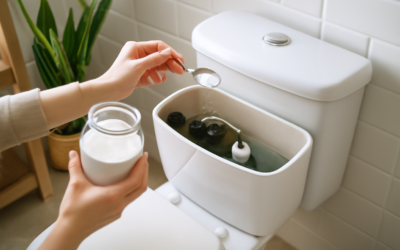
The viral cleaning hack of dumping baking soda in toilet tank water has spread across social media for years, promising sparkling porcelain with no scrubbing. The truth is more complicated. Baking soda works for some toilet problems and actively damages others. This guide separates the legitimate uses from the myths and shows the right way to use baking soda for toilet maintenance without ruining your fill valve or flapper seal.
Part of our Bathroom Remodeling & Flooring guide — explore the full guide →
- What Baking Soda Actually Does
- The Real Risk of Baking Soda in Toilet Tank Water: Damage to Rubber Components
- The Right Way to Use Baking Soda
- Better Alternatives for Tank Cleaning
- Avoid Toilet Bowl Tablets
- How to Address the Real Source of Toilet Problems
- What If Your Tank Is Already Stained?
- When Tank Maintenance Means Calling a Plumber
- Frequently Asked Questions
What Baking Soda Actually Does
Sodium bicarbonate is a mild alkaline cleaner with a pH around 8.4. It neutralizes acidic odors, gently scours soft mineral deposits, and reacts with vinegar or other acids to release carbon dioxide bubbles that loosen debris. In a toilet tank, the slightly alkaline water can soften light hard water staining on the porcelain walls and discourage some bacterial growth.
What baking soda does not do is sanitize. It is not a disinfectant. It does not kill mold, bacteria, or viruses in any meaningful concentration. Marketing claims about “deep cleaning” with baking soda are mostly mechanical scrubbing benefit, not chemical action.
The Real Risk of Baking Soda in Toilet Tank Water: Damage to Rubber Components
The flapper, fill valve seals, and tank-to-bowl gasket are all made of natural rubber, neoprene, or silicone. These materials degrade slowly over time from constant water exposure. Adding alkaline solutions accelerates that degradation, especially in soft rubber flappers found in older toilets.
A single baking soda treatment will not destroy these parts. But homeowners who add baking soda weekly or monthly often see flapper failure within 12 to 24 months instead of the typical 4 to 6 year lifespan. Replacement is cheap ($8 to $15 per flapper) but inconvenient. The damage is cumulative and largely invisible until the toilet starts running constantly.
The Right Way to Use Baking Soda
Baking soda has legitimate, safe uses for toilet cleaning when applied to the bowl rather than the tank. The bowl has no rubber gaskets to damage. For tank cleaning, use baking soda only as a one-time treatment, not a routine practice.
For an occasional tank cleaning:
- Turn off the water supply at the shutoff behind the toilet
- Flush the toilet to drain the tank
- Sprinkle 1 cup of baking soda around the empty tank walls
- Add 1 cup of white vinegar and let the fizzing action work for 15 minutes
- Scrub with a long-handled brush reaching all surfaces
- Turn the water back on and flush three times to fully rinse
This method limits exposure of rubber components to alkaline solutions and removes the residue with thorough rinsing afterward.
Better Alternatives for Tank Cleaning
For ongoing tank maintenance, products designed specifically for toilet tank use are safer than baking soda:
- Plain white vinegar ($3 per gallon) — mildly acidic, dissolves hard water deposits, gentle on rubber
- CLR Calcium Lime Rust Remover ($8) — for heavy mineral buildup, rinse thoroughly
- Lime-A-Way ($6) — similar function, follow label directions
- Borax ($5 per box) — gentler alkaline option, safer than baking soda for occasional use
For the most common tank issue (hard water staining), pour 2 to 3 cups of white vinegar directly into the tank, let it sit overnight without flushing, and flush in the morning. Acidic conditions dissolve calcium and lime far better than alkaline products like baking soda.
Avoid Toilet Bowl Tablets
The “drop-in” blue tablets that promise continuous cleaning are the worst offenders against tank components. Most contain bleach or other oxidizers that destroy flappers within 6 to 12 months and may void manufacturer warranties on the toilet itself. Kohler, Toto, and American Standard all discourage tablet use in their warranty documentation.
If you want continuous freshness, use bowl-only products like Lysol Click Gel that adhere to the inside of the bowl rim without entering the tank. Tank water should remain plain treated water.
How to Address the Real Source of Toilet Problems
Most issues blamed on dirty tank water actually come from the bowl. Hard water stains, ring buildup, and discoloration in the bowl rarely originate in the tank. The fix is bowl cleaning, not tank treatment.
For ring stains in the bowl, a pumice stone (like Pumie at $4 each) removes deposits without scratching porcelain. Wet the stone, wet the bowl, and gently rub. Stubborn rust stains respond to cream cleaners with oxalic acid like Bar Keeper’s Friend ($3 per can). For routine bowl cleaning, a standard toilet brush and a basic bowl cleaner like Lysol or Clorox cover most needs.
What If Your Tank Is Already Stained?
Old, neglected tanks often develop a pink or orange film inside. This is usually Serratia marcescens bacteria, which feeds on minerals in standing water. The fix is straightforward:
- Drain the tank by turning off the water and flushing
- Wipe down all surfaces with a sponge soaked in white vinegar
- Replace the flapper if it shows pink staining or feels gummy
- Clean the fill valve with a soft brush and vinegar
- Refill and flush twice to clear residue
Recurring pink film usually means slow water turnover from a low-flow toilet that rarely refills. Adding a small amount of vinegar to the tank weekly (1/4 cup) keeps mineral buildup down without damaging components.
When Tank Maintenance Means Calling a Plumber
If the toilet is constantly running, replacing the flapper or fill valve is a $20 DIY job. If the tank cracks, the toilet leaks at the floor, or the bowl no longer holds water properly, replacement is more economical than repair. New basic toilets run $150 to $400 plus $200 to $400 in labor.
Toilets older than 25 years often warrant replacement regardless of condition. Modern 1.28 GPF and dual-flush toilets cut water usage by 60 percent compared to pre-1992 models, paying for themselves in water bills within 5 to 8 years.
Frequently Asked Questions
Will baking soda damage my toilet tank?
Single occasional use is generally safe. Routine weekly or monthly application accelerates wear on rubber flappers, fill valve seals, and tank gaskets. Use sparingly.
How much baking soda should I put in a toilet tank?
If using at all, limit to 1 cup, combine with vinegar for a one-time fizz cleaning, and rinse thoroughly. Never leave baking soda in the tank as a continuous treatment.
What is the best thing to put in a toilet tank for cleaning?
Plain white vinegar is the safest and most effective option. Pour 2 to 3 cups, let sit overnight, and flush. It dissolves mineral deposits without harming rubber components.
Why is my toilet tank water turning blue or pink?
Blue color usually comes from drop-in cleaning tablets. Pink color is bacterial growth on minerals. Drain the tank, scrub with vinegar, and consider whether tablets are causing other problems.