
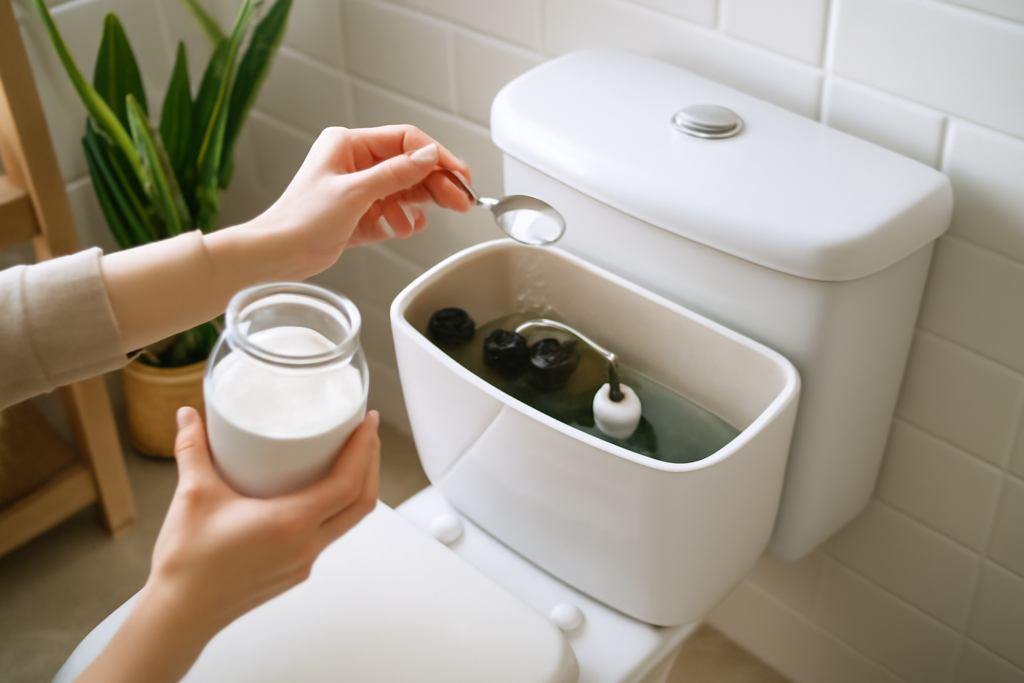
You have probably seen the tip shared as a plumber’s secret: pour a cup of baking soda into your toilet tank to keep everything fresh and clean. But why put baking soda in toilet tank water actually, and does it live up to the hype? The short version is that baking soda can gently deodorize and lightly clean the tank and bowl as it flushes through, and it is safe for your plumbing, unlike the harsh drop-in tablets many people use. It is not a miracle cure, but used correctly it is a cheap, low-risk way to keep your toilet cleaner. Here is what it does, how to use it, and what to watch out for.
Part of our Bathroom Remodeling & Flooring guide — explore the full guide →
What Baking Soda Does in the Tank
Baking soda, or sodium bicarbonate, is a mild alkaline cleaner and a natural deodorizer. When you add it to the tank, it dissolves into the water and gets distributed into the bowl with every flush. That accomplishes a few things:
- Neutralizes odors: Baking soda absorbs and neutralizes acidic odor molecules, helping cut the musty or sulfur smells that can develop in a toilet.
- Light cleaning: Its mild abrasiveness and alkalinity help loosen minor grime and buildup on the tank walls and in the bowl over time.
- Softens mineral buildup: It can help reduce hard-water scale accumulation inside the tank when used regularly.
The key word is mild. Baking soda is gentle, which is exactly why it is safe for the rubber flapper, seals, and metal parts inside the tank that harsher chemicals damage.
Why It Is Safer Than Drop-In Tablets
Many homeowners drop bleach or blue chemical tablets into the tank for continuous cleaning. The problem is those products are corrosive. Bleach and strong chemical tablets sitting in the tank slowly eat away at the rubber flapper, gaskets, and seals, leading to leaks, running toilets, and premature part failure. Plumbers frequently blame in-tank bleach tablets for the toilets they are called to repair.
Baking soda avoids all of that. It cleans and deodorizes without corroding the tank’s rubber and metal components, making it a plumber-friendly alternative for people who want an in-tank freshener without the damage.
How to Use Baking Soda in the Toilet Tank
You have two main approaches, occasional deep cleaning and light ongoing freshening.
For a tank deep clean
- Turn off the water at the shut-off valve behind the toilet and flush to drain the tank.
- Sprinkle 1 to 2 cups of baking soda around the inside of the empty tank.
- Add a cup of white vinegar if you want extra fizzing action to loosen grime, and let it sit for 30 minutes to an hour.
- Scrub the tank walls and parts gently with a sponge or soft brush.
- Turn the water back on, let the tank refill, and flush a couple of times to rinse.
For routine freshening
Add about 1/2 cup of baking soda to the filled tank once a week, let it sit for 20 to 30 minutes, then flush. This distributes a light cleaning and deodorizing dose into the bowl. Keep it modest; a small amount regularly is better than dumping in large quantities.
Important Cautions
Baking soda is safe, but there are limits worth respecting.
- Do not overdo it. Dumping large amounts frequently can leave undissolved powder that settles and, in excess, could interfere with moving parts or accumulate. Stick to modest amounts.
- It will not fully replace bowl cleaning. Baking soda in the tank lightly helps the bowl, but the bowl still needs regular scrubbing with a brush and cleaner for real hygiene.
- It is not a strong disinfectant. Baking soda deodorizes and lightly cleans but does not kill germs the way a proper bathroom disinfectant does.
- Do not mix it with bleach in the tank. Keep to gentle combinations like baking soda and vinegar, and never combine cleaning chemicals randomly.
Baking Soda and Vinegar Together
The popular baking soda and vinegar combo does create a satisfying fizz that helps loosen grime and mineral deposits during a deep clean. Just know that once they react, they largely neutralize each other, so the real benefit is the mechanical fizzing action and the mild acids and bases doing light work, not a powerful chemical clean. It is genuinely useful for a periodic tank scrub, but it is a gentle cleaner, not an industrial one.
Does It Help With Hard Water and Odors?
In homes with hard water, the toilet tank slowly accumulates chalky mineral scale on the walls, the fill valve, and the flapper, which can shorten the life of those parts and stain the bowl. Baking soda’s mild alkalinity helps loosen light scale over time, and a periodic deep clean with baking soda and vinegar dissolves more stubborn deposits during the fizzing reaction. On the odor front, toilets can develop a musty or sewer-like smell when bacteria and mildew grow in the tank’s standing water. Baking soda neutralizes many of those odor compounds as it circulates, which is why a weekly dose keeps things noticeably fresher. For heavier mineral or odor problems, white vinegar poured into the tank and left overnight, then flushed, is a stronger periodic treatment that still spares your rubber parts.
What About the Toilet Bowl Directly?
Baking soda is even more useful applied straight to the bowl than sitting in the tank. For a quick bowl refresh, sprinkle about a cup of baking soda into the bowl, add a cup of white vinegar, let the fizz work for 10 to 15 minutes, then scrub with a toilet brush and flush. This tackles stains, mineral rings, and odors right where they are worst, under the rim and at the waterline. Many people combine both approaches: a modest weekly dose in the tank for ongoing freshening, plus a direct baking-soda-and-vinegar bowl scrub during their regular cleaning. Together they keep the whole fixture clean without any harsh, corrosive chemicals.
Better Overall Toilet-Cleaning Routine
Baking soda is one helpful tool, but a clean toilet needs a fuller routine:
- Scrub the bowl weekly with a toilet brush and a bowl cleaner, getting under the rim where bacteria hide.
- Deep clean the tank a few times a year with the baking soda method above to keep it free of scale and mildew.
- Disinfect surfaces like the seat, handle, and lid with a proper disinfectant regularly.
- Skip corrosive in-tank tablets that damage the flapper and seals.
- Address hard water with periodic vinegar treatments to dissolve scale in the bowl and tank.
Does baking soda in the toilet tank actually clean it?
It provides mild cleaning and deodorizing as it dissolves and flushes through, and it helps reduce odors and light buildup. It will not deep-clean or disinfect on its own, so you still need to scrub the bowl regularly.
Is baking soda safe for toilet components?
Yes. Baking soda is gentle and will not corrode the rubber flapper, seals, or metal parts, unlike bleach and chemical drop-in tablets, which slowly damage them and cause leaks. It is a plumber-friendly choice.
How much baking soda should I put in the tank?
For routine freshening, about 1/2 cup once a week, left 20 to 30 minutes before flushing. For a deep clean, use 1 to 2 cups in an emptied tank with optional vinegar. Avoid dumping in large amounts frequently.
Can I leave baking soda in the tank all the time?
It is better to add it periodically rather than leave large amounts sitting constantly, since excess undissolved powder can settle. A modest weekly dose that you flush through is the safer, more effective approach.
The Bottom Line
Putting baking soda in the toilet tank is a cheap, safe way to deodorize, lightly clean, and reduce hard-water buildup without the corrosion that bleach tablets cause to your flapper and seals. Use about 1/2 cup weekly for freshening or 1 to 2 cups for a periodic deep clean, and pair it with vinegar for extra scrubbing power. Just remember it is a gentle helper, not a disinfectant, so keep scrubbing the bowl and disinfecting surfaces as part of your regular routine.


