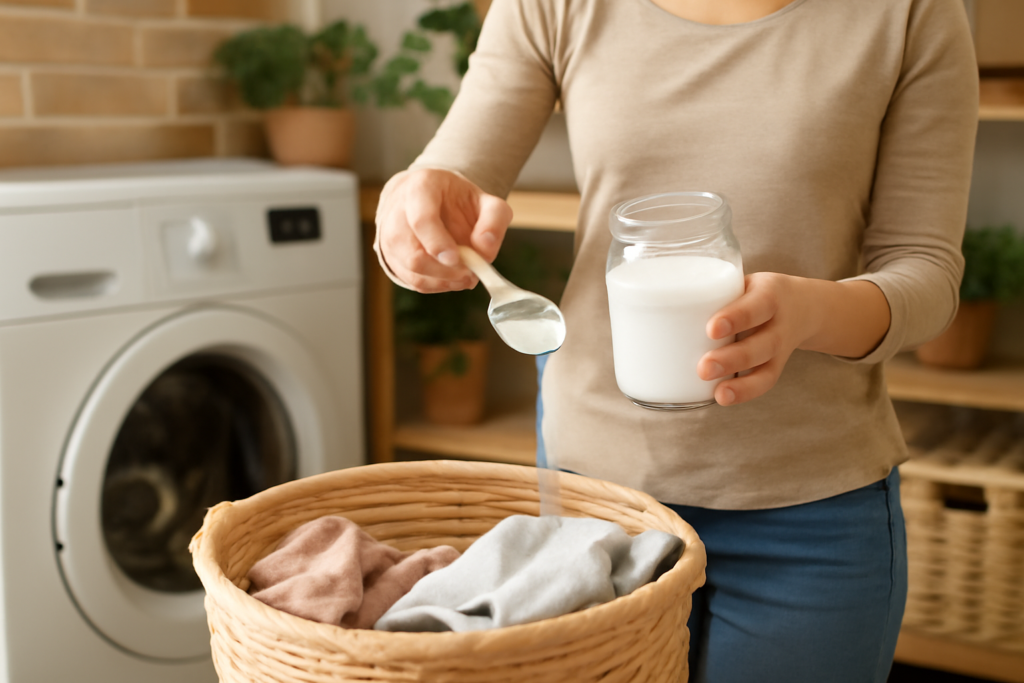
Adding just half a cup of baking soda to a wash load can noticeably boost your detergent’s performance and tame odors that survive a normal cycle. Once you learn how to use baking soda in laundry, this dollar-store staple becomes a quiet workhorse that softens hard water, brightens dingy whites, neutralizes stubborn smells, and even freshens the washing machine itself. Here is exactly how to put it to work.
Why Baking Soda Helps in the Wash
Baking soda, or sodium bicarbonate, is a mild alkali. In the laundry that mild alkalinity does several useful things at once. It helps balance the pH of the wash water so detergent can work more effectively, it softens hard water by helping to manage dissolved minerals, and it absorbs and neutralizes acidic odor compounds rather than just covering them. Because it is gentle and non-toxic, it suits households with sensitive skin and those who want to lean less on heavy chemical additives.
Boosting Your Detergent
The most common use is as a detergent booster. Add half a cup of baking soda directly into the drum along with your usual amount of detergent at the start of the cycle. The baking soda helps the detergent lift dirt and odors more efficiently, which can let you use a bit less detergent overall. This is especially helpful in hard-water homes, where minerals normally reduce how well detergent lathers and cleans.
Softening Hard Water
Hard water leaves clothes feeling stiff and looking dull because mineral ions interfere with detergent. Baking soda helps counter this effect. For a hard-water household, adding half a cup per load can make towels feel softer and colors look brighter over time. If your water is very hard, you may notice a more pronounced difference, and pairing baking soda with a vinegar rinse, described below, compounds the benefit.
Fighting Tough Odors
Some smells, like gym sweat, mildew, smoke, and pet odors, cling to fabric even after a normal wash. Baking soda’s odor-absorbing power makes it ideal here.
- Pre-soak method: dissolve one cup of baking soda in a basin or tub of warm water and soak the smelly items for several hours or overnight before washing.
- In-wash boost: add half a cup directly to the drum with your detergent for everyday odor control.
- Stubborn mildew: combine the baking soda wash with a separate vinegar rinse for layered odor removal.
For musty towels in particular, this routine often revives them when detergent alone has stopped working.
Brightening Whites and Colors
Baking soda will not bleach fabric, but it helps whites look brighter and keeps colors from going dull by improving how thoroughly the wash rinses away residue and minerals. Add half a cup with your detergent for white loads. For an extra lift on whites, some people pair baking soda with an oxygen-based booster, which is safer for colors than chlorine bleach. Just remember that baking soda is a brightener through better cleaning, not a true whitening agent.
Using Baking Soda With Vinegar
Baking soda and white vinegar make a powerful laundry team when used in the right order, never mixed together in the same step. Add baking soda to the wash at the start of the cycle, and add half a cup of white vinegar to the fabric softener dispenser or during the rinse cycle. The baking soda boosts the wash while the vinegar in the rinse helps dissolve residue, soften fabric, and cut lingering odors. Adding them together at the same moment simply neutralizes both, so keep them in separate phases of the cycle.
Pretreating Stains
Baking soda also works as a spot pretreatment before the load goes in. Make a paste of three parts baking soda to one part water, rub it gently into grease, sweat, or food stains, and let it sit 15 to 30 minutes before washing. For underarm yellowing and collar grime, this simple paste often loosens buildup that detergent alone leaves behind. Always test on colored fabrics first and avoid drying any treated garment until you confirm the stain is gone.
Freshening the Washing Machine
Your machine needs cleaning too, and baking soda is a safe way to do it. Once a month, run an empty hot-water cycle with one cup of baking soda added to the drum to help neutralize odors and loosen residue. For front-loaders prone to musty smells, follow with a separate hot cycle using white vinegar, then wipe the rubber door gasket and leave the door open to dry. This routine keeps the machine smelling clean and prevents that mildew odor from transferring to your clothes.
How Much to Use and When
Getting the amount right keeps results consistent.
- For a standard load, add half a cup of baking soda to the drum at the start.
- For heavy odors, pre-soak in one cup dissolved in warm water before washing.
- For machine cleaning, use one full cup in an empty hot cycle monthly.
- Add baking soda to the drum, not the detergent dispenser, so it dissolves freely.
Using far more than recommended will not clean better and can leave a powdery residue, so stick to these measures.
Cautions and Compatibility
At D and G Flooring, we like baking soda because it is gentle on fabrics and surfaces alike, but a few precautions apply. It is generally safe for high-efficiency machines in moderate amounts, though you should not overload the drum with powder. Avoid using it on garments labeled for specialty care, such as certain wools or silks, without checking the care tag. Never combine baking soda or vinegar with chlorine bleach, and keep the box sealed and dry so the powder stays loose. Store it out of reach of children and pets even though it is non-toxic.
Final Thoughts
From boosting detergent and softening hard water to neutralizing odors and cleaning the machine itself, baking soda earns its place beside the washer. Now that you know how to use baking soda in laundry, start with half a cup per load, add a vinegar rinse for extra freshness, and keep a box on the shelf for stain pretreatment. It is one of the cheapest, most effective laundry upgrades you can make.