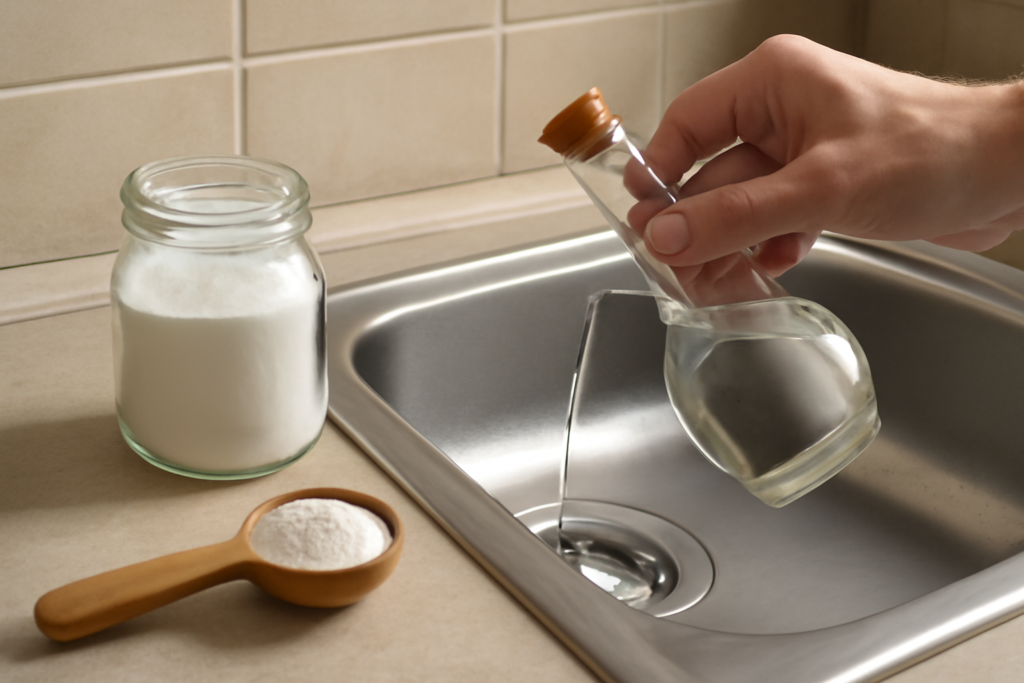
A baking soda vinegar drain cleaner is one of the most popular home remedies for sluggish sinks, and for good reason: a single box of baking soda costs about a dollar, and a gallon of white vinegar runs around three to four dollars, making this one of the cheapest cleaning tricks in any kitchen. When you combine the two, they fizz dramatically and can help loosen light buildup and knock down odors. But the method has real limits, and knowing exactly when and how to use it will save you from frustration.
At D and G Flooring we deal with bathrooms and kitchens during renovations, so drain maintenance comes up constantly. This guide covers the chemistry, the correct technique, the situations where it shines, and the cases where you genuinely need something stronger or a plumber.
The Chemistry: What the Fizz Actually Does
Baking soda is sodium bicarbonate, a mild base. White vinegar is a dilute acetic acid solution, usually around 5 percent acidity. When they meet, they react to produce water, sodium acetate, and carbon dioxide gas. That carbon dioxide is the bubbling you see and hear. The reaction is fun to watch, but it is important to understand what it does and does not accomplish.
The mechanical fizzing can help agitate loose gunk, soap scum, and food particles clinging to the upper walls of a drain. The reaction also helps neutralize odors, which is why drains often smell fresher afterward. What the reaction does not do is dissolve hair or break down a solid grease plug deep in the pipe. Once the acid and base neutralize each other, the resulting solution is fairly neutral and not especially powerful. So think of this as a maintenance and freshening tool, not a heavy-duty clog buster.
What You Will Need
- About 1/2 cup of baking soda
- About 1 cup of white vinegar
- A kettle or pot of boiling or very hot water
- A drain stopper, rag, or small plate to cover the opening
- Optional: a few tablespoons of salt for extra scouring action
Step-by-Step: The Right Way to Do It
Order and timing matter more than most people realize. Follow these steps for the best result:
- Step 1 — Clear standing water. Bail out or let any pooled water drain as much as possible so the ingredients reach the pipe walls rather than getting diluted.
- Step 2 — Pour boiling water first. A kettle of boiling water down the drain helps soften grease and loosen residue before the reaction. Skip this step on PVC pipes if you are worried about heat; very hot tap water is a safer substitute.
- Step 3 — Add the baking soda. Pour about 1/2 cup directly into the drain. Use a spoon or your fingers to push it past the opening if needed.
- Step 4 — Pour in the vinegar. Add roughly 1 cup of white vinegar. It will immediately start to fizz.
- Step 5 — Cover and wait. Plug the drain with a stopper or cover it with a small plate. This forces the bubbling reaction downward into the clog instead of escaping upward. Let it work for 10 to 15 minutes.
- Step 6 — Flush with hot water. Remove the cover and pour another kettle of hot water down the drain to wash everything away.
If the drain is still slow, you can repeat the cycle once. Beyond two attempts, the problem is likely too stubborn for this method.
When This Method Works Well
The baking soda and vinegar approach is genuinely useful for the right jobs:
- Routine maintenance: Running this once or twice a month helps keep drains flowing and odor-free before buildup becomes a problem.
- Mild slow drains: A sink that drains a little sluggishly from soap scum or light grease often improves noticeably.
- Smelly drains: Garbage disposals and bathroom sinks that smell sour respond well because the reaction neutralizes odor-causing residue.
- Households avoiding harsh chemicals: Families with kids, pets, or septic systems often prefer this gentler option over caustic commercial cleaners.
When It Will Not Be Enough
Be realistic about the limits. The fizzing reaction cannot handle:
- Hair clogs: Tangled hair in a shower or bathroom sink drain needs physical removal with a drain claw tool or a plunger, not bubbles.
- Solid grease plugs: A hardened mass of cooled fat in a kitchen line will not dissolve from this reaction.
- Full blockages: If water is not moving at all, you likely have an obstruction that requires a plunger, a drain snake, or professional attention.
- Deep or recurring clogs: Clogs that keep coming back can signal a problem further down the line, such as a partial blockage in the main drain or even root intrusion in older homes.
Tools to Reach For When Fizzing Fails
If the natural cleaner does not do the trick, escalate in this order before calling a professional:
- A cup plunger: Create a seal over the drain and plunge firmly. For sinks, block the overflow opening with a wet rag first so you build pressure.
- A drain snake or hand auger: Inexpensive plastic zip tools grab hair clogs near the surface, while a hand-crank auger reaches deeper blockages.
- Cleaning the P-trap: The curved pipe under the sink traps debris. Place a bucket underneath, unscrew the slip nuts, and clear it out by hand.
If none of these work, or if multiple drains in the house back up at once, that points to a main line issue and a plumber is the right call.
Safety and Pipe Considerations
This method is mild, but a few precautions still apply. Never mix baking soda and vinegar with commercial drain cleaners. Leftover chemical drain cleaner in the pipe can react unpredictably with the acid, and the combination may release dangerous fumes or splash caustic liquid. If you have already poured a commercial product down a drain and it did not work, do not follow it with this remedy; wait, flush with plenty of water, or call a professional.
For older homes with metal pipes, the occasional vinegar treatment is fine. For modern PVC, the reaction itself is harmless, though you may want to use very hot tap water rather than rolling-boil water to avoid stressing the plastic joints over time.
Preventing Future Clogs
The best drain cleaner is the clog that never forms. Keep grease out of kitchen sinks by wiping greasy pans with a paper towel before washing. Use a mesh strainer in showers and tubs to catch hair. Run hot water for a few seconds after each use to keep residue moving. With these habits plus a monthly baking soda and vinegar refresh, most household drains stay clear without ever needing harsh chemicals.
The Bottom Line
A baking soda and vinegar drain cleaner is a cheap, low-toxicity, and effective tool for maintenance, light slow drains, and odor control. It is not a miracle clog remover, and it will not defeat hair, hardened grease, or full blockages. Used regularly as prevention and paired with simple mechanical tools when needed, it keeps most home drains running smoothly and saves the plumber’s bill for the problems that truly require one.