
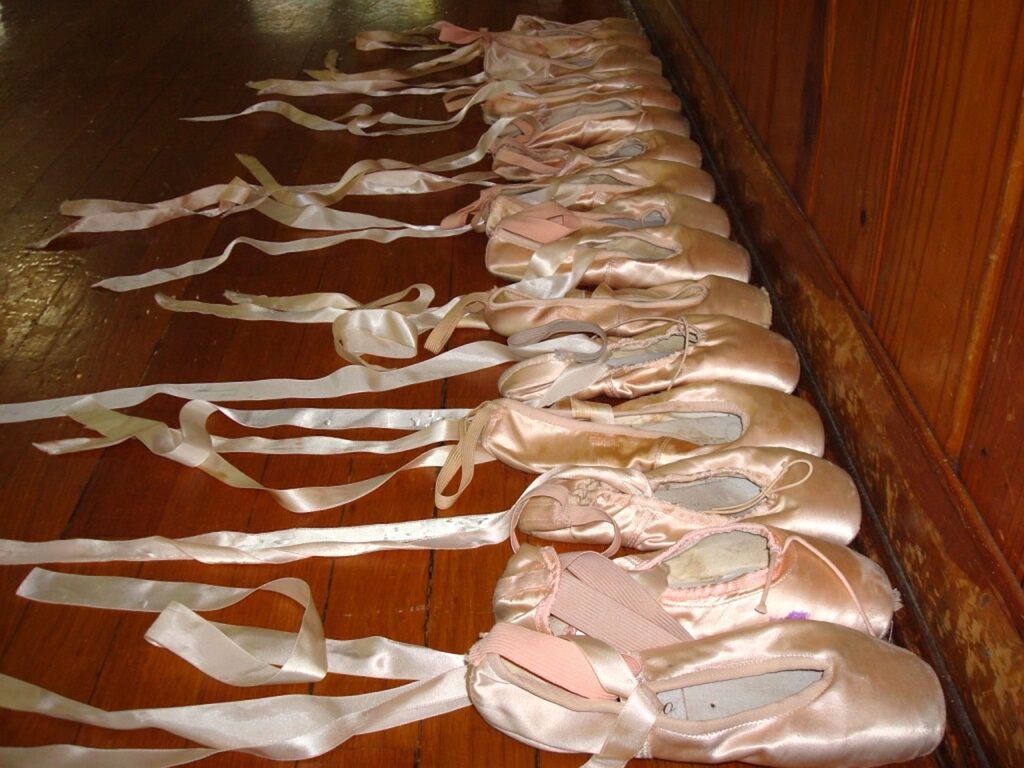
Professional dancers landing from a grand jete generate ground reaction forces of up to seven times body weight, which is why concrete-on-tile gymnasium floors end careers within a decade. Ballet flooring solves this with a two-layer system: a sprung wooden subfloor that absorbs roughly 65% of impact, topped by a marley vinyl surface that delivers the precise sliding friction pointe shoes need. Choosing the wrong surface — or laying marley directly over concrete — leads to shin splints, stress fractures, and rolled ankles within a single season.
How Sprung and Marley Floors Actually Work
A true ballet floor is engineered in two distinct layers. The sprung subfloor sits on rubber or foam blocks (sometimes called “basket weave” sleepers) that compress under load, returning energy to the dancer on takeoff. Underneath, plywood panels float independently so each section can flex without transmitting force to the next dancer 6 feet away.
Marley refers to the vinyl roll laid on top. The name is generic — actual Marley Mouldings Inc. exited the market in the 1970s — but the term stuck. Modern marley measures 1.5 to 2 mm thick and is engineered with a microscopic texture that allows controlled sliding for turns while still providing grip for jumps and balances.
Top Marley Brands and What They Cost
Three manufacturers dominate the US studio market, and the price gap between them is meaningful for home installations.
- Harlequin Cascade and Harlequin Studio: $7 to $12 per sq ft. Industry standard at major ballet companies including American Ballet Theatre. 6.5 ft wide rolls in lengths up to 65 ft
- Rosco Adagio and Dance Floor: $4 to $6.50 per sq ft. Reversible (matte black one side, gray the other). Popular for touring productions and schools
- StageStep Timestep and Quickstep: $3.50 to $5.50 per sq ft. Best value for home studios. Available in 5.25 ft widths
- American Harlequin Reversible: $5 to $7 per sq ft. A good middle ground between durability and price
For a 12 ft by 12 ft home studio, expect $500 to $1,800 in marley alone, before the sprung subfloor underneath.
Home Studio Sprung Floor Construction
Building a sprung floor from scratch costs $4 to $9 per sq ft in materials if you handle the carpentry yourself. The basic recipe: lay 1 inch foam squares or rubber pucks on a 12 inch grid over the existing slab, then 3/4 inch tongue-and-groove plywood as the substrate, then 1/4 inch hardboard or birch ply on top for a smooth surface. The marley rolls over that.
Total system thickness runs 2 to 3 inches, which means your studio loses headroom and any doorways need consideration. Skip the foam pucks and you do not have a sprung floor — you have plywood over concrete, which is barely better than dancing on a parking lot.
Permanent vs Portable Ballet Flooring
Studios renting space typically use rolled marley that can be taken up at the end of a session. Tape it down with Rosco Premier or Harlequin Floor Tape at the seams, and the floor reinstalls in about 30 minutes. For permanent home installations, marley can be heat-welded or chemically welded at seams for a continuous surface that handles years of slide-and-spin without lifting.
Portable systems like Stagestep’s Quickstep tiles or Harlequin Liberty interlocking panels combine sprung underlayer and marley top into 3 ft by 3 ft squares. Pricing runs $35 to $60 per sq ft, but installation takes one afternoon and the floor lifts and stores in a closet between uses.
Surface Properties That Matter
Marley is rated by friction coefficient and density. Higher friction (around 0.6 to 0.7 dynamic coefficient) suits pointe and classical work where precise control prevents slipping. Lower friction (0.4 to 0.5) suits contemporary and jazz where sliding is part of the choreography. Reversible marley like Rosco Adagio gives you both options depending on which side faces up.
Color matters too. Black absorbs studio lighting and reduces eye strain during long rehearsals, while gray gives videographers cleaner contrast for performance recordings. Most pros prefer black for daily practice and gray for performances.
Maintenance and Lifespan
A well-built marley floor lasts 8 to 15 years in heavy studio use, longer in a home setting. Routine care matters: damp mop with diluted Harlequin Cleaner-Maintainer or a pH-neutral floor cleaner weekly, and avoid bleach or ammonia which break down the vinyl. Resin and rosin from pointe shoes builds up and requires a deep clean with Harlequin Studio Cleaner roughly every 90 days.
- Sweep before every class to remove grit that scratches the surface
- Never wear street shoes on marley — heels create permanent dents
- Patch tears with vinyl repair kits before they spread
- Re-tape rolled seams every 60 to 90 days as adhesive softens
Common Mistakes Home Installers Make
Skipping the sprung subfloor is the single most common error. Marley laid on concrete looks correct but provides zero shock absorption — dancers experience the same joint loading as on bare slab. The marley itself is just a sliding surface, not impact protection.
Other frequent mistakes include using carpet padding under marley (compresses unevenly and creates dead spots), using the wrong tape that leaves residue, and choosing 1 mm thin “dance ribbon” marley for serious training. Thin marley wears through in months under pointe work.
Budget Recommendations by Use Case
For a serious home studio supporting daily practice and pointe work, budget $12 to $20 per sq ft total — sprung subfloor plus high-grade marley. A 12 ft by 14 ft space comes in around $2,500 to $3,500 in materials.
For casual practice or barre work without much jumping, a portable Quickstep system at $40 per sq ft installed delivers acceptable shock absorption and rolls up when not in use. For touring or pop-up studios, a single 6 ft by 30 ft roll of Rosco Adagio over a portable subfloor like Harlequin Activity gives professional results at $1,200 to $1,800 total.
Prefer to explore on your own?
See how new flooring looks in your actual room in seconds — free, no signup.
Try the free Floor Studio →

