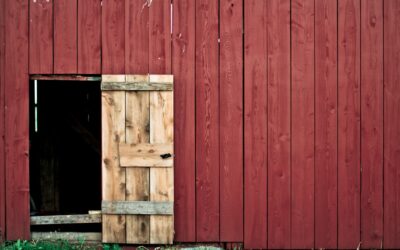
Barn door hardware kits bundle everything you need to hang a sliding barn door—track, rollers, stops, and mounting hardware—into one package, making a stylish, space-saving door an achievable weekend project. Sliding barn doors free up the floor space that a swinging door wastes, add rustic or modern character, and work beautifully for closets, pantries, bathrooms, and room dividers. Choosing the right kit comes down to matching the hardware to your door’s size, weight, and the look you want.
Part of our Windows & Doors guide — explore the full guide →
- Why Choose a Sliding Barn Door
- What Comes in a Kit
- Track Styles and Finishes
- Matching Hardware to Door Weight and Size
- What Barn Door Hardware Costs
- The Critical Role of the Mounting Board
- Step-by-Step Installation
- Common Mistakes to Avoid
- Privacy, Sound, and Light Gaps
- Building or Buying the Door Slab
- Bringing It All Together
Why Choose a Sliding Barn Door
A barn door slides flat along the wall instead of swinging into the room, reclaiming the arc of floor space a hinged door normally needs. That makes them ideal for tight spaces like small bathrooms, laundry rooms, and hallways where a swinging door would collide with fixtures or furniture. Beyond function, barn doors are a design statement—the exposed track and rollers add architectural interest, and the style ranges from reclaimed-wood farmhouse to sleek matte-black modern. Because they mount on the wall surface, they are also easier to install than a pocket door, which requires opening up the wall.
What Comes in a Kit
A complete barn door hardware kit typically includes the track rail, two roller hangers (trolleys) that bolt to the door, floor guide to keep the door from swinging, end stops to prevent the door from rolling off the track, spacers to hold the track off the wall, and all mounting bolts. Better kits also include a wall mount board or clear instructions for mounting into studs. The door itself is almost always sold separately, so you choose or build a slab that fits your opening and style.
Track Styles and Finishes
The track and rollers define the look, and options abound:
- Straight/flat track: A simple flat steel bar, the most common and affordable, with a clean modern profile.
- Roller-top (“classic” J or hoop) hangers: Decorative roller shapes—J-strap, hoop, or arrow—that show above the track for a farmhouse feel.
- Round tube track: A cylindrical rail for a more industrial or refined look.
- Bypass kits: A double-track system that lets two doors slide past each other, great for wide closets.
- Soft-close kits: Add dampers that gently stop the door instead of slamming, a worthwhile upgrade.
Popular finishes include matte black (by far the most common), oil-rubbed bronze, brushed nickel, and raw steel. Match the finish to your other hardware and lighting for a coordinated look.
Matching Hardware to Door Weight and Size
The single most important spec is the weight rating. Hardware kits list a maximum door weight, commonly 200 to 400 pounds for residential kits. A solid-wood door is heavy—a 36-inch solid door can weigh 80 to 120 pounds—so always choose a kit rated well above your door’s actual weight for smooth, safe operation. Underrated hardware binds, wears fast, and can fail.
Track length is the other key measurement: the track should be roughly twice the width of your door opening so the door can slide completely clear of the opening. For a 36-inch-wide door, you want about a 72-inch track. The door slab itself should be a few inches wider and taller than the opening—typically 2 to 3 inches wider on each side and 1 inch taller—so it fully covers the opening and blocks light gaps.
What Barn Door Hardware Costs
Hardware kits range widely by quality. Budget kits start around $40 to $80, mid-range kits with solid steel tracks and quiet nylon-tired rollers run $100 to $200, and premium kits with soft-close, heavy weight ratings, and designer finishes reach $250 to $500. Bypass and double-door systems cost more. The door slab adds anywhere from $150 for a simple pre-made panel to $600-plus for a solid-wood or glass door. Overall, a complete DIY barn door installation commonly lands between $250 and $800.
The Critical Role of the Mounting Board
Because a sliding door and its hardware are heavy and the load hangs entirely from the track, the track must be anchored into solid framing—never just drywall. The problem is that studs sit every 16 inches, but the track bolt holes rarely line up with them. The professional solution is to mount a horizontal backer board (often a 1×6 painted or stained to match the trim) securely into the studs first, then bolt the track anywhere along that board. This spreads the load, guarantees solid anchoring, and lets you position the track exactly where you want it.
Skipping the backer board and relying on drywall anchors is the number-one cause of barn doors ripping loose from the wall. Do not shortcut this step.
Step-by-Step Installation
- Find and mark your studs, then mount the backer board level and securely into them.
- Assemble the track and bolt it to the backer board with the included spacers, checking that it is perfectly level—an unlevel track makes the door roll to one side on its own.
- Attach the roller hangers to the top of the door with the provided bolts, positioned so the door hangs at the right height with a small floor gap.
- Lift the door and set the rollers onto the track, then install the end stops so the door can’t roll off either end.
- Add the floor guide at the bottom to keep the door from swinging away from the wall, and attach a handle or pull.
Test the slide, adjust the roller height if needed for an even floor gap, and confirm the door covers the opening fully.
Common Mistakes to Avoid
Beyond mounting into drywall, watch for a track that isn’t level, which causes self-rolling. Make sure the door is wide enough to cover the opening plus overlap on each side, or you will have annoying light and privacy gaps. Don’t forget the floor guide—without it, the door swings and scrapes the wall. And account for wall obstructions: light switches, outlets, and trim in the door’s slide path can block it, so plan the layout before drilling.
Privacy, Sound, and Light Gaps
One trade-off of surface-mounted barn doors is that they don’t seal like a swinging door in a jamb. Because the door hangs slightly off the wall and rolls along a track, there are gaps on the sides and bottom that let light and sound pass. For rooms where privacy matters—bathrooms and bedrooms—plan for this. Size the door generously so it overlaps the opening by at least a couple of inches on each side, and consider adding a door-edge seal or a small return strip on the wall to close the side gap. A floor guide keeps the bottom consistent, but a gap there is unavoidable, so barn doors are less ideal where full sound isolation or complete darkness is required.
For a bathroom, many homeowners add a privacy latch designed for barn doors, which engages when the door is closed. Just remember these doors will never be as soundproof or light-tight as a conventional door, so set expectations accordingly and choose the room accordingly.
Building or Buying the Door Slab
The hardware is only half the project—you also need a door. You can buy a pre-made barn door slab, often sold alongside the hardware in matching styles from farmhouse Z-brace to flat modern panels, typically $150 to $600. Alternatively, building your own from tongue-and-groove boards, a solid-core door blank, or a shiplap panel lets you customize the look and often saves money. If you build one, keep it flat and rigid, because a warped or racked door won’t hang or slide properly. Reinforce with a diagonal brace or a sturdy frame, and finish both faces to prevent moisture from warping one side. Whatever you choose, confirm the door’s weight stays within the hardware’s rating and that it is the right dimensions to cover your opening with proper overlap.
Bringing It All Together
Barn door hardware kits make it easy to add a space-saving, character-rich sliding door to almost any opening. Match the kit’s weight rating to your door, size the track to about twice the opening width, and above all mount everything to a solid backer board anchored in the studs. Nail those details and you will have a smooth-gliding barn door that looks professionally installed and works flawlessly for years.