The right bathroom tile ideas can transform an ordinary bathroom into a space that feels both functional and beautiful. Tile remains the most popular material for bathrooms because it handles moisture, heat, and daily wear better than almost any alternative. But with hundreds of styles, patterns, and formats now available, choosing the right tile can feel overwhelming.
This guide covers the most popular bathroom tile trends 2026 has to offer, from large-format porcelain slabs and handmade zellige to bold color palettes and budget-friendly options. Whether you are designing a spacious master suite or working with a compact guest bathroom, you will find bathroom tile design ideas that match your vision and your budget.
- Trending Bathroom Tile Styles for 2026
- Tile Style Visual Guide
- Bathroom Floor Tile Ideas vs Wall Tile Ideas
- Small Bathroom Tile Ideas and Strategies
- Master Bathroom vs Guest Bathroom Tile Ideas
- Bathroom Tile Color Trends for 2026
- Budget-Friendly Bathroom Tile Ideas
- Frequently Asked Questions About Bathroom Tile Ideas
- Choosing the Right Bathroom Tile
Trending Bathroom Tile Styles for 2026
The bathroom tile trends 2026 landscape favors a mix of organic textures, bold geometry, and refined simplicity. Here are the nine styles dominating bathrooms this year.
Large Format Tiles
Large format tiles — typically 600x1200mm or larger — continue to dominate modern bathroom tile design. Fewer grout lines mean a cleaner, more expansive look and significantly less maintenance over time. Porcelain slabs as large as 1200x2400mm can now cover entire shower walls in a single piece, creating a seamless, spa-like atmosphere.
Large format porcelain tiles work exceptionally well in both floor and wall applications. They are especially effective in smaller bathrooms where minimizing visual interruption makes the space feel larger. The main consideration is installation — large tiles require a perfectly level substrate and are best handled by an experienced professional.
Herringbone and Chevron Patterns
Herringbone and chevron patterns remain among the most requested bathroom tile design choices for 2026. These angled layouts add movement and visual interest to floors, shower walls, and feature panels without relying on busy patterns or bold colors.
Herringbone works beautifully with subway tiles, wood-look planks, and narrow rectangular formats. The pattern draws the eye along the length of a room, making narrow bathrooms appear wider. For a subtler effect, use a tone-on-tone herringbone where the tile and grout are similar in color.
Subway Tile Variations
The classic subway tile has evolved well beyond the standard 75x150mm white rectangle. In 2026, expect to see elongated subway formats (75x300mm and 100x400mm), stacked vertical layouts, and offset patterns with contrasting grout. Beveled, handmade, and undulated subway tiles add texture and character that flat versions lack.
Subway tile remains one of the most versatile bathroom wall tile ideas because it suits every style from traditional to contemporary. It is also one of the most affordable tile options, making it a go-to choice for full-height shower surrounds and wainscoting.
Patterned and Encaustic Tiles
Patterned tiles — including traditional encaustic cement tiles and their porcelain reproductions — are a bold way to inject personality into a bathroom. Geometric motifs, Moroccan-inspired designs, and floral patterns work as statement floors, shower niches, or accent walls.
Porcelain reproductions of encaustic tiles offer the same visual impact at a lower price with virtually zero maintenance. Genuine cement encaustic tiles require sealing and more careful upkeep, but they deliver an authenticity and depth of color that printed porcelain cannot fully replicate.
Wood-Look Tile
Wood-look porcelain tile gives you the warmth and character of timber with full waterproof performance — something real wood cannot offer in wet areas. Modern wood-look tiles feature incredibly realistic grain textures, knot details, and matte finishes that are difficult to distinguish from actual hardwood.
These tiles are ideal for bathroom floor tile ideas where you want to create continuity with wood flooring in adjacent rooms. Plank-format wood-look tiles in a staggered layout or herringbone pattern are particularly popular for creating a natural, cohesive flow from bedroom to ensuite. Pair them with a different wall tile to avoid an overwhelming all-wood effect.
Marble-Look Porcelain
Not everyone can afford genuine marble flooring, but marble-look porcelain tiles now replicate the veining, depth, and luminosity of Calacatta, Carrara, and Statuario marble with remarkable accuracy. These tiles offer the luxurious aesthetic of natural stone without the porosity, staining risk, and high maintenance that real marble demands.
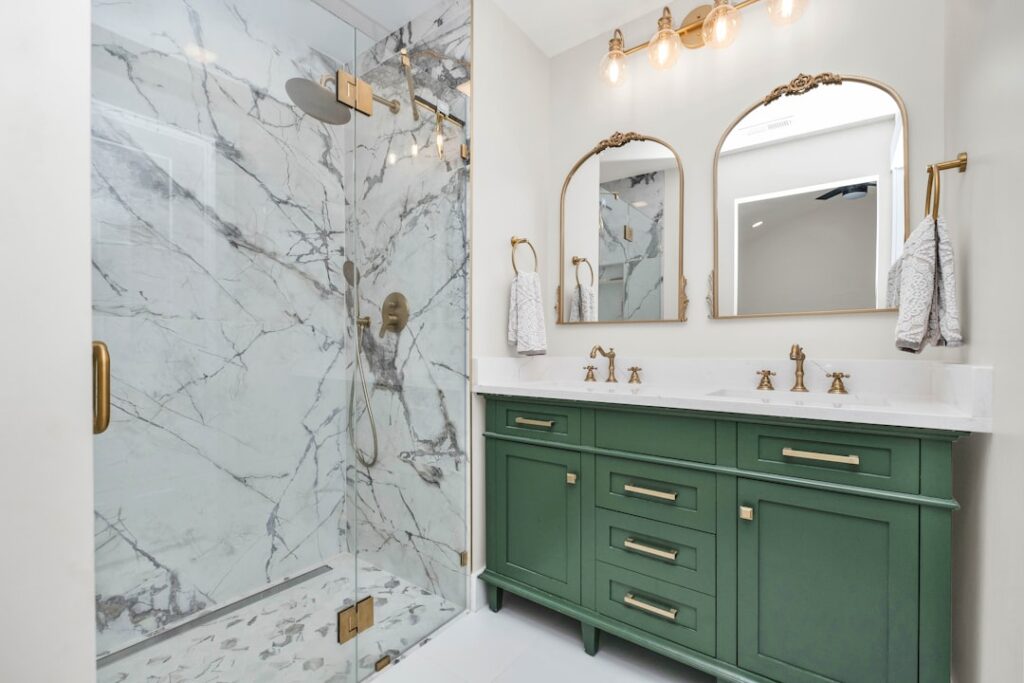
Marble-look porcelain is one of the top bathroom tile ideas for master bathrooms, especially when used floor-to-ceiling in a large format. Book-matched panels — where adjacent slabs mirror each other’s veining — create a dramatic, high-end effect that rivals genuine marble installations.
Penny Round and Hex Mosaics
Mosaic tiles in penny round and hexagonal shapes are experiencing a strong revival. These small-format tiles excel in shower floors where their numerous grout lines provide essential slip resistance. They also make stunning accent walls, niche linings, and decorative borders.
In 2026, hex mosaics are trending in larger scales (100mm+ hexagons) as well as micro-mosaics for shower floors. Mix-and-match color palettes — combining three or four tonal variations within one installation — add dimension without overwhelming the space. Penny rounds in metallic, matte black, or sage green finishes are particularly popular.
Zellige Tiles
Zellige tiles — handmade glazed terracotta tiles originating from Morocco — have surged in popularity for their imperfect, artisanal character. No two zellige tiles are identical. Their uneven surfaces catch light at different angles, creating a shimmering, textured wall that feels alive and organic.
Zellige is best used on walls rather than floors, and it is especially striking in shower surrounds, behind vanities, and as a kitchen-to-bathroom design thread. The handmade nature means slightly higher costs and wider grout joints, but the visual warmth and uniqueness are unmatched by any machine-made tile.
Terrazzo-Look Tiles
Terrazzo-look porcelain tiles capture the playful, speckled aesthetic of traditional terrazzo without the weight, cost, or installation complexity of poured-in-place terrazzo. Available in a wide range of chip sizes, colors, and base tones, these tiles work as both floor and wall applications.
Terrazzo-look tile pairs naturally with minimalist fixtures and solid-color accents. Soft pastel bases with white and grey chips create a subtle, sophisticated look, while bold bases with multicolored chips deliver a more playful, retro-inspired bathroom tile design.
Tile Style Visual Guide
Use this comparison table to quickly evaluate which tile style fits your bathroom project. Cost ranges reflect materials only per square metre, including typical UK pricing for 2026.
| Tile Style | Best For | Cost Range (per m²) | DIY Difficulty | Trend Level 2026 |
|---|---|---|---|---|
| Large Format Porcelain | Modern master bathrooms, minimal grout look | £30 – £80 | Hard (pro recommended) | Very High |
| Herringbone / Chevron | Feature walls, floors, adding visual movement | £25 – £70 | Medium-Hard | High |
| Subway Tile Variations | Shower walls, wainscoting, full-height surrounds | £10 – £40 | Easy-Medium | Steady (evergreen) |
| Patterned / Encaustic | Statement floors, accent walls, niches | £35 – £100+ | Medium | High |
| Wood-Look Porcelain | Bathroom floors, bedroom-to-ensuite continuity | £20 – £55 | Medium | High |
| Marble-Look Porcelain | Master bathrooms, floor-to-ceiling luxury | £25 – £75 | Medium-Hard | Very High |
| Penny Round / Hex Mosaic | Shower floors, accents, decorative borders | £30 – £90 | Medium | Rising |
| Zellige | Feature walls, shower surrounds, artisanal look | £50 – £120+ | Medium (wider grout joints) | Very High |
| Terrazzo-Look | Floors, walls, playful or retro-inspired spaces | £25 – £65 | Easy-Medium | Rising |
Bathroom Floor Tile Ideas vs Wall Tile Ideas
Choosing tile for a bathroom means thinking about floors and walls as separate but connected design decisions. The requirements differ, and the best bathrooms use that contrast intentionally.
Bathroom Floor Tile Ideas
Bathroom floor tile ideas should prioritize slip resistance, durability, and ease of cleaning. Textured porcelain, matte-finish tiles, and small-format mosaics all provide better grip underfoot when wet. Look for tiles with an R10 or R11 slip rating for general bathroom floors, and R12 or higher for walk-in shower areas.
Popular floor choices include large-format porcelain for a minimal look, wood-look planks for warmth, hex mosaics for shower bases, and terrazzo-look tiles for a playful touch. Keep floor tiles in a neutral or grounded palette to anchor the room and let wall tiles carry the design statement.
Bathroom Wall Tile Ideas
Bathroom wall tile ideas offer more creative freedom because slip resistance and heavy-duty durability are less critical. Glossy finishes, delicate textures, and handmade tiles like zellige are all excellent for walls. Full-height tiling — from floor to ceiling — is a defining trend for 2026, creating a waterproof, cohesive envelope that eliminates the need for paint in wet zones.
Consider mixing formats: a large-format marble-look tile on the main walls paired with a mosaic or patterned tile inside the shower niche. This layered approach adds depth without visual clutter.
Small Bathroom Tile Ideas and Strategies
Tiling a small bathroom requires a strategic approach. The right small bathroom tile ideas can make a compact space feel significantly larger and more open.
Use Light Colors to Open Up the Space
Light-toned tiles — whites, soft greys, pale creams, and warm beiges — reflect more light and create an airy, spacious feel. In very small bathrooms, keeping the walls and floor in the same light tone eliminates visual boundaries that make the room feel boxed in.
Choose Larger Tiles to Reduce Grout Lines
Counterintuitively, larger tiles often work better in small bathrooms than small tiles. Fewer grout lines mean fewer visual interruptions, which helps the eye travel across surfaces without pause. A 600x600mm or 600x1200mm porcelain tile on both the floor and lower walls creates a sense of unbroken space.
Run Tile Continuously From Floor to Wall
Using the same tile (or a coordinating tone) on the floor and walls eliminates the horizontal line where floor meets wall, tricking the eye into perceiving a larger volume. This technique is especially powerful in walk-in showers where the shower tile extends seamlessly from the floor up the walls. Pairing this with a linear drain rather than a traditional shower tray reinforces the open, barrier-free look.
Vertical Layouts to Add Height
Stacking subway tiles vertically rather than horizontally draws the eye upward and makes low ceilings feel taller. This simple change in orientation delivers a noticeable difference in perceived room height, and it works with standard subway tile, making it one of the most cost-effective small bathroom tile ideas available.
Master Bathroom vs Guest Bathroom Tile Ideas
Master Bathroom Ideas
The master bathroom is where you can invest in premium materials and create a personal retreat. Marble-look porcelain slabs, book-matched feature walls, zellige shower surrounds, and heated bathroom floors in large-format tile are all fitting choices. A master ensuite benefits from a cohesive palette — typically two or three complementary tiles — with one statement element such as a patterned floor or a textured feature wall.
Consider underfloor heating with your tile selection. Porcelain and ceramic tiles are excellent conductors of radiant heat, turning cold tile into a warm, comfortable surface that adds genuine luxury to daily routines.
Guest Bathroom Ideas
Guest bathrooms and powder rooms offer an opportunity to take creative risks you might not attempt in a primary bathroom. Bold patterned encaustic tile on the floor, a vivid zellige accent wall, or a dramatic dark color scheme can all work beautifully in a smaller space that guests experience briefly. Because guest bathrooms are typically lower-traffic, you can use more delicate materials like genuine cement tile or natural stone without worrying about heavy wear.
Budget-wise, guest bathrooms are smaller, so splurging on a premium tile for a single feature wall is often affordable even on a modest renovation budget.
Bathroom Tile Color Trends for 2026
Color is one of the most impactful elements of bathroom tile design. The dominant palettes for 2026 reflect a desire for warmth, nature, and confident self-expression.
Warm Neutrals
Cool greys are giving way to warm neutrals — think creamy whites, soft taupes, warm greiges, and sandy beiges. These tones create an inviting, spa-like atmosphere and pair naturally with wood-look tiles, brass fixtures, and natural stone accents. Warm neutrals have broad appeal and age well, making them a safe choice for renovations intended to add resale value.
Bold Greens and Blues
Sage green, forest green, deep teal, and dusty blue are the standout accent colors for modern bathroom tile in 2026. Used as a zellige shower wall, a mosaic accent band, or a patterned floor tile, these nature-inspired hues bring calm and sophistication to a bathroom without overwhelming the senses. Green in particular connects to the broader biophilic design trend that continues to gain momentum.
Black and White
The black-and-white bathroom is timeless and shows no signs of fading. Classic combinations include white marble-look walls with a black hex mosaic floor, white subway walls with black grout, or a black-and-white patterned encaustic tile. This high-contrast palette works across every design style, from Victorian to industrial to minimalist.
Budget-Friendly Bathroom Tile Ideas
A stunning bathroom does not require a premium budget. Here are practical strategies for achieving high-impact bathroom tile ideas without overspending.
- Use affordable subway tile as the base. Standard ceramic subway tile costs as little as £10 per square metre and covers large areas affordably. Spend more on a smaller accent area — like a patterned shower niche or mosaic border — for visual contrast.
- Choose porcelain reproductions over natural materials. Marble-look, terrazzo-look, and encaustic-look porcelain tiles deliver the aesthetic of expensive materials at a fraction of the cost, with far less maintenance.
- Limit premium tile to feature areas. A single statement wall or shower floor in a high-end tile, surrounded by simpler tile elsewhere, creates a designer look on a modest budget.
- Consider larger tiles for lower labor costs. Fewer tiles mean fewer cuts and faster installation, which reduces labor charges. A 600x600mm tile covers a wall faster than a 100x100mm mosaic.
- Shop end-of-line and clearance stock. Tile retailers regularly discount discontinued lines. If you buy enough to cover your project (plus 10% for waste and future repairs), clearance tiles offer exceptional value.
Even on a tight budget, prioritize quality where it matters most: shower tile and bathroom floor tile must be properly waterproof and slip-resistant. Cutting corners on waterproofing leads to damage that costs far more than the initial savings.
Frequently Asked Questions About Bathroom Tile Ideas
What is the most popular bathroom tile for 2026?
Large-format marble-look porcelain is the most popular bathroom tile choice for 2026. It combines a luxurious aesthetic with practical waterproof performance and low maintenance. Zellige tiles and herringbone-laid subway tiles are the top choices for walls and feature areas. Overall, the trend favors fewer grout lines, warm color palettes, and natural-looking textures.
What size tile is best for a small bathroom?
Larger tiles — 600x600mm or 600x1200mm — generally work best in small bathroom tile ideas because fewer grout lines create a less cluttered, more spacious appearance. Running the same tile from floor to wall further amplifies this effect. Small mosaics can work well as accents but should be limited to small areas like shower floors or niches to avoid making the room feel busy.
Should bathroom floor and wall tiles match?
They do not need to match exactly, but they should coordinate. A popular approach is to use the same tile (or a shade from the same range) on the floor and lower walls, then introduce a different texture or format on the upper walls. In small bathrooms, using the same tile floor-to-wall creates a seamless look that makes the space feel larger. In larger bathrooms, contrasting floor and wall tiles adds design interest.
Are patterned tiles a good idea for bathrooms?
Yes, patterned tiles are an excellent choice when used strategically. They work best as a statement floor in a powder room or guest bathroom, inside a shower niche, or as a contained accent panel. In larger bathrooms, balance patterned tiles with plain tiles on surrounding surfaces to prevent visual overload. Porcelain patterned tiles are more practical than cement encaustic tiles because they require no sealing.
How much does it cost to tile a bathroom in the UK?
The total cost to tile a bathroom in the UK typically ranges from £1,500 to £5,000+ depending on bathroom size, tile material, and labor rates. Tile materials alone range from £10 per square metre for basic ceramic to £100+ per square metre for handmade zellige or premium large-format porcelain. Professional installation adds £35 to £60 per square metre on average, with complex patterns like herringbone costing 15-30% more in labor.
Choosing the Right Bathroom Tile
The best bathroom tile ideas balance aesthetics with the practical demands of a wet environment. Start with your non-negotiables — waterproofing, slip resistance, and budget — then layer in style choices like pattern, color, and texture. Use the visual guide table above to narrow down which tile styles suit your space, and remember that mixing two or three complementary tiles creates a more dynamic result than covering every surface in a single material.
Whether you are drawn to the clean minimalism of large-format marble-look porcelain, the handmade warmth of zellige, or the playful character of patterned encaustic tile, 2026 offers more bathroom tile design options than ever before. Plan your layout carefully, invest in proper waterproofing, and choose quality tile in the areas that matter most — your bathroom will reward you with years of style and performance.
Prefer to explore on your own?
See how new flooring looks in your actual room in seconds — free, no signup.
Try the free Floor Studio →