Millions of American homes have a fireplace nobody lights. Maybe the chimney failed inspection, the flue was sealed decades ago, or you rent and the landlord forbids burning anything. A battery operated fireplace insert fills that dark box with flickering LED light, no cord, no venting, and no smoke. It will not warm the room, and that is the most important thing to understand before buying one. What it does well is restore the focal point of a living room for the price of a nice lamp, and this guide explains how to choose, size, and set one up so it looks convincing rather than cheap.
- What a Battery Operated Fireplace Insert Actually Is
- Common Styles You Will Find
- Sizing a Battery Operated Fireplace Insert for Your Firebox
- Battery Life, Timers, and Remote Controls
- Cost to Expect
- Preparing the Fireplace Before Installation
- Safety Considerations
- Making It Look Realistic
- Is a Battery Operated Fireplace Insert Right for You?
- Battery Fireplace Insert FAQ
What a Battery Operated Fireplace Insert Actually Is
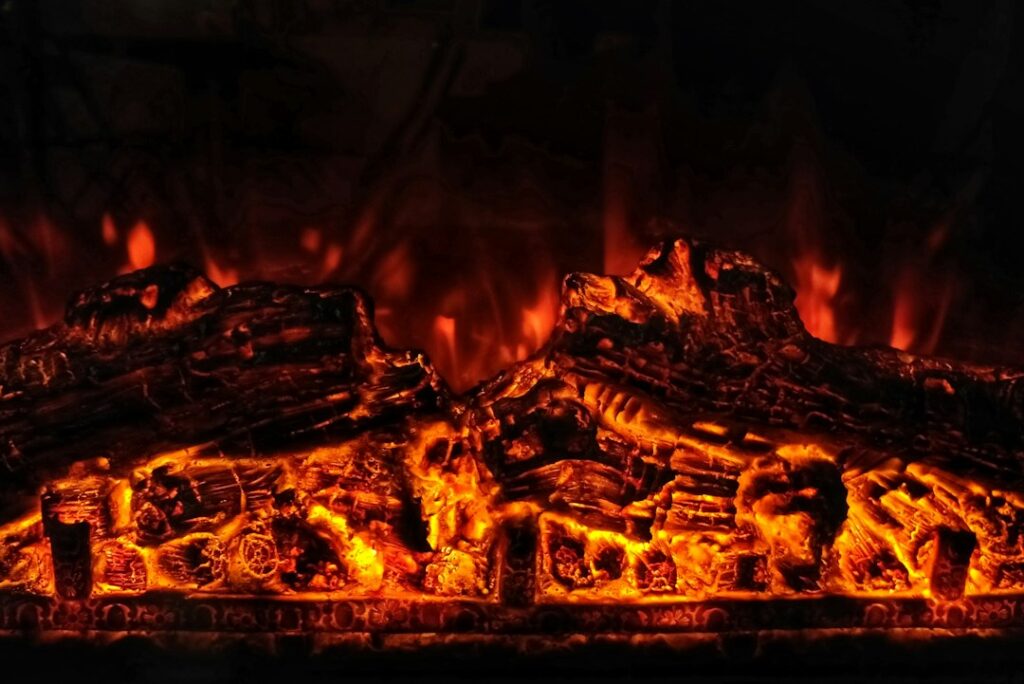
The term covers a family of decorative, cordless products designed to sit inside an existing firebox or hearth opening. Instead of burning fuel, they use LEDs behind resin logs, glass, or fabric to imitate the glow and movement of a fire. Power comes from AA, C, or D cells, or from a rechargeable lithium pack, which is why they can go in a masonry fireplace that has no nearby outlet.
It helps to separate these from the electric fireplace inserts sold at home centers. A plug-in electric insert is a metal box with a built-in fan heater, typically drawing around 1,500 watts, and it needs a standard 120-volt outlet. A battery unit draws a tiny fraction of a watt per LED and produces essentially no heat. Plug-in water-vapor fireplaces, which create a realistic mist-and-light flame effect, also need wall power. If you want heat, a cordless model is the wrong product.
Common Styles You Will Find
LED Log Sets
Molded resin or ceramic-look logs with LEDs embedded underneath and inside cracks in the bark. They sit on a grate or directly on the hearth floor. Better sets use orange, amber, and red LEDs on staggered flicker patterns so the glow does not pulse in obvious unison.
Flameless Candle Arrangements
Groupings of battery pillar candles in varying heights, often with moving-wick technology, placed on a tray, in a candelabra, or directly on the firebox floor. This look reads as intentional decor rather than an imitation fire, which suits modern and minimalist rooms.
Faux Ember Beds and Light Strings
Fabric or crushed-glass ember beds with LED strings beneath, sometimes combined with birch logs or decorative stones. These are budget-friendly and easy to customize.
Panel-Style Inserts
A flat, framed panel printed or backlit to resemble a burning fire. They cover the opening completely, which also helps block chimney drafts, but they look less three-dimensional than a log set.
Sizing a Battery Operated Fireplace Insert for Your Firebox
A log set that is too small looks like a toy; one that is too large will not sit flat. Measure the firebox before shopping:
- Front width: Measure across the opening at the hearth floor.
- Rear width: Most masonry fireboxes taper toward the back, so this is often several inches narrower.
- Depth: From the front edge of the opening to the back wall.
- Height: From the hearth floor to the underside of the lintel or damper area.
As a rule of thumb, aim for a log set whose width is roughly two-thirds of the front opening. A standard 36-inch-wide firebox usually looks right with a set around 22 to 26 inches wide. Leave a few inches of space on each side and behind so the logs appear to sit naturally rather than wedge in. For candle arrangements, fill about half to two-thirds of the width with three to seven candles of varied heights, and put the tallest toward the back.
Battery Life, Timers, and Remote Controls
Runtime is the difference between a product you enjoy and one you quietly give up on. Battery life depends on how many LEDs are in the set, the chemistry of the cells, and how many hours a day it runs. Manufacturer claims range widely, from a few dozen hours for dense log sets on alkaline AAs to several hundred hours for single flameless candles on D cells. Treat any printed figure as a best case at the dimmest setting.
Features that stretch battery life and add convenience:
- Built-in timers: A 6-hour on, 18-hour off cycle is the most common. Turn it on at dusk once and it repeats daily.
- Remote controls: Let you switch modes, dim, or turn off without kneeling at the hearth.
- Dimming and flicker modes: Lower brightness settings use less power and often look more realistic in a dim room.
- Rechargeable packs or USB charging: Worth paying extra for if you run the insert nightly.
Rechargeable NiMH cells are a smart swap for sets that eat AAs. They cost more upfront, but a household running a log set four or five nights a week can easily go through dozens of disposable batteries a season. Lithium primary cells last longer and handle cold better, which matters if the firebox gets chilly from chimney drafts.
Cost to Expect
Prices for cordless fireplace decor are modest compared with any real heating appliance:
- LED ember strings and simple birch log bundles: about $25 to $70.
- Flameless candle sets for a firebox: about $40 to $150, depending on number and moving-wick features.
- Mid-range LED log sets with remote and timer: about $70 to $200.
- Premium realistic log sets and panel inserts: $200 to $400 or more.
Factor in batteries or a charger, plus optional extras such as a decorative screen, a new grate, or a chimney draft stopper. Even at the high end, the total rarely approaches the cost of a vented gas insert or a chimney rebuild.
Preparing the Fireplace Before Installation
Because a battery operated fireplace insert simply sits in place, installation is mostly about making the firebox look clean and ready:
- Clean out soot and ash. Vacuum with a HEPA shop vac or an ash vacuum, then wipe the hearth. Old soot will stain light-colored resin logs.
- Refresh the interior. Many owners paint the inside of an unused firebox with high-heat black paint for a crisp backdrop. A black interior hides wiring and makes the LED glow pop.
- Close or seal the flue. Close the damper, or use an inflatable chimney balloon or top-sealing damper to stop cold drafts and keep debris or animals out.
- Position the insert. Place logs on a grate or directly on the floor, angle them slightly toward the room, and tuck battery compartments at the back where you can reach them.
- Add a screen. A mesh or glass screen softens the light and hides any visible plastic.
Safety Considerations
Cordless LED products carry far less risk than any burning fuel, but a few rules still apply. Never use a decorative insert in a fireplace that is still used for wood or gas fires, and never light a real fire with plastic logs or candles inside. Resin and plastic will melt and release toxic fumes. If you ever go back to burning wood, remove every decorative piece first and have the chimney inspected.
If your fireplace has a gas log set or a gas line, do not simply set LED logs on top of the burner. Have a licensed gas technician shut off, cap, or remove the gas supply properly, and keep the home’s carbon monoxide detectors in service regardless. Likewise, if the chimney has known structural damage, a cracked liner, or loose masonry, a decorative insert hides the symptom but does not fix it. Call a certified chimney professional to assess any leaning, crumbling, or water-damaged chimney before you cover it up. Finally, store button cells and small batteries out of reach of children and pets, and swap leaking alkaline cells promptly because corrosion can damage the contacts.
Making It Look Realistic
Realism comes from layering, not from the most expensive single product. Start with a black or dark-gray backdrop. Combine an LED log set with a scatter of faux embers across the grate floor so light comes from low and deep, the way a real fire glows. Keep room lighting warm, around 2,700K, so the LED amber does not clash with cool white bulbs. Use the lowest flicker setting that still reads as movement; fast, strobing effects look artificial. Seasonal touches such as real split birch logs stacked beside the hearth or a basket of pinecones reinforce the illusion without adding any fire risk.
Is a Battery Operated Fireplace Insert Right for You?
Choose a battery operated fireplace insert if you want ambiance in a fireplace that cannot or should not burn fuel, you have no outlet near the hearth, or you rent and cannot modify the home. Skip it if you need supplemental heat; in that case, a plug-in electric insert or a professionally installed vented gas or wood insert is the correct path. For most people with a dormant firebox, a quality cordless log set, a timer, and a set of rechargeable batteries deliver the cozy look they missed, at a fraction of the cost and with none of the maintenance.
Battery Fireplace Insert FAQ
Does a battery operated fireplace insert produce heat?
No. Battery-powered units use low-power LEDs that create light and a flame effect only. For heat, you need a plug-in electric insert or a vented fuel-burning appliance.
How long do the batteries last?
It varies by product, LED count, battery type, and daily run time. Using a timer, a lower brightness setting, and rechargeable or lithium cells will stretch runtime considerably.
Can I put LED logs in a gas fireplace?
Only after a licensed gas technician has safely shut off and capped the gas supply. Never place plastic or resin decor on an active gas burner.
Should I close the damper behind a decorative insert?
Yes. Closing the damper or adding a chimney balloon reduces cold drafts and heat loss, keeps debris out, and helps the room feel more comfortable.
Can I use a battery fireplace insert without a real fireplace?
Yes. Many owners place log sets or candle arrangements inside a faux mantel surround or a decorative hearth box, since no venting or wiring is required.