
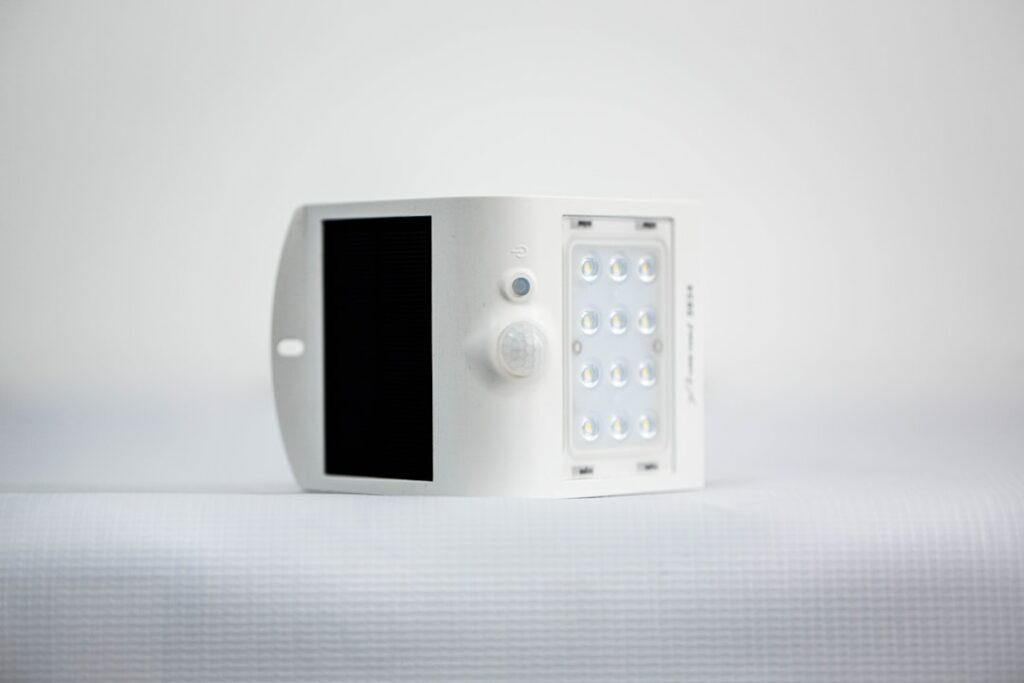
Some of the darkest, most inconvenient spots in a home, closets, stairways, sheds, garage corners, and back doors, are exactly the places where running electrical wiring is hardest. A battery operated motion sensor light solves that problem instantly, delivering automatic, hands-free illumination anywhere you can stick a mounting bracket, with no electrician, no outlet, and no wiring at all. These versatile fixtures have become one of the most practical and affordable upgrades a homeowner can make, and the technology has improved dramatically in recent years.
How They Work
Battery operated motion sensor lights use a passive infrared (PIR) sensor to detect the body heat of a person or animal moving within range. When motion is detected, the light switches on for a preset interval, usually 15 to 60 seconds, and resets the timer with each new movement. Many models add a photocell, an ambient light sensor, so the light only activates in darkness, conserving battery during daylight. This combination of motion detection and darkness-only operation is what makes battery models practical, because it prevents the light from draining its cells needlessly.
Battery Types and Runtime
The power source shapes how much maintenance the light needs:
- Replaceable alkaline cells (AA or AAA): The simplest and cheapest, running three to twelve months depending on how often the light triggers. You swap cells when they die.
- Built-in rechargeable lithium: Charged via USB cable, these run one to four weeks per charge and eliminate battery waste. Popular in slim magnetic light bars.
- D-cell powered: Larger outdoor security lights use big D batteries for longer runtime and brighter output, lasting six months to a year.
- Solar-assisted: Outdoor models pair a small solar panel with a rechargeable battery, topping up during the day for indefinite runtime in sunny locations.
Runtime depends heavily on traffic. A closet light that triggers a few times a day lasts far longer than a busy hallway fixture. Look for models with a low-battery indicator so a dying light does not leave you in the dark unexpectedly.
Indoor vs. Outdoor Models
Battery motion lights split into two broad categories, and choosing the right one matters:
- Indoor lights: Compact puck lights, under-cabinet strips, and closet bars with modest brightness, often 50 to 300 lumens, and adhesive or magnetic mounting. They prioritize convenience and clean looks.
- Outdoor lights: Weather-resistant fixtures rated IP44 or higher, with brighter output of 300 to 1,000-plus lumens, wider detection ranges up to 30 feet, and rugged housings. These secure entryways, garages, sheds, and pathways.
Always match the fixture to its environment. An indoor puck light exposed to rain will fail quickly, while an outdoor security light is overkill and too bright for a closet.
Brightness and Coverage
Lumens measure brightness. For guidance: a closet or cabinet needs 50 to 150 lumens; a hallway or stairway 150 to 400; an entryway or garage 400 to 800; and a security or driveway application 800 to 1,200 or more. Detection range and angle matter just as much as brightness. Indoor lights typically sense motion within 8 to 15 feet across a 100- to 120-degree cone, while outdoor security models reach 25 to 30 feet with wider coverage. Position the sensor so it faces the direction people approach from, and avoid aiming it at heat sources like HVAC vents or sun-baked pavement that can cause false triggers.
Mounting Options
The no-wiring advantage extends to mounting, which is usually tool-free:
- Adhesive pads: Included 3M strips stick lights to any clean, smooth surface. Wipe the spot with rubbing alcohol first for a strong bond.
- Magnetic mounts: A steel base plate mounts once, and the light snaps on and off magnetically, ideal for rechargeable models you lift to charge.
- Screw brackets: For heavier or outdoor fixtures, screws provide a secure, permanent hold on wood, siding, or masonry.
- Keyhole hangers: Some units hang on a single screw for quick removal.
Choose a mounting height that puts the sensor in the path of movement: about waist to chest height for entryways, or under the top shelf for closets.
Useful Features to Look For
Beyond the basics, these features add real value:
- Ambient light cutoff: Saves battery by only lighting in the dark.
- Adjustable timeout: Set how long the light stays on after motion stops.
- Multiple modes: Auto (motion), always-on, and always-off settings for flexibility.
- Adjustable sensitivity and range: Tune detection to avoid false triggers or extend coverage.
- Dimmable or color-temperature options: Warm light for ambiance, cool for task areas.
- Weatherproof rating: IP44 or higher for anything exposed to the elements.
- Low-battery indicator: Warns you before the light dies.
Best Uses Around the Home
These lights excel in spots wiring cannot easily reach. Popular applications include closets and pantries, stairways and hallways for nighttime safety, under kitchen cabinets, inside garages and sheds, along dark pathways, at back and side entrances, in laundry rooms, and inside cabinets or wardrobes. Elderly residents benefit from motion lights on the path to a bathroom, and renters love them because installation leaves no wiring behind and adhesive mounts remove cleanly.
Cost and Value
Battery operated motion sensor lights are inexpensive. Simple indoor puck or bar lights start at $10 to $15 for a multi-pack. Rechargeable magnetic bars run $20 to $40 each. Bright outdoor security models cost $25 to $60, and solar-assisted outdoor lights $30 to $80. Compared with hardwiring a new fixture, which can cost $150 to $300 in electrician labor per location, the battery option is dramatically cheaper and installs in minutes. The only ongoing cost is batteries or occasional recharging.
Common Problems and Fixes
- Light will not turn on: Check battery charge and confirm the mode switch is set to auto rather than off.
- Turns on in daylight: The model may lack a photocell, or it is disabled; enable the darkness-only setting.
- Short runtime: High traffic or a long timeout drains cells fast; shorten the on-time or move to a rechargeable model.
- False triggers: A heat source, reflective surface, or pet is tripping the sensor; reposition or lower the sensitivity.
- Weak detection: Cold batteries or an obstructed sensor; replace cells and clear the sensor’s view.
Tips for Best Performance
To get the most from your lights, mount them where the sensor faces oncoming movement, keep the lens clean of dust and cobwebs, and use lithium batteries in cold outdoor locations where alkalines fade. For outdoor units, seal the battery compartment fully against moisture. Rotate rechargeable bars onto a charger before they fully die so you always have illumination ready.
Frequently Asked Questions
How long do battery motion sensor lights last on a charge? It varies with traffic and battery type. Replaceable alkaline cells last three to twelve months, built-in rechargeable lithium batteries run one to four weeks per charge, and larger D-cell outdoor units can go six months to a year. A photocell that limits the light to darkness greatly extends runtime.
Can I use a battery motion sensor light outdoors? Yes, but only models rated for the weather. Look for an IP44 or higher rating, a rugged housing, and brighter output of 300 lumens or more. Indoor puck lights will fail quickly if exposed to rain, so match the fixture to its environment.
How do I stop false triggers? False triggers usually come from a heat source like an HVAC vent, sun-baked pavement, reflective surfaces, or pets moving in the sensor’s field. Reposition the light so the sensor faces the approach path, lower the sensitivity if adjustable, and keep it away from heat sources.
Are battery motion lights good for renters? They are ideal. Adhesive and magnetic mounts install in minutes without wiring and remove cleanly, leaving no holes or electrical changes behind, so renters gain automatic lighting anywhere without violating a lease.
A battery operated motion sensor light delivers automatic, wire-free lighting exactly where you need it most, from the darkest closet to the back garden gate. With no electrician required and prices starting around ten dollars, it is one of the easiest ways to add safety, convenience, and a modern touch to any home. Match the brightness and weather rating to your location, pick a battery type that fits your maintenance style, and enjoy lighting that simply turns on when you arrive and off when you leave.


