A motion sensor flood light bulb is the simplest way to add automatic security lighting to your home because it screws into a standard socket you already have, no electrician required. Where a hardwired motion fixture means running cable and mounting a new housing, these self-contained LED bulbs pack a passive infrared sensor, a dusk-to-dawn photocell, and bright flood optics into a single unit. Twist one into your porch, garage, or eave fixture and you instantly gain hands-free light that snaps on when someone approaches and shuts off when the area is quiet again.
- How a Motion Sensor Bulb Works
- Brightness, Color, and Coverage
- Where to Use One
- Cost and Value
- Installation Tips
- Reducing False Triggers
- Smart and Adjustable Options
- Limitations to Understand
- Choosing the Right Bulb for Your Home
- Motion Bulbs Versus Dedicated Fixtures
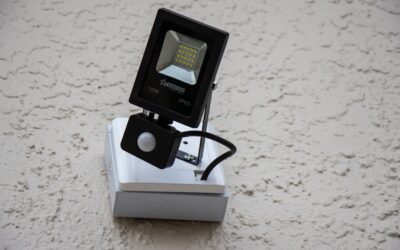
- Exterior Flood Lights With Motion Sensor: Mounting Height, Aim, and Upgrading to a Hardwired Fixture
How a Motion Sensor Bulb Works
Inside the bulb is a PIR (passive infrared) sensor that detects the heat signature of a moving person, animal, or vehicle. When it registers movement within its field of view, it powers the LED array to full brightness for a set duration, then dims or shuts off after the area stays still. A built-in photocell keeps the bulb dark during daylight so it only triggers after dusk. The best models let you tune three settings with the wall switch or a small dial: sensitivity, how long the light stays on (typically 15 seconds to several minutes), and the ambient light threshold.
Brightness, Color, and Coverage
Flood-style motion bulbs generally range from 800 to 2,500 lumens, with most security-focused models landing around 1,200 to 1,600 lumens, roughly equal to a 100- to 150-watt incandescent while drawing only 12 to 20 watts. Color temperature matters for how the light reads at night:
- 2700K to 3000K (warm white): flattering for porches and entries, blends with indoor lighting.
- 4000K (neutral): a balanced choice for garages and side yards.
- 5000K to 6500K (daylight): the crisp, bluish light most people associate with security, giving the best visibility and camera clarity.
Sensor range on a screw-in bulb is typically 15 to 30 feet with a detection angle between 120 and 180 degrees, narrower than a dedicated fixture, so aim the socket toward the path you want to cover.
Where to Use One
Because they need an existing socket, these bulbs shine in spots already wired for a light:
- Front and back porch fixtures for arrival lighting and deterrence
- Garage service doors and carports
- Basement stairwells and utility rooms where hands are often full
- Sheds, workshops, and detached structures
- Under eaves or soffits aimed at a driveway or walkway
They are ideal for renters and anyone who wants security lighting without touching the wiring or the wall switch position.
Cost and Value
A single motion sensor flood light bulb costs $12 to $30, and multi-packs bring the per-bulb price down toward $10. Compare that to a hardwired motion flood fixture at $30 to $90 plus $100 to $250 in electrician labor if you cannot do the wiring yourself. For most homeowners, a $20 bulb delivers 80 percent of the benefit at a fraction of the total cost. LED longevity of 20,000 to 30,000 hours means one bulb often lasts a decade, and because it only runs at full power when triggered, operating cost is negligible, usually well under a dollar a year.
Installation Tips
Installation is genuinely a two-minute job, but a few details make the difference between reliable operation and constant false triggers. First, cut power at the switch before handling the socket. Screw the bulb in so the sensor faces the area you want to monitor, not the sky or a blank wall. The wall switch must stay ON for the bulb’s internal electronics to run; if someone flips the switch off, the sensor is dead. Many bulbs enter a setup or test mode when first powered, so read the quick-start card. Give the bulb its full warm-up cycle, then walk the area at dusk to confirm the trigger zone and adjust the aim.
Reducing False Triggers
The most common complaint with motion bulbs is nuisance activation. PIR sensors respond to heat movement, so a few things reliably set them off: passing cars on a nearby street, tree branches swaying in wind, HVAC exhaust, and pets or wildlife. To cut down false alarms, aim the bulb away from streets and heat sources, lower the sensitivity setting, and mount it high enough that small animals fall below the detection cone. If your fixture is glass-enclosed, note that thick or frosted glass can block the infrared sensor entirely, so open-bottom or clear fixtures work best.
Smart and Adjustable Options
Basic bulbs handle their settings with tiny mechanical dials, but a growing category adds smart features. Some connect to Wi-Fi so you can adjust brightness, schedules, and sensitivity from a phone app, and a few integrate with Alexa or Google Home for voice control and routines. Others offer selectable modes right on the bulb: motion-only, dusk-to-dawn steady light, or a hybrid that glows dim all night and jumps to full brightness on motion. That hybrid mode is popular for walkways because it provides constant low-level light plus a bright alert when someone approaches. Expect to pay $25 to $45 for smart-enabled versions.
Limitations to Understand
A screw-in motion bulb is a convenience product, not a substitute for a full security system. Its sensor range and angle are narrower than a wall-mounted flood fixture with dual heads, and it cannot record video. Because the sensor sits inside the bulb, it works best in open-bottomed or clear fixtures; a deep decorative lantern may blind it. Very cold weather can slightly reduce PIR sensitivity, and extreme heat shortens LED life, so choose a bulb rated for outdoor or damp locations if it will live under an open eave. For fully enclosed fixtures, confirm the manufacturer lists it as enclosed-rated, or the trapped heat will cut the bulb’s lifespan dramatically.
Choosing the Right Bulb for Your Home
Match the bulb to the job. For a front porch where ambiance matters, pick a 1,200-lumen 3000K bulb with a hybrid dim-to-bright mode. For a driveway or garage focused on deterrence and camera visibility, go brighter and cooler, around 1,600 lumens at 5000K. Confirm the base type matches your socket (standard E26 medium base is most common, but some fixtures use candelabra bases), verify the bulb is damp- or wet-rated for its location, and check that the physical size fits inside your fixture. A quick measurement now prevents an awkward return later.
Motion Bulbs Versus Dedicated Fixtures
It helps to know where a screw-in bulb fits in the broader security-lighting picture. A dedicated hardwired motion flood fixture, the kind with two adjustable heads mounted on the wall, offers a wider detection zone (often up to 70 feet and 240 degrees), brighter twin lamps, and separate sensor aiming, all of which make it superior for covering a large driveway or backyard. But it requires an electrical box, wiring, and either your labor or an electrician’s. The screw-in bulb trades some range and brightness for the enormous convenience of installing in seconds into a fixture you already own.
A smart approach is to use each tool where it shines. Put dedicated dual-head floods on the corners of the house that cover big open areas, and use motion sensor bulbs in the many smaller sockets scattered around the property, the side-door sconce, the back-porch light, the shed, the carport. Together they blanket the property in automatic light for a fraction of the cost and effort of wiring dedicated fixtures everywhere. For renters who cannot alter wiring at all, the bulb is often the only practical option, and it delivers most of the deterrent value on its own.
Also weigh the deterrent psychology. Sudden bright light is startling to anyone approaching with bad intent, and the perception that a home is watched and reactive is itself a discouragement. Pair a motion bulb with a visible camera or a doorbell cam, and you create layers of both light and observation that make your entry a far less appealing target than a dark, static one down the street.
For a low-effort, high-value security improvement, few products beat a motion sensor flood light bulb. It installs in minutes, needs no wiring, cuts your energy use compared with leaving lights on all night, and gives you the peace of mind of automatic light every time someone walks up to your door. Dial in the sensitivity and duration, aim it well, and you will wonder why you left that socket holding an ordinary bulb for so long.
Exterior Flood Lights With Motion Sensor: Mounting Height, Aim, and Upgrading to a Hardwired Fixture
Once a screw-in bulb has shown you where automatic light helps, many homeowners move on to dedicated exterior flood lights with motion sensor heads for the widest areas of the property. A few placement and wiring details decide whether that fixture works well or annoys everyone on the street.
Placement and Aiming
- Mount high enough: placing the fixture roughly at eave or second-story height widens its view and makes the lamps harder to tamper with. Check the manufacturer’s recommended mounting height, because the sensor’s range is rated for a specific height.
- Aim across the path: like any passive infrared sensor, the detector responds best when people walk across its field of view, so point it along the side of a driveway or walkway rather than straight down it.
- Aim the lamps separately from the sensor: tilt the lamp heads downward onto the ground you want lit, not outward toward the street or a neighbor’s windows. Downward aim reduces glare, improves visibility for cameras, and helps you stay within any local lighting ordinances.
- Tune sensitivity and range: start at a moderate sensitivity, walk the area at dusk, and shorten the range if passing cars or sidewalk traffic trigger the light.
Replacing an Existing Outdoor Fixture
Swapping an existing porch or eave fixture for a motion flood is a common upgrade, but it is still line-voltage work. Turn off the breaker for the circuit, not just the wall switch, and confirm every wire in the box is dead with a non-contact voltage tester before touching anything. Never test or work on energized wiring.
Use a fixture and electrical box listed for wet locations, seal the mounting plate with the included gasket, and make sure the box is securely fastened to the structure, since dual-head floods are heavier than a typical porch light. If there is no box at the location you want, if the wiring is damaged or aluminum, or if you would need to run a new circuit, hire a licensed electrician; new outdoor circuits generally require a permit and appropriate ground-fault protection under local code.
After installation, leave the controlling wall switch on so the sensor stays powered, and label it so no one turns it off by habit. Recheck the aim after the first few nights, because seasonal changes in foliage and snow can shift how the sensor reacts.