A battery powered paint sprayer trades the cord and the compressor for the freedom to walk a fence line, a deck, or a back-forty gate with nothing but a tool in your hand. Cordless models have gotten genuinely good in the last few years, and for the right jobs they’ll save you hours of brushwork. They’re not magic, though, and knowing where they shine and where they fall short saves you a frustrating afternoon.
How Cordless Sprayers Work
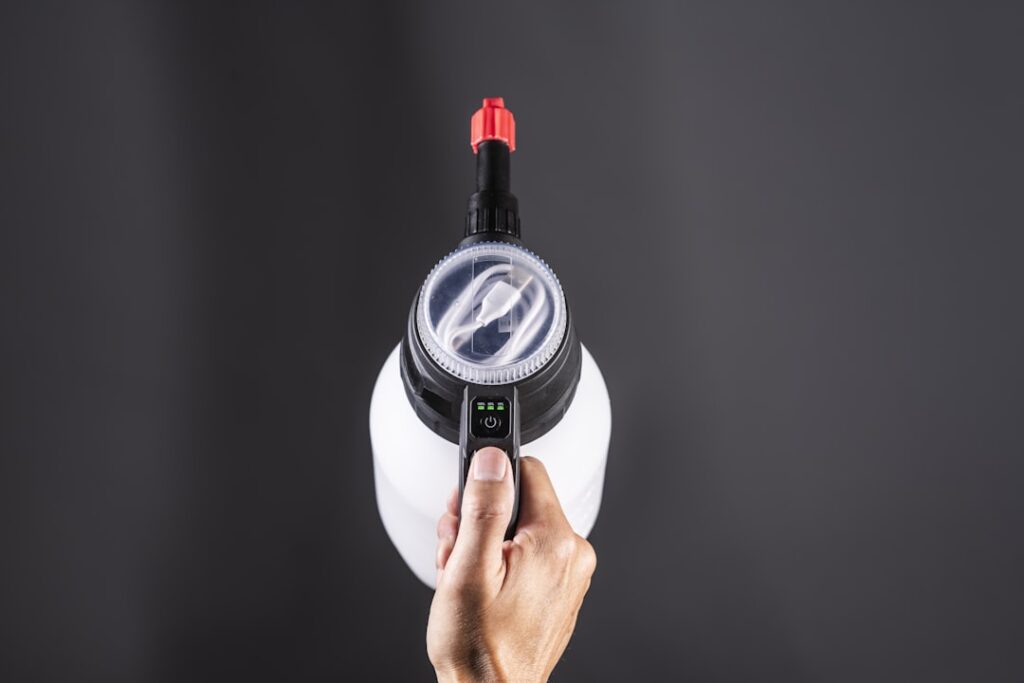
Most battery powered sprayers are handheld HVLP (high-volume, low-pressure) units or compact airless models. A brushless motor drives either a turbine that atomizes paint with air or a small piston that pushes paint through a tip under pressure. The paint sits in a cup that screws onto the gun — typically 20 to 32 ounces — and the whole thing runs off an 18V or 20V lithium battery, often the same pack that powers your drill.
That battery-platform compatibility is a real selling point. If you already own DeWalt, Ryobi, Milwaukee, or Ridgid tools, a bare-tool sprayer on the same platform means no new charger and a spare battery already in the shop.
What They’re Great For
Cordless sprayers earn their keep on jobs where dragging a hose and compressor is the real chore. Think:
- Fences and lattice — spraying stain or paint into all those gaps is 5x faster than brushing.
- Decks and railings — even coverage on spindles and balusters.
- Outdoor furniture, planters, and Adirondack chairs — quick, uniform finish.
- Small sheds and playhouses — full coverage without cords across the yard.
- Cabinets and doors — with the right thin coating and a fine tip, a glass-smooth finish.
For any of these, the payoff is speed and reach. You can prime a 6-foot privacy fence panel in a minute or two and move down the line without unplugging anything.
Where They Fall Short
Battery sprayers have limits you should respect. Run time is the big one — a single 4.0Ah battery might spray for 20 to 40 minutes of trigger time, so big jobs mean swapping packs. Cup capacity is small, so you’re refilling often on a large surface. And atomization pressure is lower than a corded airless rig, which means thick latex paints need thinning and very large jobs (a whole house exterior) are better handled by a corded airless sprayer.
Overspray is also real. Plan to mask, drop-cloth, and work on a calm day. A gusty afternoon turns overspray into a fine mist that lands on the car two driveways over.
Thinning and Prep
Most spray failures trace back to paint that’s too thick. HVLP cordless guns like the material about the consistency of milk. Latex and acrylics usually need thinning 10 to 20 percent with water; oil-based coatings thin with the manufacturer’s recommended solvent. Many sprayers include a viscosity cup — a small funnel you time — so you can dial the mix to spec instead of guessing.
- Strain the paint through a fine mesh to remove skins and grit that clog tips.
- Thin gradually, testing on cardboard between additions.
- Match the tip or nozzle to the coating — wider for thick paint, finer for stains and clears.
- Keep the gun 6 to 10 inches from the surface, moving at a steady walking pace.
Overlap each pass by about 50 percent and keep your wrist locked so the fan stays parallel to the surface. Arcing the gun leaves heavy edges and thin centers.
HVLP vs. Airless: Which Cordless Type
Cordless sprayers split into two camps, and picking the right one saves frustration. HVLP handhelds atomize with air, so they’re gentler, produce less overspray, and handle stains and thin coatings beautifully — but they struggle with thick latex without heavy thinning. Cordless airless units pump paint under high pressure, so they push thicker material, cover faster, and lay a smoother enamel finish, at the cost of more overspray and a higher price.
- Choose cordless HVLP for fences, stains, thin exterior coatings, and smaller detail jobs where control matters more than speed.
- Choose cordless airless for cabinets, doors, trim, and larger surfaces where you want a factory-smooth finish and faster coverage.
If you can only own one and you mostly do fences and outdoor furniture, an HVLP handheld is the value play. If cabinets and doors are your thing, spend up for the airless.
Managing Run Time and Batteries
Battery life is the real constraint on any cordless sprayer, so plan around it. A single mid-size battery typically gives 20 to 40 minutes of trigger time, which sounds short but covers a lot of fence when you’re only pulling the trigger during passes. The trick is to keep a second, freshly charged pack on the charger and swap when the motor slows.
- Own at least two batteries so one charges while the other sprays — this alone doubles your working window.
- Use higher-capacity packs (5.0Ah or 6.0Ah) for big exterior jobs; they run noticeably longer.
- Mix your paint in one large batch so color and thinning stay consistent across battery swaps and refills.
- Watch for a dropping fan pattern — a fading battery thins the spray before it dies, so swap at the first sign.
For a whole-house exterior, honestly, a corded airless is still the better tool. Cordless shines when the freedom to move outweighs raw endurance.
Top Picks by Job
Match the tool to the work and your battery platform:
- Ryobi 18V ONE+ HVLP sprayer — budget-friendly, huge battery ecosystem, ideal for fences and furniture.
- Graco TC Pro (corded, but the benchmark for airless) — the cordless Graco Ultra models bring true airless quality to cabinets and doors.
- Wagner cordless Control Spray / FlexiO handhelds — good for stains and thin exterior coatings.
- DeWalt / Milwaukee bare-tool sprayers — smart if you already own their batteries and want one charger for everything.
For a fine furniture or cabinet finish, spend up for a cordless airless like the Graco Ultra — the atomization is a clear step above HVLP handhelds and lays down a smoother coat with waterborne enamels.
Cleaning and Maintenance
The chore nobody mentions is cleanup, and it makes or breaks whether you keep using the tool. Clean immediately — dried latex in a tip means a new tip. For water-based paint, flush the cup and run clean water through the gun until it sprays clear, then brush the tip and filter. For oil-based coatings, use the appropriate solvent. Pull the tip and nozzle, wipe the seals, and store the parts dry. Ten minutes of cleanup after every session keeps a $150 sprayer working for years.
Controlling Overspray and Prep
Overspray is the price you pay for speed, and good prep contains it. A sprayer atomizes paint into a fine cloud that drifts, so mask three times more than you think you need. Cover windows, fixtures, plants, and anything downwind, and lay drop cloths well past the edge of your work area. Work on a calm day — even a light breeze carries mist onto a neighbor’s car.
- Back-roll critical surfaces — spray then immediately roll — to push paint into the grain and even out coverage on siding.
- Wear a respirator rated for paint, plus eye protection; atomized paint and solvents are not something to breathe.
- Shield edges with a cardboard spray guard to keep crisp lines without endless taping.
Ten minutes of extra masking saves an hour of scrubbing overspray off glass and concrete later.
Is It Worth Buying?
If you own fences, decks, outdoor furniture, or you refinish cabinets and doors, a battery powered paint sprayer pays for itself fast in saved time and better-looking coats. Entry HVLP handhelds run $80 to $180 as bare tools; cordless airless units for fine work run $300 to $600. Buy on the battery platform you already own to skip a redundant charger. Just size your expectations to run time and thinning, mask well, and clean it every single time — do that and it’ll be the tool you reach for on every exterior project.