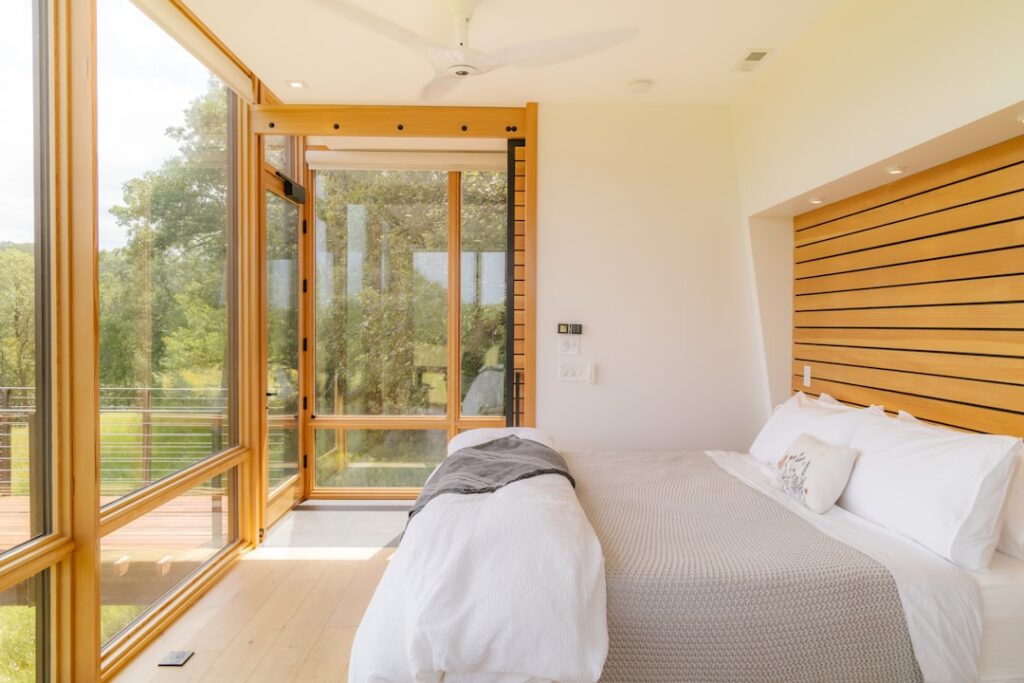
The wrong ceiling fan in a bedroom hums, ticks, wobbles, and pushes barely enough air to ruffle a sheet. The right one runs at 32 dB on low (whisper-quiet), moves enough air to drop perceived temperature 4°F, and runs on $7 of electricity per year. Picking the best ceiling fan for bedroom use comes down to three numbers: blade span matched to room size, motor type (DC for quiet and efficient, AC for budget), and CFM at low speed for actual sleeping comfort, not just maximum output. Plenty of fans look good. Far fewer are actually pleasant to sleep under.
Sizing the Fan to Your Room
The standard guidance:
- Up to 75 sq ft bedroom: 29 to 36 inch blade span
- 76 to 144 sq ft: 42 to 48 inches
- 145 to 225 sq ft: 52 inches
- 226 to 400 sq ft: 56 to 60 inches
- Over 400 sq ft: 60+ inches or two smaller fans
For a master bedroom around 14 by 16 ft (224 sq ft), a 52- or 54-inch fan is the right call. Going too small means you crank the speed and hear the motor; going too large in a small room creates uneven airflow that wakes light sleepers.
DC vs AC Motor Differences
This is the single biggest decision. DC motors use 70% less power, run dramatically quieter, offer 6 speeds (versus 3 on AC), and reverse direction in 1 second instead of 30. AC motors are louder, less efficient, but $80 to $200 cheaper. For bedrooms, the DC premium is worth it; you sleep under it 8 hours a night and the noise difference is the difference between hearing the fan and not hearing it.
DC fan brands worth considering include Big Ass Fans Haiku, Hunter Symphony, Minka-Aire Light Wave, Modern Forms Wynd, and Hinkley Hover. Expect $300 to $1,200 per unit.
Top DC Motor Picks for 2026
Three fans consistently lead bedroom recommendations.
The Big Ass Fans Haiku L Series at $695 sets the quiet bar at 28 dB on low. Bamboo blade options look like furniture, the LED light is integrated and dimmable, and SenseME automation responds to occupancy and humidity. Setup pairs with the Big Ass Fans app for schedules.
The Modern Forms Wynd at $499 hits the design-forward niche with sleek aluminum blades and a profile that works in modern bedrooms. 6-speed DC motor, integrated 17W LED, and Wi-Fi control through the Modern Forms app and HomeKit.
The Hunter Symphony at $369 offers excellent value at the lower end of the DC range. Quiet operation, smartphone control, and a clean design that fits traditional or transitional bedrooms.
Best AC Motor Budget Picks
If $300 plus exceeds your budget, two AC fans punch above their price.
The Hunter Crestfield 52-inch at $169 has been a quiet AC option for over a decade. Three speeds, integrated dimmable LED, and a reliable motor with a lifetime warranty. Operation is louder than DC fans but acceptable for most sleepers on low.
The Honeywell Quick-2-Hang Carmel at $159 uses a quick-install bracket that cuts hanging time in half for DIYers. Integrated light, remote control included, and 5 reversible blades for forward-and-reverse seasonal use.
Smart Features That Matter
Wi-Fi and Bluetooth control sound like marketing fluff but actually improves bedroom use. The ability to start the fan from bed, schedule a slowdown overnight, or pair with a smart thermostat to coordinate cooling adds real comfort. HomeKit, Alexa, and Google Home integration is now standard on DC fans over $400.
Look for “occupancy detection” features that turn the fan on when you enter the room. Big Ass Fans and a few Modern Forms models offer this. It is a small luxury that becomes habit fast.
Light Kit Considerations
Integrated LEDs are now better than older bolt-on light kits. Most quality fans use a recessed LED panel rated for 1,200 to 1,800 lumens, dimmable to 1%, and color temperature switchable from 2700K (warm) to 5000K (daylight). For bedrooms, default to 2700K or 3000K to support evening wind-down.
If you prefer a fan without light (paired with separate ceiling cans or a chandelier in larger rooms), pick one designed for that, not a fan with the light kit removed. The fixture under the motor housing should look intentional, not like a missing piece.
Installation Tips for Quiet Operation
Most fan noise comes from poor installation, not the fan itself. Mount to a fan-rated electrical box rated for 35 to 75 lbs. Standard light-fixture boxes are not rated for fans. The mounting screws must thread into the box bracket all the way; partial threading transfers vibration to the ceiling drywall.
Balance new blades with the included balance kit. A clip weight on the right blade often eliminates a tick or wobble that started fresh-out-of-box. Skip this step and the fan never sleeps quietly.
Mounting Height for Bedrooms
Bedrooms typically have 8- to 10-foot ceilings. Use a flush-mount installation if your ceiling is 8 feet to maintain at least 7 feet of clearance below the blades. For 9- to 10-foot ceilings, use a 3- to 6-inch downrod for optimal airflow. Above 10-foot ceilings, downrod length should drop the fan to about 8 to 9 feet above the floor for ideal air movement.
Reverse Direction in Winter
Forward-rotation (counterclockwise as you look up) blows air down for cooling. Reverse direction (clockwise) pulls air up and pushes warm ceiling air down the walls; it adds 2°F to 4°F of perceived warmth in heating season at very low speed. Most homeowners forget this setting exists. DC fans switch direction on the app or remote in seconds.
Final Pick
For a master bedroom up to 250 sq ft, the Modern Forms Wynd at $499 hits the right balance of quiet operation, design appeal, and smart features for most homeowners. Spring for the Big Ass Fans Haiku L if you want absolute silence and have the budget. For a guest room or kids’ bedroom under $200, the Hunter Crestfield delivers reliable performance without breaking the budget. The best ceiling fan for bedroom use is the one you actually leave on at night because it is quiet enough to forget about. Pick the motor first, the look second, and you will sleep cooler for the next 15 years.