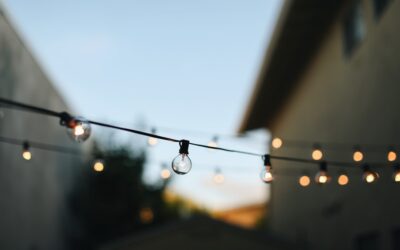
String lights are no longer just a December decoration. The best indoor string lights turn a blank wall into a focal point, soften a harsh overhead bulb, and add the kind of warm glow that paint and furniture alone never quite deliver. The trick is matching the right style, bulb, and length to the room, because a strand built for a fairy-tale bedroom canopy looks wrong strung across a den, and vice versa.
Part of our Windows & Doors guide — explore the full guide →
This guide walks through the bulb types, the numbers that matter, and specific models worth your money so you can light a space without the trial-and-error of buying three sets that all end up in a drawer.
The Main Types of String Lights
Before chasing brands, decide which category fits your look. Each one casts a distinct kind of light.
- Fairy lights: Tiny LED dots on thin copper or silver wire. Bendable, nearly invisible by day, perfect for draping behind sheer curtains or wrapping a headboard. Strands run $8 to $20.
- Globe and bistro lights: Round G40 or G50 bulbs on a heavier cord. They read as cozy and casual, great over a kitchen island or along a covered porch. Expect $20 to $50 per strand.
- Edison-style vintage: Exposed filament bulbs that bring an industrial, warm look to lofts and dining nooks. $25 to $60.
- Curtain lights: Multiple vertical strands hung from a single wire, creating a glowing waterfall behind a bed or window. $15 to $40.
Color Temperature Makes or Breaks the Mood
This is where most people go wrong. Color temperature is measured in Kelvin (K), and the lower the number, the warmer the light. For indoor ambiance you almost always want the warm end.
- 2200K to 2700K (warm white): The cozy, candle-like glow that flatters skin and wood tones. Best for bedrooms and living rooms.
- 3000K (soft white): A touch crisper, good for craft areas or a reading corner.
- 4000K and up (cool white): Bluish and clinical. Skip it indoors unless you want a stark, modern accent.
If a listing only says “white LED” without a Kelvin number, assume it runs cool and bright. Pay the extra dollar for a strand that specifies 2700K.
Length, Spacing, and Power
Buy by the measured foot, not the bulb count, because spacing varies wildly. A 33-foot fairy strand might pack 100 bulbs, while a bistro strand spreads 25 bulbs over the same distance.
For a queen headboard, plan on 16 to 33 feet. To frame a 10-foot wall or window, 33 feet gives enough slack to drape. For a patio or sunroom perimeter, measure the run and add 15 percent for sag and corners.
Power matters for placement. Plug-in strands deliver steady brightness but tether you to an outlet. Battery packs (usually 3 AA) free you to hang lights anywhere but need swapping every 18 to 40 hours. USB-rechargeable strands split the difference and are my pick for shelves and mantels.
Top Picks by Room
Here are reliable models that consistently earn their place.
Best for Bedrooms
The Twinkle Star 33-foot copper fairy lights ($10 to $14) offer eight flicker modes, a 2700K warm glow, and a remote with a timer. Hang them behind sheer curtains for a soft, even wash.
Best for Living Rooms
Brightech Ambience Pro globe lights ($35 to $45) use shatterproof G40 bulbs at 2700K. The cord is rated for indoor and covered-outdoor use, so a sunroom or three-season porch works perfectly.
Best Smart Option
Govee or Twinkly app-controlled strands ($40 to $80) let you set scenes, sync to music, and shift colors. They are overkill for a quiet bedroom but ideal for a media room or party space.
Safety and Heat Considerations
Stick with LED strands. They draw a fraction of the power of incandescent lights, stay cool to the touch, and you can string several sets end to end without tripping a breaker. Incandescent globe bulbs get hot enough to scorch fabric, so keep them off curtains and bedding.
Check the listing for a UL or ETL safety rating, especially on cheaper imports. For lights you leave on overnight, a built-in timer or a smart plug that cuts power after a set number of hours adds peace of mind.
Hanging Them Without Damaging Walls
Lightweight strands need almost nothing to hold them up. Clear adhesive hooks like 3M Command minis hold fairy wire without leaving marks, and they peel off cleanly when you move. For heavier bistro strands, use small cup hooks screwed into a stud or trim, since adhesive will eventually sag under the cord weight.
Plan your route before you start sticking hooks. Lay the strand out on the floor, mark your anchor points with painter’s tape, then hang. Ten minutes of planning saves you from a droopy, uneven line and a wall dotted with leftover hook marks.
Controls and Convenience Features
The way you turn lights on and off shapes how often you actually use them. Basic strands have an inline switch on the cord, which means reaching behind the bed every night. Better options remove that friction entirely.
- Remote controls: Most fairy-light kits now include a small remote with brightness, mode, and timer buttons. The timer is the standout feature, letting you set the lights to run 6 hours then shut off automatically.
- App control: Smart strands pair with your phone for scenes, scheduling, and color changes, and many work with Alexa or Google Home for voice control.
- Smart plug: The cheapest upgrade. Plug any standard strand into a $10 to $15 smart plug and you gain scheduling and voice control instantly.
A timer or smart plug also addresses the small but real worry of leaving lights on all night, cutting power on a schedule so you never have to think about it.
Matching Lights to Your Decor Style
String lights read very differently depending on the bulb and how you hang them, so let your room’s style guide the choice. For a soft, romantic bedroom, thin warm-white fairy lights draped behind sheer fabric give that diffused glow. A modern loft suits exposed Edison bulbs strung in a straight, taut line for an intentional, architectural look.
Cozy and casual spaces, like a sunroom or covered porch, come alive under globe or bistro lights swagged in gentle arcs overhead. For kids’ rooms and play spaces, color-changing or shaped novelty strands add fun without the warmth concerns of a main living area. The same product hung two different ways can look either charming or cluttered, so commit to one approach per room rather than mixing several strand types in a single space.