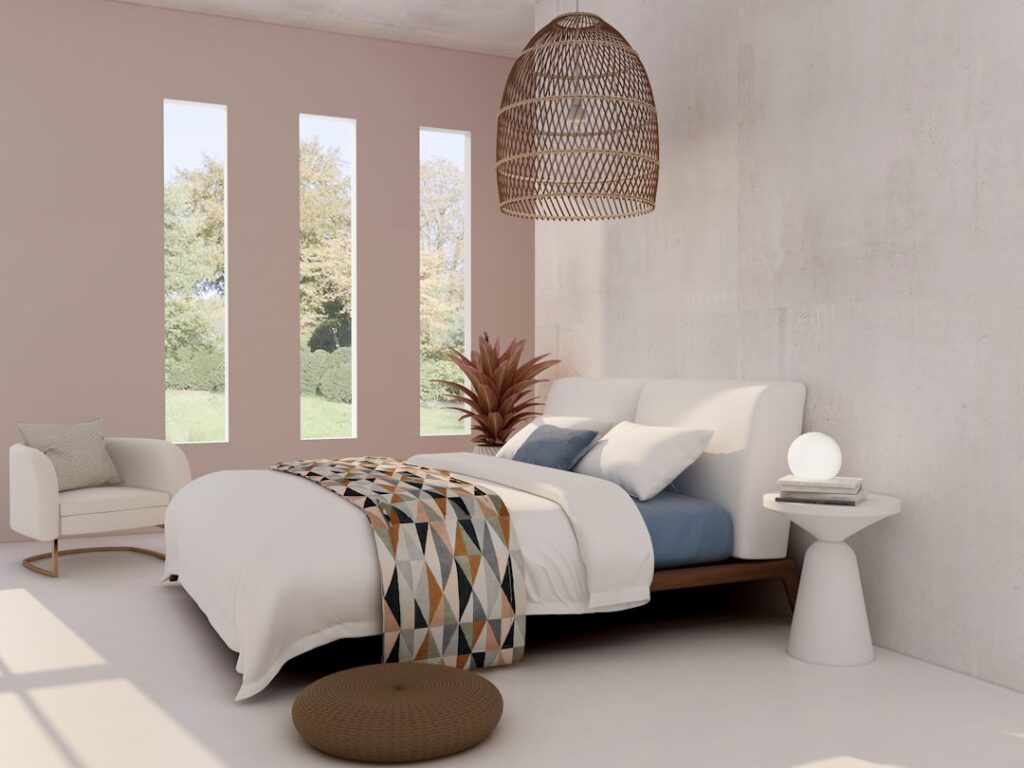
Walk into a teenager’s room and you will likely see a string of cheap white LEDs drooping along the ceiling line, casting a flickery blue-white wash that does nothing for the space. That is the budget version. Done right, light strings for bedroom use can deliver a warm, layered glow that rivals proper sconces at a fraction of the cost. The trick lies in choosing the correct color temperature, mount style, and power source for what you actually want the room to feel like.
Color Temperature Is Everything
Most disappointing string lights look harsh because the bulbs run at 5,000K or higher. For bedrooms, you want warm white at 2,200K to 2,700K. That is the same yellowy tone as a vintage Edison bulb or a candle flame. Brands list this clearly on the package; if it just says “white LED,” skip it.
The Brightech Ambience Pro string at 2,700K is a reliable pick around $40 for a 26-foot run. Govee H7022 offers tunable white and color, useful if you want to dial in mood instead of being locked at one shade.
Bulb Style Sets the Vibe
Bulb size and shape change the look more than people expect. G40 globe bulbs (1.5-inch round) give a soft glow with visible filaments and feel resort-grade. Fairy lights, those rice-grain LEDs on copper wire, disappear into the wall and look like floating stars. Cafe lights with S14 bulbs read more grown-up and bistro-style.
- G40 globes: Best behind a headboard or canopy.
- Fairy wire: Best inside curtains or wrapped around a mirror.
- S14 cafe: Best draped along the ceiling perimeter.
- Star or moon shaped: Fun for kids’ rooms, less versatile.
Plug-In vs Battery vs USB
Power source matters more than you would think because it dictates where you can actually run the lights. Plug-in strings deliver steady brightness and never need recharging, but they tether you to outlets. Battery-powered fairy lights (typically 2 or 3 AA cells) go anywhere but run out after 30 to 50 hours. USB-powered sets split the difference: plug them into a wall adapter for permanent use, or a power bank for portability.
For a permanent installation, always pick a plug-in or hardwired set with a UL listing. The cheap unbranded strings on marketplace sites occasionally fail open and can melt their own insulation.
Layout Ideas That Actually Work
The standard ceiling-line zigzag is overdone. Try these instead:
- Behind a sheer curtain: Run fairy wire vertically behind a panel for a wall-of-stars effect.
- Headboard frame: Tack G40 globes around the headboard outline for an architectural halo.
- Canopy drape: Suspend strings from a four-poster or a wall-mounted half-canopy frame.
- Mirror surround: Wrap a full-length mirror in fairy lights for vanity-style glow.
- Window valance: Drape cafe lights along the top of a window for soft sill light.
Dimmers and Smart Control
A non-dimmable string at full brightness will keep you awake. Look for built-in remote dimmers or sets that work with Lutron Caseta plug-in dimmer modules (around $55). Smart options like the Govee app or a TP-Link Kasa smart plug let you schedule, dim, and even sync to music.
If you go the smart-plug route, confirm the string’s controller is “dumb” — some have their own on-off chip that resets every power cycle and forces you to grab the remote anyway.
Safety Numbers Worth Knowing
Bedroom strings are low-voltage but still demand respect. A typical 50-foot LED string draws 5 to 10 watts total, which is harmless on any 15-amp circuit. The risk is mechanical: pinched wires behind beds, hot bulbs against fabric, or off-brand transformers that fail.
- Keep bulbs at least 4 inches from any curtain or bedding.
- Never run strings under a rug or mattress.
- Look for UL, ETL, or CSA marks on both the string and the power adapter.
- Unplug battery sets when storing — leaking alkalines ruin the controller.
- Running too many feet: Cramming 100 feet of lights into a small room reads chaotic. Less is more.
- Mixing color temperatures: One warm white string and one cool white string in the same room fight each other.
- Leaving extension cords visible: Run cords behind furniture or along baseboards using clear cord clips.
- Stapling through wires: Always use plastic clips, never staples or nails through the cord.
- Forgetting a timer: Lights left on around the clock burn out faster and cost more than expected.
Mounting Without Damaging Walls
Adhesive clips beat staples and nails for renters and for anyone who repaints. 3M Command Mini Hooks hold lightweight fairy strings; Command Outdoor Light Clips ($8 for 16) handle heavier G40 sets. Press them firmly for 30 seconds and wait an hour before hanging. They come off cleanly when you twist the tab straight down.
For drywall ceilings, push pins work for fairy lights and leave pinpoint holes. Avoid hot glue — it pulls paint when you remove it months later.
Budget Tiers
Set expectations before you shop. Under $25 buys a 33-foot fairy wire set, decent for a small accent. The $40 to $80 range covers quality G40 globe strings with replaceable bulbs and weather-resistant cords. Above $100, you get commercial-grade strings with shatterproof bulbs, dimmable drivers, and 25,000-hour LED lifespans.
Cheap is fine for short-term decor in a dorm. For a bedroom you sleep in every night for years, spend the extra $40 once and avoid the replacement cycle.
Common Mistakes to Avoid
A few patterns show up repeatedly in disappointing string-light installations. Skip these and you will end up with a result you actually enjoy looking at:
Bringing It Together
The most pleasing bedrooms layer light at three heights: ceiling, mid-wall, and bedside. Reserve light strings for bedroom use as the mid-wall layer, paired with a warm overhead pendant and a 2,700K bedside lamp. Run them on a smart plug timed to dim down two hours before bedtime. That gradual fade signals your body to start releasing melatonin, which means you fall asleep faster — a side benefit of getting the lighting right.