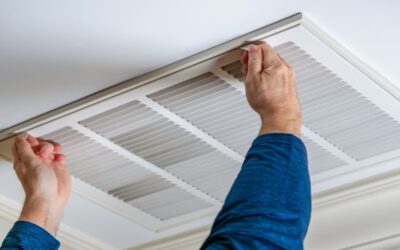
The MERV rating debate gets heated in HVAC forums for good reason – go too low and your filter does nothing, go too high and you risk choking your blower motor into early failure. The best MERV for air filter use sits between MERV 8 and MERV 13 for most residential systems, depending on your specific HVAC capacity, occupants with allergies or respiratory conditions, and local air quality. ASHRAE’s 2024 update to Standard 52.2 confirmed MERV 13 as the residential recommendation post-COVID, but the real-world answer is more nuanced than the spec.
- What MERV Actually Measures
- Why Higher MERV Isn't Always Better
- Matching MERV to Your HVAC System
- Best Filter Brands by MERV Rating
- How Often to Change Each MERV Level
- Allergies and Health Considerations
- Testing Your System's Static Pressure
- Smart Thermostats and Filter Tracking
- What Each MERV Catches in Real Life
- Final Recommendation
What MERV Actually Measures
MERV (Minimum Efficiency Reporting Value) ratings developed by ASHRAE measure a filter’s ability to capture particles between 0.3 and 10 microns. The scale runs from 1 to 20, with higher numbers capturing smaller particles at higher efficiency.
- MERV 1-4 – captures particles 10+ microns (dust mites, pollen, carpet fibers) at 20 percent efficiency
- MERV 5-8 – captures particles 3-10 microns at 70-80 percent efficiency
- MERV 9-12 – captures particles 1-3 microns at 80-90 percent efficiency
- MERV 13-16 – captures particles 0.3-1 micron at 90+ percent efficiency, including bacteria and some viruses
- MERV 17-20 – HEPA-class filtration, typically requires dedicated air handlers
Why Higher MERV Isn’t Always Better
Higher MERV filters use denser media that restricts airflow. Restricted airflow forces the blower motor to work harder, increases static pressure across the system, and can reduce overall efficiency by 5 to 15 percent. Over time, the constant strain shortens HVAC equipment lifespan by 2 to 5 years.
The static pressure problem is so significant that ASHRAE Standard 62.2 recommends MERV 13 only for systems designed to handle the additional pressure drop. Older HVAC systems with 1-inch filter slots may struggle with anything above MERV 11 unless the blower motor is rated for high static operation.
Matching MERV to Your HVAC System
The best MERV depends on three factors: filter slot depth, blower motor type, and system age. As a general guide:
- 1-inch filter slot, PSC motor (typical pre-2010) – MERV 8 maximum
- 1-inch filter slot, ECM motor (2010 and newer) – MERV 11 acceptable, MERV 13 with monitoring
- 4 to 5-inch filter slot, any motor type – MERV 13 to 16 safely
- Whole-house HEPA bypass system – MERV 17+ in dedicated unit
If you don’t know your blower motor type, check the HVAC nameplate for “ECM” or “Variable Speed” labels – both indicate modern motors that can handle higher MERV filters.
Best Filter Brands by MERV Rating
Honeywell, Filtrete (3M), and Aprilaire dominate the residential filter market. Top picks at each MERV level:
- MERV 8 – Honeywell Pleated Air Filter (FC10C1019), $24.99 for a 4-pack at Home Depot
- MERV 11 – Filtrete Allergen Defense 1500, $34.99 per 16x25x1 filter at Target
- MERV 13 – Filtrete Healthy Living Ultra Allergen 2200, $42.99 per 16x25x1 at Lowe’s
- MERV 16 – Aprilaire 213 for 4-inch slot systems, $89 per filter
Brand matters less than fit and material quality. Cheap MERV 13 filters from no-name brands often have larger pleats that perform closer to MERV 11 in real-world testing.
How Often to Change Each MERV Level
Higher MERV filters load up with particulate faster. Change intervals:
- MERV 8 – 60 to 90 days in clean homes, 30 to 45 days with pets
- MERV 11 – 45 to 60 days standard, 30 days with pets
- MERV 13 – 30 to 60 days, check monthly with a flashlight test
- 4-inch MERV 13 media filters – 6 to 12 months depending on home cleanliness
The flashlight test: hold the filter up to a strong light source. If you can see distinct beams through the media, replace it. If light is completely blocked, you’re past the change date.
Allergies and Health Considerations
For households with asthma, severe allergies, or immunocompromised members, MERV 13 is the EPA-recommended residential minimum. The Lung Association specifically endorsed MERV 13 in 2022 for residential HVAC capable of handling the static pressure load.
If your HVAC can’t handle MERV 13, the alternative is a standalone HEPA air purifier in primary living spaces. The Coway AP-1512HH ($229 at Amazon) and Levoit Core 600S ($299) deliver true HEPA filtration in 400 to 600 square foot rooms without affecting your central HVAC.
Testing Your System’s Static Pressure
If you’re unsure whether your HVAC can handle MERV 13, an HVAC technician can measure static pressure for $85 to $145. Systems designed for 0.5 inches water column (WC) total external static pressure are common in older installations. MERV 13 filters typically add 0.10 to 0.20 inches WC, which can exceed safe operating limits.
The Dwyer Magnehelic gauge or digital UEi EM201B ($165) measures actual pressure across the filter and total system static. DIY testing is possible with the right tools, but professional measurement is more reliable.
Smart Thermostats and Filter Tracking
Modern smart thermostats like the Nest Learning Thermostat ($249) and Ecobee Smart Thermostat Premium ($249) track runtime hours and remind you to change filters at programmed intervals. The runtime tracking is more accurate than calendar-based reminders because it accounts for actual HVAC usage.
Some HVAC systems include differential pressure sensors that detect filter loading directly. When the pressure drop across the filter exceeds a setpoint, the thermostat alerts you to change the filter regardless of date.
What Each MERV Catches in Real Life
- MERV 8 catches pollen, dust mite debris, mold spores, lint, hair
- MERV 11 adds capture of pet dander, dust, and most allergens
- MERV 13 adds bacteria, smoke particles, sneeze droplets, smog
- MERV 16+ adds most viruses and the finest combustion particulates
For typical homes without specific health concerns, MERV 8 to 11 captures the particles that actually impact comfort and surface cleanliness. The jump to MERV 13 matters most for households where someone has respiratory sensitivity or where outdoor air quality is consistently poor.
Final Recommendation
For most homes with HVAC systems built after 2010, MERV 11 hits the sweet spot of allergen capture, airflow preservation, and reasonable cost. Households with allergies or asthma should target MERV 13 if their system can handle it. Older HVAC systems should stick with MERV 8 to avoid blower motor strain. Whatever you choose, change the filter on schedule, monitor your system’s airflow, and don’t assume that the highest MERV rating in the store is the right answer for your house. The best MERV for air filter performance is the one your HVAC can sustain without compromise.