
Picking the right air filter seems simple until you face a wall of MERV ratings and confusing size numbers. A 16x20x1 furnace filter is one of the most common residential HVAC filter sizes, and understanding its dimensions, MERV rating, and replacement schedule keeps your system running clean and efficient. This guide covers sizing, filtration levels, costs, and how to choose the best filter for your home.
- What the Numbers Mean
- Nominal vs Actual Size
- Understanding MERV Ratings
- Higher MERV Isn’t Always Better
- How Often to Replace
- Typical Costs
- Why the Filter Matters
- Installing It Correctly
- MERV vs MPR vs FPR Rating Systems
- Filters and Allergies
- Choosing the Right Filter
- 1-Inch vs Thicker Media Filters
- Where the Filter Lives
- Signs You Need to Change It
- Washable and Reusable Options
- Final Takeaway
What the Numbers Mean
The three numbers describe the filter’s dimensions in inches: 16 inches by 20 inches by 1 inch thick. The first two are the length and width of the flat face, and the third is the depth that slides into the filter slot. A 16x20x1 filter fits a return vent or blower compartment sized for that opening. Always confirm your system’s required size before buying, as installing the wrong size lets unfiltered air bypass the filter.
Nominal vs Actual Size
An important quirk: the printed size is nominal, and the actual size is slightly smaller. A 16x20x1 filter usually measures about 15.5 by 19.5 by 0.75 inches in reality. This small gap lets the filter slide in and out easily. When replacing a filter, match the nominal size printed on the old one rather than measuring it exactly, unless you have a custom-size housing.
Understanding MERV Ratings
MERV (Minimum Efficiency Reporting Value) rates how well a filter captures particles, on a scale of 1 to 20. For homes, the useful range is:
- MERV 1 to 4: Basic fiberglass filters; catch large dust and lint but little else. Cheap but minimal protection.
- MERV 5 to 8: Pleated filters that capture dust, pollen, and mold spores. A good general-purpose choice.
- MERV 9 to 12: Capture finer particles including some bacteria and fine dust. Good for allergy sufferers.
- MERV 13 to 16: Capture smoke, fine particulates, and some viruses. Excellent filtration but higher airflow resistance.
Higher MERV Isn’t Always Better
It is tempting to buy the highest MERV rating, but a denser filter restricts airflow. If your system is not designed for a high-MERV filter, it can strain the blower, reduce efficiency, and even cause the coil to freeze. For most homes, MERV 8 to 11 balances good filtration with healthy airflow. Check your equipment’s recommendations before jumping to MERV 13 or higher.
How Often to Replace
A 1-inch filter is thin and clogs faster than thicker media, so it needs frequent changes.
- Basic fiberglass filters: every 30 days
- Pleated MERV 8 to 11 filters: every 60 to 90 days
- More often with pets, smokers, allergies, or during heavy heating and cooling seasons
Check the filter monthly by holding it up to light; if you cannot see through it, replace it. A clogged filter makes the furnace work harder and raises energy bills.
Typical Costs
Filters are inexpensive but add up over a year. Basic fiberglass 16x20x1 filters cost $2 to $5 each, mid-range pleated MERV 8 to 11 filters run $8 to $20, and high-efficiency MERV 13 filters cost $15 to $30. Buying multi-packs lowers the per-filter price. Over a year, expect to spend $30 to $120 depending on quality and change frequency.
Why the Filter Matters
The furnace filter protects both your air and your equipment. It keeps dust and debris off the blower motor and coil, which prevents breakdowns and maintains efficiency. It also improves indoor air quality by capturing airborne particles. A neglected filter is one of the most common causes of HVAC service calls, since restricted airflow leads to overheating, frozen coils, and premature wear.
Installing It Correctly
Direction matters. Every filter has an airflow arrow printed on the frame that must point toward the furnace or air handler, in the direction air flows. Installing it backward reduces effectiveness and can cause the pleats to collapse. Slide the filter fully into the slot with no gaps around the edges, and make sure the cover or grille seals so air cannot bypass it.
MERV vs MPR vs FPR Rating Systems
Confusingly, retailers use several rating scales, and knowing the rough equivalents prevents mistakes. MERV is the industry-standard scale from 1 to 20. Some brands use MPR (Microparticle Performance Rating), which runs from about 300 to 2800 and emphasizes fine-particle capture. Others use FPR (Filter Performance Rating) on a 4 to 10 scale with color codes. As a rough guide, a MERV 11 filter corresponds to roughly MPR 1000 to 1200 or FPR 7, and MERV 13 aligns with about MPR 1500 to 1900 or FPR 10. When comparing filters across brands, translate everything to MERV so you are comparing genuine filtration levels, not marketing numbers.
Filters and Allergies
For households with allergies or asthma, the filter is a frontline air-quality tool. Pollen is captured well by MERV 8 and above, pet dander and fine dust by MERV 11, and smoke and the smallest particles by MERV 13. Changing the filter more frequently, every 30 to 45 days, keeps capture efficiency high during allergy season. Pairing a good filter with source control, such as reducing indoor humidity and vacuuming with a HEPA cleaner, does more for symptoms than filtration alone. Just confirm your system tolerates the higher MERV before upgrading, to avoid airflow problems.
Choosing the Right Filter
Match the filter to your household needs:
- Standard home with no allergies: MERV 8 pleated
- Pets or mild allergies: MERV 11
- Severe allergies, asthma, or smoke concerns: MERV 13, if your system allows it
- Rental or budget priority with frequent changes: basic pleated
1-Inch vs Thicker Media Filters
The 1-inch depth is standard but not the only option. Some systems accept 2-inch, 4-inch, or 5-inch media filters, which have far more surface area and pleats. Thicker filters clog more slowly, so a 4-inch filter might last 6 to 12 months versus 1 to 3 months for a 1-inch, and they can offer higher MERV with less airflow restriction because the air passes through more media. However, your filter slot must be built for the thicker size. If your system only has a 1-inch slot, stick with 16x20x1 and change it more often.
Where the Filter Lives
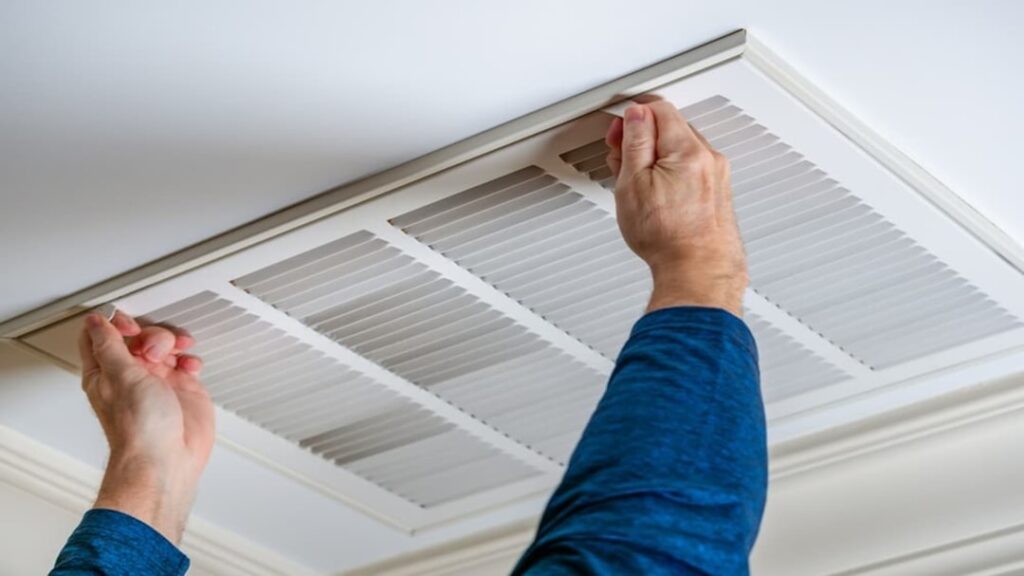
Knowing your filter’s location helps with sizing and changes. In many homes the filter sits in a slot at the furnace or air handler, near where the large return duct connects. In others, it mounts behind a return-air grille on a wall or ceiling. Some homes have multiple return grilles, each with its own filter, so check every return. If you find a 16x20x1 in one spot, confirm whether other returns use the same or different sizes before stocking up on replacements.
Signs You Need to Change It
Watch for these indicators that the filter is overdue:
- Visibly gray, dusty media you cannot see light through
- Reduced airflow from the vents
- The system running longer to reach temperature, raising energy bills
- More dust settling on furniture than usual
- The blower or coil freezing up in extreme cases
A calendar reminder every 60 to 90 days, checked monthly by eye, keeps you ahead of these symptoms.
Washable and Reusable Options
Beyond disposable filters, washable 16x20x1 filters exist. These have a rigid frame and reusable media you rinse and dry, lasting several years for a one-time cost of $20 to $40. They reduce waste and long-term spending, but they typically offer lower MERV filtration, must be fully dried before reinstalling to prevent mold, and require diligence to clean on schedule. For allergy sufferers, a disposable pleated MERV 11 or 13 usually filters better than a washable option, so weigh convenience and cost against filtration needs.
Final Takeaway
A 16x20x1 furnace filter is a common, affordable size, but choosing well means understanding nominal sizing, picking a MERV rating your system can handle, and replacing it on schedule. For most homes, a MERV 8 to 11 pleated filter changed every 60 to 90 days protects both your air quality and your equipment. Install it with the airflow arrow pointing toward the furnace, and this small, inexpensive part will keep your HVAC system running efficiently.


