A single female mosquito can lay up to 300 eggs at a time, which is why an untreated yard can turn from a few annoying bites into a genuine infestation in a matter of weeks. The best outdoor mosquito trap breaks that breeding cycle by luring and capturing the egg-laying females before they multiply, giving you back your patio without dousing the yard in chemicals. Not all traps work the same way, though, and a $30 bug zapper performs nothing like a $300 CO2-emitting unit. Understanding the technology behind each type is the key to actually reducing the mosquito population rather than just frying random moths.
Part of our Windows & Doors guide — explore the full guide →
- How Mosquito Traps Actually Work
- Types of Mosquito Traps
- Top Picks by Category
- What to Look For When Buying
- Placement Makes or Breaks Results
- Pair Traps With Source Reduction
- Understanding Attractants and Refills
- Maintenance for Year-Round Performance
- Realistic Expectations and Timeline
- The Bottom Line
How Mosquito Traps Actually Work
Mosquitoes hunt by detecting the carbon dioxide, heat, and body odors that warm-blooded animals exhale. The most effective traps mimic those cues. They emit CO2, sometimes warmth, and a chemical attractant like octenol or lactic acid to convince mosquitoes that a host is nearby. Once drawn in, the insects are sucked into a net or trapped on an adhesive surface where they dehydrate and die. The goal isn’t to kill one night’s mosquitoes; it’s to capture the breeding females and collapse the next generation, which takes consistent operation over several weeks.
Types of Mosquito Traps
CO2 (Propane) Traps
These are the heavy hitters. By burning propane to produce carbon dioxide and heat, units like the Mosquito Magnet convincingly imitate a breathing mammal. They cover up to an acre and are the most effective at population control, but they’re expensive ($250 to $500) and require ongoing propane and attractant cartridge costs.
Electric CO2 and Lure Traps
Plug-in traps such as the DynaTrap and Flowtron units use UV light, a warming surface, and sometimes a CO2-mimicking titanium dioxide coating to attract mosquitoes, then a quiet fan vacuums them into a basket. Priced $60 to $150, they cover a half to a full acre and have no propane refills, making them the sweet spot for most homeowners.
UV Light and Adhesive Traps
Smaller indoor-outdoor units like the Katchy use UV light and a fan to draw mosquitoes onto a sticky glue board. They’re affordable ($40 to $50) and quiet but suited to patios and small areas rather than a whole yard.
Bug Zappers (Use With Caution)
Classic electric zappers attract insects to a UV light and electrocute them. The problem is they kill far more harmless and beneficial insects than mosquitoes, since mosquitoes aren’t strongly drawn to light alone. Skip these for serious mosquito control.
Top Picks by Category
- Best overall coverage: Mosquito Magnet Patriot Plus, propane-powered, up to 1 acre, around $350
- Best value: DynaTrap DT2000XLP, covers up to 1 acre, around $130, no propane
- Best for patios: Katchy Indoor Insect Trap, around $45
- Best mid-range: Flowtron Mosquito Power Trap, around $100, octenol attractant included
What to Look For When Buying
Match the trap to your yard. Coverage area is the first spec to check; buying a half-acre trap for a full acre leaves dead zones where mosquitoes still breed. Consider the running cost, propane traps need refills every few weeks, while electric traps just sip power. Look for replaceable attractants like octenol or lactic acid, which significantly boost catch rates. Quiet operation matters if the trap sits near a seating area, and weather resistance is essential for a unit that lives outdoors year-round.
Placement Makes or Breaks Results
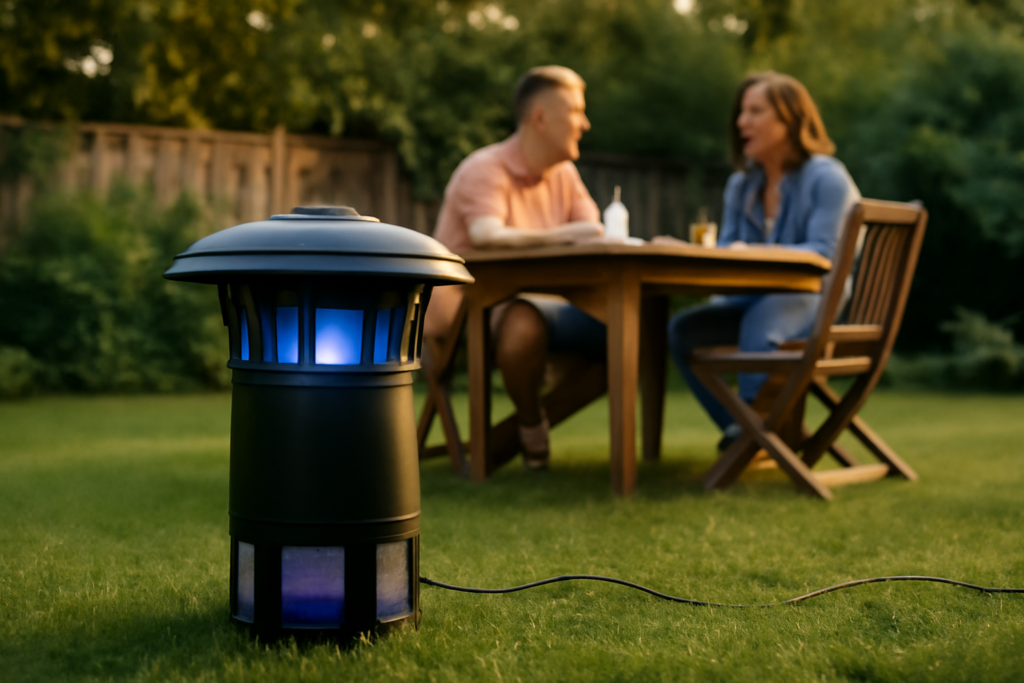
Even the best trap fails in the wrong spot. Position it between mosquito breeding areas (standing water, dense shrubs, shaded damp ground) and the spot you want to protect, so the trap intercepts them on their way in. Keep it 20 to 40 feet from where people gather, because you want mosquitoes drawn to the trap, not to you. Place it in shade, since mosquitoes rest there during the day, and run it continuously through the season rather than only when you’re outside.
Pair Traps With Source Reduction
No trap can outrun a yard full of breeding sites. The single most effective thing you can do is eliminate standing water, where mosquitoes lay eggs. Empty saucers under flowerpots, clean clogged gutters, change birdbath water weekly, and treat ponds with mosquito dunks (Bti, harmless to fish and pets, about $10). A trap plus diligent source reduction will cut your mosquito population dramatically; either one alone leaves gaps.
Understanding Attractants and Refills
The attractant is often what separates a mediocre trap from an effective one. Two chemicals dominate: octenol and lactic acid, both compounds that mimic human and animal scent. Octenol works especially well for certain mosquito species and is sold as small lure cartridges that last about three weeks before needing replacement, typically $10 to $20 for a multi-pack. Some species respond better to lactic acid, so a few traps let you swap lures. Factor these recurring refill costs into your decision, an inexpensive trap that needs $15 of attractant every month may cost more over a season than a pricier unit with cheaper consumables. Always check what refills a model requires before buying.
Maintenance for Year-Round Performance
A neglected trap quickly stops working. Empty the collection basket or replace the adhesive board regularly, because a full basket of dead insects deters new ones and can clog the fan. Clean the unit at the start and end of each season, wiping away dust and debris that block the intake. For propane models, monitor the tank and swap it before it runs dry, since even a brief gap lets the mosquito population rebound. Store electric traps indoors over winter in freezing climates to protect the motor and electronics. A few minutes of upkeep every couple of weeks keeps the trap catching at full strength all season long.
Realistic Expectations and Timeline
Don’t expect overnight silence. Traps work by reducing the breeding population over time, so you’ll typically notice a meaningful drop after two to four weeks of continuous operation as fewer eggs hatch. Set the trap out early in the season, before mosquito numbers peak, for the best results. Run it all season and the cumulative effect is a yard you can actually enjoy at dusk.
The Bottom Line
The best outdoor mosquito trap for you depends on your yard size and budget: a propane CO2 trap for maximum coverage, a DynaTrap-style electric unit for the best balance of cost and effectiveness, or a compact UV trap for a patio. Whatever you choose, place it strategically between breeding areas and your living space, run it continuously, and eliminate standing water. That combination is what finally turns the tide on a mosquito-ridden yard.