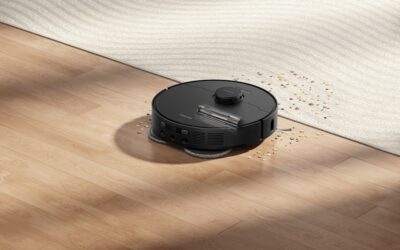
Anyone who shares a home with a shedding dog or cat knows the truth: pet hair is relentless. It drifts into corners, weaves into carpet, and reappears an hour after you sweep. That is exactly the daily grind a robot vacuum is built to win. Finding the best robot vacuum for pet hair 2025 comes down to three features that separate the machines that actually help from the ones that jam within a week: strong suction, tangle-resistant brushes, and a self-emptying base big enough to hold weeks of fur. Get those right and you come home to clean floors every single day without lifting a finger.
Not every robot vacuum handles fur well. The cheap ones clog, wrap their brushrolls into a matted mess, and fill their tiny bins by lunchtime. Here is what to look for and which models earn the money.
The Three Features That Actually Matter
Ignore the marketing noise and focus on what beats pet hair:
- Suction power (measured in Pa): look for at least 4,000 Pa; the best pet models now push 8,000 to 22,000 Pa to pull embedded hair from carpet
- Anti-tangle brushroll: rubber or dual-brush designs that resist hair wrapping, the single biggest pet-vacuum headache
- Self-emptying base: a dock that sucks the robot’s bin into a large bag, so you empty it every 45-60 days instead of daily
A large sealed dust bag matters more for pet owners than anyone else, because fur fills a small onboard bin fast. Combine that with a HEPA-style filter and you also trap the dander that triggers allergies.
Best Overall for Pet Hair
The premium flagships from iRobot, Roborock, and Eufy lead the category in 2025 because they combine everything above with smart navigation.
- Roborock S8 Pro Ultra / Qrevo series: dual rubber brushes that shrug off tangles, strong suction, and an all-in-one dock that self-empties, refills water, and even washes its own mop pads. Around $1,200-$1,600.
- iRobot Roomba j9+ / Combo: excellent carpet agitation with dual rubber brushes designed specifically to avoid hair wrap, plus reliable obstacle avoidance that dodges pet accidents. Roughly $800-$1,000.
- Eufy X10 Pro Omni: a strong value flagship with 8,000 Pa suction and a self-emptying, self-washing dock at a lower price, near $700-$800.
All three use dual counter-rotating rubber brushes rather than a single bristle brush, which is the design that best resists the wrapping that kills lesser vacuums.
Best Value Pick
You do not have to spend four figures. Mid-range models handle pet hair well if you accept fewer luxury features:
- Shark Matrix Self-Emptying: solid suction, a self-empty base, and matrix-grid cleaning for around $400-$500
- Eufy Clean X9 Pro or L60: strong suction and reliable navigation in the $300-$500 range
- iRobot Roomba i5+ / j5+: the self-emptying base without the top-tier price, often $350-$500
The key compromise at this price is usually navigation quality and dock features, not raw cleaning power. For a home with hard floors and low-pile rugs, a mid-range model does the pet-hair job just fine.
Navigation: Why It Matters for Pet Homes
A vacuum that bumps around randomly misses spots and gets stuck under furniture. Look for LiDAR or camera-based mapping, which lets the robot build an accurate floor plan, clean in efficient rows, and let you send it to a specific room from the app. For pet owners, one navigation feature is worth extra money: obstacle avoidance that recognizes and dodges pet waste. iRobot’s models even offer a “Pet Owner Official Promise” to replace the unit if it fails to avoid solid pet accidents. Nothing ruins a day like a robot smearing a mess across the house.
Carpet vs Hard Floors
Match the machine to your flooring. On hard floors and tile, almost any decent robot lifts loose pet hair easily, and a mopping combo adds value for paw prints. On medium and high-pile carpet, suction becomes critical, because fur burrows deep into the fibers. If your home is mostly carpet, prioritize the highest Pa rating and a model with automatic carpet boost that ramps suction when it senses a rug.
Rubber brushrolls also glide over carpet without tangling, while bristle brushes tend to grab and wrap long hair. This is why the anti-tangle designs consistently win pet-owner reviews.
Maintenance to Keep It Working
Even the best pet vacuum needs occasional care. Stay ahead of it:
- Empty the dock bag every 45-60 days (sooner with multiple heavy shedders)
- Check the brushroll weekly and snip away any wrapped hair with scissors
- Clean the side brush and wheels, where fur loves to collect
- Wash or tap out the filter monthly to keep suction strong
- Wipe the drop sensors so it does not mistake dark rugs for stairs
Rubber brushes cut this maintenance dramatically compared to bristle designs, which is one more reason to prioritize them for a pet household.
Mopping Combos for Pet Homes
Pets track in more than hair. Paw prints, drool, and the occasional muddy trail all end up on hard floors, which is why many 2025 flagships combine vacuuming with mopping in a single pass. The best combo docks even wash and dry their own mop pads, so you are not handling dirty water.
If you have a lot of tile, hardwood, or luxury vinyl, a vacuum-mop combo is worth the premium:
- Self-washing mop pads mean you never wring out a filthy cloth by hand
- Auto mop lift raises the pads when the robot crosses carpet, so rugs stay dry
- Hot-water washing and heated drying prevent the sour-mop smell that plagues cheaper units
For homes that are mostly carpet, skip the mop and put that money toward suction and a bigger dust bag instead. Match the machine to your flooring rather than paying for features you will not use.
Allergy Considerations
Pet hair is only half the problem; the dander riding on it is what triggers allergies and asthma. If anyone in your home is sensitive, prioritize filtration as heavily as suction. Look for these features:
- A true HEPA or high-efficiency filter that traps fine dander rather than recirculating it
- A sealed dust path and self-emptying bag so you are not breathing a cloud of allergens when you empty it
- Frequent scheduled runs, since daily light cleaning keeps dander from accumulating
The self-emptying base is a genuine allergy win. Instead of dumping a fur-packed bin into the trash and releasing dander into the air, the robot deposits everything into a sealed bag you touch only once every couple of months. For allergy sufferers, that sealed handling matters as much as the vacuum’s raw cleaning power.
The Bottom Line
The best robot vacuum for pet hair 2025 combines strong suction of at least 4,000 Pa, tangle-resistant rubber brushes, and a large self-emptying base so fur is handled hands-free for weeks at a time. Spring for a Roborock, Roomba j-series, or Eufy Omni flagship if you want the do-it-all docks and top navigation, or save with a Shark Matrix or mid-range Eufy if you mainly need daily hair pickup. Prioritize obstacle avoidance if you have pets that have accidents, match the suction to your carpet, and keep up with simple brush maintenance. Do that, and the constant battle against shedding finally shifts in your favor.
Battery Life and Coverage
For larger homes, run time and recharge behavior matter as much as suction. Most quality models offer 120 to 180 minutes on a charge, enough to cover a whole floor of an average house. Just as important is recharge-and-resume, where the robot returns to the dock, tops up, and continues exactly where it left off. That feature is what lets a single robot clean a 2,000-plus square foot home without you babysitting it.
A few things to check on battery and coverage:
- Recharge-and-resume: essential for homes over about 1,500 square feet
- Battery capacity: higher milliamp-hour ratings mean longer runs before docking
- Scheduling: set daily runs while you are out so hair never accumulates
Because pet hair builds up fast, a daily scheduled run beats a single deep clean once a week. Little and often keeps floors consistently clear and keeps the dust bag from overflowing between empties.
Smart Features Worth Having
Beyond cleaning, app and voice features make a pet-focused robot far more convenient to live with:
- Room-specific cleaning, so you can send it to the kitchen after dinner or the pet bed after playtime
- No-go zones and virtual walls to keep it away from food bowls and cords
- Voice control through Alexa or Google for hands-free starts
- Dirt-detect or targeted cleaning that spends extra passes on high-shedding spots
Being able to say “clean the living room” and have the robot handle just that zone is genuinely useful in a pet home, where certain rooms collect far more hair than others. Combined with no-go zones around food and water, these smart controls let the vacuum work around your pets rather than into their space.