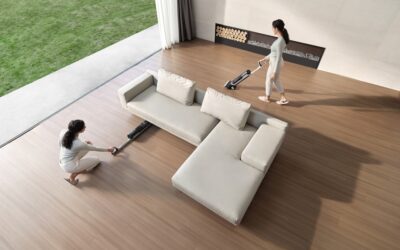
Choosing the best vacuum for hardwood floors means finding a machine that picks up dust, pet hair, and debris without scratching or dulling your finish. Not every vacuum is safe for hardwood — stiff bristle brushrolls, heavy plastic wheels, and poor suction sealing can damage floors that cost $8–$16 per square foot to install. This guide covers 10 vacuums we evaluated specifically for hardwood floor performance, with detailed comparisons and buying advice for 2026.
Top 10 Vacuums for Hardwood Floors
1. Dyson V15 Detect — Best Overall
The Dyson V15 Detect remains the top choice for hardwood floors in 2026. Its laser-equipped Fluffy Optic cleaner head reveals microscopic dust particles invisible to the naked eye, and the piezo sensor counts and sizes particles in real time, automatically adjusting suction power. The soft roller head is specifically designed for hard floors — no stiff bristles to cause scratches. Runtime is up to 60 minutes on low power, 25 minutes on boost. Price: $749.
2. Tineco Floor One S7 Pro — Best Wet/Dry
This combination vacuum and mop picks up dry debris and washes the floor simultaneously. The self-cleaning system rinses the brush roll after every use, preventing dirty water from sitting on your hardwood. The iLoop Smart Sensor adjusts suction and water flow based on mess level. At $599, it replaces both a vacuum and a mop.
3. Shark Stratos Cordless — Best Value
Shark’s Stratos delivers 90% of Dyson’s performance at 60% of the price. The anti-allergen complete seal captures 99.97% of particles, and the DuoClean PowerFins combines a soft roller for hard floors with a bristle guard for transitioning to carpet. Runtime hits 50 minutes. Price: $449.
4. Miele Triflex HX2 — Best for Allergies
Miele’s HEPA AirClean filtration system is hospital-grade, capturing 99.999% of particles down to 0.1 microns. The Parquet Twister floor head has natural bristles that glide over hardwood without scratching. The 3-in-1 convertible design works as a stick, handheld, or extended-reach vacuum. Price: $699.
5. Roborock S8 MaxV Ultra — Best Robot Vacuum
For hands-free hardwood floor cleaning, the Roborock S8 MaxV Ultra leads with 10,000 Pa suction, dual rubber brush rolls that resist tangling, and a built-in mop that lifts automatically on carpet. The auto-empty dock holds 7 weeks of debris. LiDAR navigation maps your home with millimeter precision. Price: $1,399.
6. LG CordZero A939KBGS — Best Cordless Upright
LG’s CordZero converts from an upright to a handheld and includes a telescoping wand for ceiling fans and high shelves. The Power Drive Nozzle has a soft microfiber pad that polishes hardwood while vacuuming. Dual batteries provide up to 80 minutes of combined runtime. Price: $799.
7. Bissell CrossWave HydroSteam — Best Multi-Surface
The CrossWave vacuums, washes, and steam-cleans simultaneously. The steam function (212°F) sanitizes hardwood floors without chemicals, killing 99.9% of common household bacteria. Use steam mode only on sealed hardwood — unsealed or waxed floors can be damaged by steam. Price: $399.
8. Samsung Bespoke Jet AI — Best Smart Vacuum
Samsung’s AI-powered vacuum detects floor type and mess size, automatically switching between its soft brush (for hardwood) and turbo brush (for carpet). The Clean Station empties the dustbin and sanitizes the cyclone filter with UV light. Runtime is 60 minutes. Price: $899.
9. Swiffer PowerMop + Vacuum — Best Budget
At $79, this lightweight cordless stick vacuum is the most affordable option that is genuinely safe for hardwood. The soft microfiber roller picks up fine dust without scratching, and the slim profile slides under furniture with just 4 inches of clearance. Runtime is 30 minutes. Not suitable for heavy-duty cleaning.
10. Kenmore Elite 81714 Canister — Best Canister
Canister vacuums offer the strongest suction with the lightest floor head, making them ideal for large hardwood areas. The Kenmore Elite delivers 400 air watts of suction through a retractable cord system with a 28-foot reach. The bare floor brush uses natural horse hair bristles. Price: $349.
Comparison Table
| Model | Type | Suction | Runtime | Weight | Price |
|---|---|---|---|---|---|
| Dyson V15 Detect | Cordless stick | 230 AW | 60 min | 6.8 lbs | $749 |
| Tineco Floor One S7 Pro | Wet/dry | 185 AW | 40 min | 12.5 lbs | $599 |
| Shark Stratos Cordless | Cordless stick | 200 AW | 50 min | 8.4 lbs | $449 |
| Miele Triflex HX2 | Cordless 3-in-1 | 190 AW | 60 min | 9.2 lbs | $699 |
| Roborock S8 MaxV Ultra | Robot | 10,000 Pa | 180 min | N/A | $1,399 |
| LG CordZero A939 | Cordless upright | 210 AW | 80 min | 10.1 lbs | $799 |
| Bissell CrossWave HydroSteam | Wet/dry/steam | 170 AW | 25 min | 11.8 lbs | $399 |
| Samsung Bespoke Jet AI | Cordless stick | 210 AW | 60 min | 6.5 lbs | $899 |
| Swiffer PowerMop + Vacuum | Cordless stick | 90 AW | 30 min | 4.2 lbs | $79 |
| Kenmore Elite 81714 | Canister | 400 AW | Corded | 5.2 lbs (head) | $349 |
What to Look for in a Hardwood Floor Vacuum
Soft Roller or Brush Head
The brush head is the single most important factor for hardwood safety. Look for soft woven nylon, microfiber, or felt rollers. These materials pick up fine dust and debris without scratching polyurethane, lacquer, or oil finishes. Avoid stiff nylon bristle brush rolls designed for carpet — they leave micro-scratches that dull your floor’s finish over time.
Adjustable Suction
Maximum suction is not always ideal on hardwood. Too much suction can cause the vacuum head to stick to the floor, making it difficult to push and potentially marking the surface. Models with automatic or manual suction adjustment let you find the sweet spot for your specific floor type.
Rubber or Felt Wheels
Hard plastic wheels can scratch hardwood, especially if debris gets embedded in the wheel. Look for rubber-coated or felt-padded wheels that glide smoothly without marking. This is especially important for heavier upright and canister models.
HEPA Filtration
Hardwood floors do not trap dust the way carpet does, which means more particles become airborne during vacuuming. A sealed HEPA filter (capturing 99.97% of particles at 0.3 microns) prevents the vacuum from recirculating dust into your home’s air.
Edge Cleaning
Dust and pet hair accumulate along baseboards and in corners. Look for vacuums with edge-cleaning bristles or a slim profile that reaches within 1/2 inch of the wall. Without good edge cleaning, you will still need to hand-sweep baseboards.
Best Vacuum Type for Hardwood
| Type | Pros for Hardwood | Cons for Hardwood | Best For |
|---|---|---|---|
| Cordless stick | Lightweight, maneuverable, quick daily cleaning | Limited runtime, smaller dustbin | Daily maintenance, small to medium homes |
| Canister | Strongest suction, lightest floor head, great edge cleaning | Dragging canister behind you, storage bulk | Large homes, deep cleaning |
| Robot | Hands-free daily cleaning, scheduled runs | Cannot deep clean, expensive, requires maintenance | Maintaining between manual cleanings |
| Wet/dry | Vacuums and mops simultaneously, saves time | Heavier, must empty and clean after each use | Kitchens, high-traffic areas |
| Upright | Familiar design, large dustbin, often cheaper | Heavier, brush roll may scratch, less maneuverable | Homes with mixed carpet and hardwood |
Must-Have Features
- Hard floor mode or soft roller head — Non-negotiable. Using a carpet brush roll on hardwood causes cumulative damage.
- Swivel steering — Hardwood floors are often in open-plan spaces that require navigating around furniture legs and corners.
- Low-profile head — 4 inches or less of clearance allows cleaning under sofas, beds, and cabinets where dust bunnies accumulate.
- Easy dustbin emptying — Bagless designs with one-button release minimize mess and are more convenient for daily use.
- Wall-mount charging dock — Keeps the vacuum accessible for quick daily cleanups, which is the best maintenance strategy for hardwood floors.
Features to Avoid on Hardwood
- Stiff bristle brush rolls — Designed for agitating carpet fibers, they scratch and dull hardwood finishes.
- Beater bars — The spinning bar in traditional upright vacuums can chip edges of hardwood planks and wear down the finish at high speeds.
- Non-adjustable suction — Maximum-only suction makes the head hard to push and can leave marks from the seal pressing against the floor.
- Narrow hard plastic wheels — Concentrate the vacuum’s weight on a small contact area, increasing scratch risk.
- Exhaust that blows downward — Blows dust and debris out from the sides instead of capturing it, redistributing mess across your floor.
Hardwood Floor Vacuum Maintenance
- Clean the brush roll weekly — Even soft rollers collect hair and fibers that reduce cleaning performance. Use scissors to cut away wrapped hair.
- Wash filters monthly — Most filters are washable. Rinse under running water and let dry completely (24 hours) before reinstalling. A clogged filter reduces suction by 30–50%.
- Empty the dustbin after every use — A full dustbin reduces suction and forces the motor to work harder, shortening its lifespan.
- Inspect wheels quarterly — Check for embedded debris, wear, or flat spots that could scratch floors. Replace worn wheels promptly.
- Replace the battery every 2–3 years — Cordless vacuum batteries lose capacity over time. Replacement batteries cost $50–$150 depending on the brand.
For more home care tips, check out our guide on coordinating your walls and floors for a cohesive look, or learn about kota stone flooring as a durable natural alternative to hardwood.
Frequently Asked Questions
Can a regular vacuum damage hardwood floors?
Yes. Vacuums with stiff bristle brush rolls, beater bars, or hard plastic wheels can scratch and dull hardwood finishes over time. The damage is cumulative — a single use may not cause visible marks, but daily use over months creates a hazy, worn appearance, especially on glossy finishes.
How often should you vacuum hardwood floors?
High-traffic areas (kitchen, entryway, living room) benefit from daily vacuuming or at least every 2–3 days. Low-traffic areas (guest bedrooms, formal dining rooms) can be vacuumed weekly. Homes with pets should increase frequency as pet hair and dander accumulate faster.
Is a robot vacuum good enough for hardwood floors?
Robot vacuums are excellent for daily maintenance between deeper cleanings. They pick up surface dust, pet hair, and crumbs effectively. However, they cannot match the suction power or edge cleaning ability of a manual vacuum. The ideal setup is a robot for daily runs and a cordless stick or canister for weekly deep cleans.
Should I use a vacuum or a broom on hardwood?
A vacuum with a soft roller head is better than a broom in most cases. Brooms push fine dust particles around and into the air, while vacuums capture and contain them. However, a soft-bristle broom or dust mop is perfectly adequate for quick daily sweeping between vacuum sessions.
Can I use a steam mop vacuum on hardwood floors?
Only on sealed hardwood floors with a polyurethane or similar waterproof finish. Steam (212°F) can penetrate unsealed, waxed, or oiled hardwood and cause warping, discoloration, and finish failure. When in doubt, contact your floor’s manufacturer for steam compatibility guidance.
What is the best vacuum for pet hair on hardwood floors?
The Dyson V15 Detect and Shark Stratos Cordless both excel at pet hair pickup on hardwood. Look for models with anti-tangle brush rolls (rubber fins instead of bristles) and a motorized pet tool attachment for furniture. HEPA filtration is essential for trapping pet dander and allergens.
Last updated: March 2026
Prefer to explore on your own?
See how new flooring looks in your actual room in seconds — free, no signup.
Try the free Floor Studio →