Reliability varies noticeably between washer brands, and a dependable machine can spare you costly repairs over its life. Identifying the best washer brands today means weighing far more than headline features like steam cycles and smart apps. Cycle time, parts availability, motor warranty, and five-year repair rates separate machines that age gracefully from those that start limping at year three. Here is how the major players actually stack up.
- Speed Queen: The Commercial-Grade Heirloom
- LG: The Front-Load Performance Leader
- Samsung: Feature-Rich but Mixed Reliability
- Miele: Premium Longevity Priced Accordingly
- Whirlpool and Maytag: Dependable Mid-Market
- GE and GE Profile: Rising Contenders
- Bosch: The European Compact Specialist
- Front Load Versus Top Load
- Capacity Guide by Household Size
- Features Worth Paying For
- How to Pick the Right Brand for Your House
- Warranty Terms Worth Paying Attention To
- Frequently Asked Questions
Speed Queen: The Commercial-Grade Heirloom
Speed Queen builds its washers in Ripon, Wisconsin with commercial-grade components borrowed from its laundromat machines. Their TR series top-loader uses a heavy-duty, commercial-style drive built for a long service life. Cycles finish in under 30 minutes, compared to 75 to 90 minutes on high-efficiency front-loaders.
The tradeoff is water use and gentleness. Speed Queen agitator machines use noticeably more water per load than most HE top-loaders, and agitator models are rougher on delicates. Expect to pay $1,200 to $1,600, with parts availability that rivals a Toyota dealer.
LG: The Front-Load Performance Leader
LG front-loaders have a strong reliability record in retailer service-call reports. Their WM4000 and WM6700 front-loaders run on a direct-drive inverter motor backed by a 10-year warranty, no belts or pulleys to fail.
Stain-removal testing places LG within two points of the class-leading Miele at about half the price. The TurboWash 360 cycle wraps a full load in 29 minutes. Watch for door-boot mildew, which is easily prevented by leaving the door cracked open and wiping the gasket weekly.
Samsung: Feature-Rich but Mixed Reliability
Samsung washers pack the best feature set per dollar, including AI Smart Dial cycles and automatic detergent dispensing. The FlexWash with a top-drawer second compartment handles delicates simultaneously with a main load.
Service data is less flattering. Samsung washers have seen multiple recalls over the past decade, and control-board failures after year four remain common. Extended warranties are worth the $180 when buying a Samsung. For shoppers who rotate appliances every five years anyway, the features outweigh the risk.
Miele: Premium Longevity Priced Accordingly
Miele engineers its W1 washers for a 20-year lifespan at 5,000 cycles, nearly triple the industry norm. Honeycomb drum design reduces fabric wear, and the CapDosing system dispenses precise detergent pods automatically. Cycles include specialized programs for down jackets, allergy-sensitive linens, and steam-refresh for unlaundered clothes.
Price tags start at $1,999 and climb past $2,800. Parts are more expensive and service technicians are sparser than for mass-market brands. For buyers willing to pay for decades of service and concert-hall-quiet operation at 49 dBA, Miele justifies the premium.
Whirlpool and Maytag: Dependable Mid-Market
Whirlpool owns the Maytag name, and both brands share platforms with minor cosmetic differences. Their mid-range top-loaders hit the sweet spot of capacity, speed, and reliability at $750 to $1,100. The Maytag MVW7232 offers a 5.3 cu ft tub and a 10-year parts warranty on the motor and drive.
Whirlpool front-loaders like the WFW5620 tie for second in Yale’s repair data behind LG. Cycles are not the fastest, but wash performance on heavily soiled loads beats many pricier competitors. The Maytag Commercial MVWP586 is a basic, agitator-driven workhorse popular with landlords.
GE and GE Profile: Rising Contenders
GE has invested heavily in its Louisville, Kentucky facility and now produces some of the most innovative top-loaders on the market. The UltraFresh Vent system actively dries the door gasket after each cycle, which solves the mildew problem that plagues most front-loaders.
GE Profile ventless washer-dryer combo units fit in apartments and basement laundry nooks without outside venting. GE Appliances has been owned by Haier since 2016. Expect $900 to $1,700 for feature-packed models.
Bosch: The European Compact Specialist
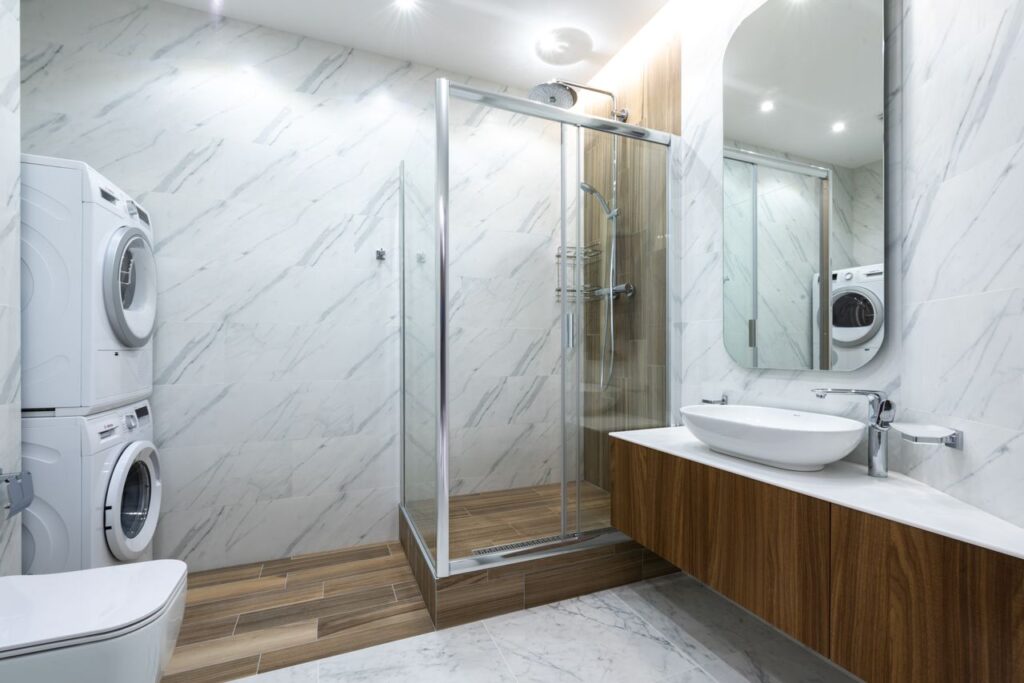
Bosch does not sell full-size washers in the US, but their 24-inch compact washer-dryer set owns the small-space market. Stacked, the pair fits in a closet 28 inches wide and 82 inches tall. A heat-pump dryer option cuts drying energy use nearly in half compared to vented electric models.
Loads top out at 2.2 cubic feet, which handles about 15 pounds of laundry. That is fine for couples and small families but cramped for five-person households. At roughly $2,400 for the pair, Bosch compacts compete with premium full-size sets on price while saving significant footprint.
Front Load Versus Top Load
Front loaders use roughly 40 to 60 percent less water than traditional agitator top loaders, and their faster spin leaves clothes noticeably drier, which cuts dryer time and energy use. The downsides are longer cycles, more upkeep and the risk of a musty door gasket if the drum is closed up wet.
High-efficiency top loaders with an impeller instead of an agitator sit in between. They use more water than a front loader but less than an old-style agitator model, and they are easier to load without bending. Agitator top loaders remain the fastest and most aggressive cleaners, at the cost of more water and more wear on delicate fabrics.
Capacity Guide by Household Size
Buying more drum than you need adds cost without making laundry day easier, while buying too little means extra loads every week.
- 4.2 to 4.5 cu ft: singles, couples and small apartments.
- 4.5 to 5.0 cu ft: households of three to four.
- 5.0 to 5.3 cu ft: larger families and anyone washing bulky bedding at home.
- 5.5 cu ft and up: a niche size aimed mostly at king comforters, pet beds and very large households.
Each step up in capacity generally moves you into a higher price tier, so size the machine to your weekly routine rather than to the occasional comforter.
Features Worth Paying For
Steam cycles help with set-in stains and allergens and are worth the modest premium if anyone in the home has dust mite allergies. Sanitize cycles that reach water temperatures in the 145 to 165 degree Fahrenheit range are useful for households with infants or people with weakened immune systems.
Wi-Fi alerts are more useful than they sound, because a notice that the cycle has finished keeps wet clothes from souring in the drum. Voice control, drum lighting and extra cosmetic touches rarely change how clean your clothes get. Choose for reliability and capacity first, then add features.
How to Pick the Right Brand for Your House
Start with household size. Families of four or more benefit most from 4.5 cu ft or larger capacity, which narrows the field to Whirlpool, Maytag, LG, and Samsung. Apartments and duplexes with 120-volt-only laundry hookups need ventless compacts from Bosch or GE Profile.
Weigh how long you plan to stay. Homeowners in their forever house should prioritize Speed Queen or Miele despite higher upfront costs. Those moving in five to seven years get more value from feature-loaded LG or Samsung units. Match the machine to your life, not to the glossiest showroom display.
Warranty Terms Worth Paying Attention To
Standard warranty coverage runs one year on parts and labor across nearly every manufacturer, but the meaningful difference is what happens after that. Speed Queen covers the motor and transmission for 10 years, while LG and Samsung offer 10-year limited coverage on the direct-drive motor only. Miele backs its machines with a 2-year full warranty and 20 years of parts availability.
Extended protection plans through the retailer typically add $150 to $300 for five years. They are more worth considering on feature-heavy machines with complex electronics, but rarely pay off on Speed Queen or Whirlpool given those brands’ reliability records. Register every machine within 30 days of purchase, since missed registration voids some warranty claims regardless of receipt.
Frequently Asked Questions
What is the best washer brand?
There is no single best washer brand for everyone. LG is a strong all-round pick for front-load performance and reliability, Speed Queen is the choice for durability and fast cycles, Whirlpool and Maytag offer dependable mid-market value, and Miele leads the premium tier. Samsung has the most features per dollar but a more mixed repair record. Match the brand to how long you plan to keep the machine and how much laundry you do.
Which washing machine brand lasts the longest?
Speed Queen and Miele are built to last the longest, with both brands designing their washers for roughly 20 years or more of residential use and backing them with long parts availability. Mid-market Whirlpool and Maytag machines often run 10 to 15 years with basic care. Whatever the brand, cleaning the gasket and filter, leaving the door open to dry and using the right detergent dose extend a washer’s life.