If you love the timeless elegance of white marble but want something with its own personality, Bianco Dolomite tile deserves a close look. This soft white stone, with its gentle gray veining and warm undertones, brings a calm, luxurious feel to bathrooms, kitchens, and floors without the stark coolness of pure white Carrara.
Understanding what Bianco Dolomite tile is, how it behaves, and where it works best helps you decide whether the natural stone or a porcelain look-alike is right for your project. This guide covers appearance, care, applications, and cost.
What Is Bianco Dolomite
Bianco Dolomite is a natural marble known for its creamy white-to-light-gray background and subtle, feathery veining. The name reflects its dolomitic marble composition, a stone closely related to classic marbles but often a touch warmer and more uniform in tone. It is quarried, cut into slabs and tiles, and finished in polished or honed surfaces.
Compared to the bright white and bold gray of Carrara or the dramatic veins of Calacatta, Bianco Dolomite reads softer and more understated. The veining is typically finer and more consistent, which makes it easier to mix and match across a large installation without jarring contrasts.
Appearance and Finishes
The look is the main reason people choose this stone. Its muted palette pairs beautifully with both warm and cool design schemes, and the gentle veining adds movement without overwhelming a space. Two common finishes change the feel considerably:
- Polished: A glossy, reflective surface that brightens rooms and emphasizes the veining, ideal for walls and low-traffic areas
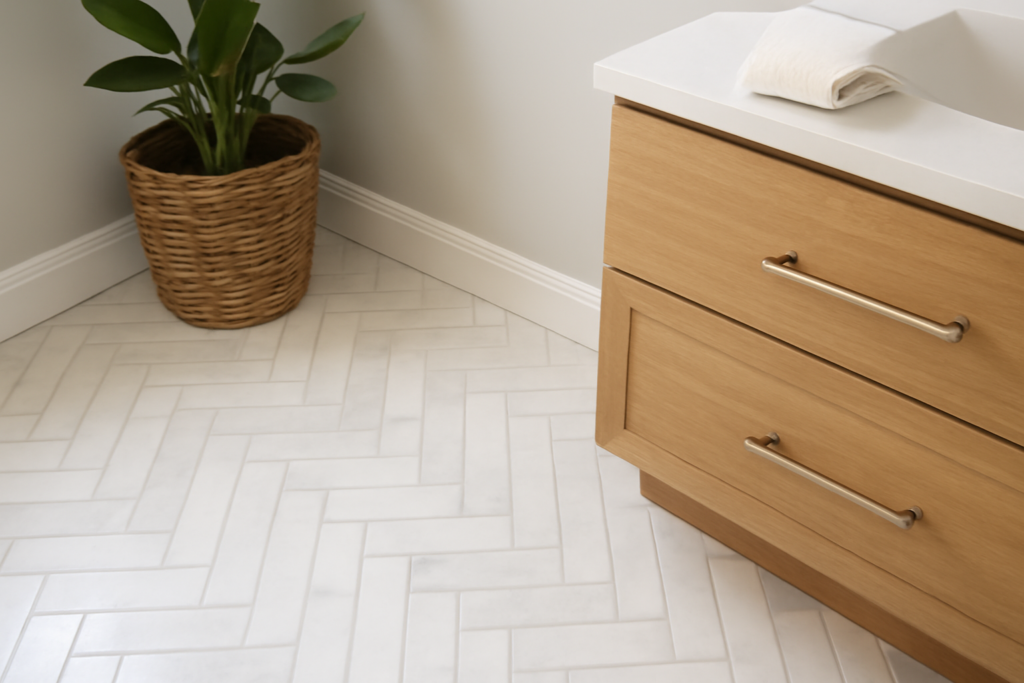
- Honed: A smooth matte finish that hides etching better and offers more slip resistance, a better fit for floors
Because it is a natural stone, every tile is slightly different. That variation is part of its charm, but it means you should view actual tiles rather than rely on a single sample photo.
Where It Works Best
Bianco Dolomite is versatile across the home. It is a popular choice for bathroom walls and floors, shower surrounds, kitchen backsplashes, fireplace surrounds, and accent features. The soft tone makes small bathrooms feel larger and brighter.
On floors, choose a honed finish for safety and durability, and be mindful of high-traffic, high-spill zones. Like all marble, it is softer and more porous than porcelain, so a busy kitchen floor or a household with kids and pets may see more wear than it would with a tougher material.
Natural Stone Versus Porcelain Look-Alikes
You can get the Bianco Dolomite look in two ways: genuine marble tile or porcelain tile printed to mimic it. Both have their place.
Genuine marble offers unmatched depth, a cool natural feel, and the prestige of real stone, but it requires sealing, etches when it meets acids, and costs more. Porcelain look-alikes use high-definition printing to reproduce the color and veining on a dense, low-maintenance body that resists stains, etching, and water without sealing. For floors, wet areas, and busy households, porcelain is often the more practical pick, while purists choose the real stone for its authenticity.
Sealing and Maintenance
Natural Bianco Dolomite is porous and reactive, so care matters. Acidic substances like lemon juice, wine, vinegar, and many household cleaners can etch the surface, leaving dull spots. Protect the stone with these habits:
- Seal the tile and grout after installation and reseal periodically per the sealer’s instructions
- Wipe up spills, especially acidic ones, immediately
- Clean only with a pH-neutral stone cleaner, never vinegar or bleach
- Use coasters, trivets, and mats in kitchens and on counters
Porcelain versions skip nearly all of this. A simple wipe with mild cleaner keeps them looking new, which is a major reason many homeowners choose the look-alike.
Installation Considerations
Marble tile is heavier and more brittle than porcelain, so it needs a flat, stable substrate and careful handling to avoid chips and cracks. Polished marble shows lippage, or uneven tile edges, more readily, so precise installation and the right thinset matter. A white or light, non-staining thinset and grout prevent dark adhesives from bleeding through the translucent stone.
Given the cost of the material and the precision required, many homeowners hire an experienced tile setter for marble. A botched marble installation is expensive to redo, so the labor investment is usually worthwhile.
Designing With Bianco Dolomite
The soft, neutral palette of this stone makes it one of the easiest marbles to design around. Its creamy white background pairs beautifully with warm brass and gold fixtures for a luxurious feel, or with matte black and brushed nickel for a more modern contrast. Because the veining is subtle, it does not compete with bold cabinetry or colorful accents the way a heavily veined Calacatta might.
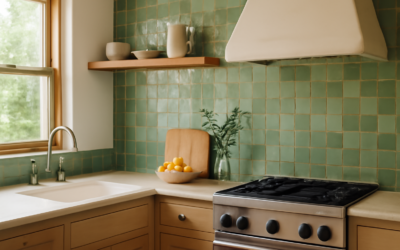
In a bathroom, a full wall of Bianco Dolomite behind a vanity creates a serene, spa-like backdrop. In a kitchen, it makes a light, elegant backsplash that brightens the room without drawing too much attention. Pair it with white or wood cabinetry, and the warm undertone keeps the space from feeling cold or clinical. Larger-format tiles minimize grout lines and let the gentle veining flow more naturally across the surface.
Common Mistakes to Avoid
With natural marble, the most expensive mistakes happen after installation. Cleaning the stone with vinegar, bleach, or a typical bathroom spray etches the surface and leaves permanent dull spots, so switch to a pH-neutral stone cleaner from day one. Leaving acidic spills like wine or citrus to sit is the other common culprit.
During installation, using a gray or dark thinset behind the translucent stone can cause shadowing that shows through the tile, so insist on a white, non-staining setting material. Skipping the sealer, or failing to reseal on schedule, leaves the porous stone vulnerable to staining. If you are not prepared for this level of care, a porcelain look-alike sidesteps nearly all of it.
Cost and Final Thoughts
Natural Bianco Dolomite tile commonly runs about $7 to $20 or more per square foot depending on size, finish, and quality, with installation adding several dollars per square foot. Porcelain look-alikes typically cost less, often in the $3 to $10 range, with easier installation and care.
Whichever path you choose, Bianco Dolomite tile delivers a soft, sophisticated marble aesthetic that never goes out of style. Decide based on your tolerance for maintenance, your traffic and moisture conditions, and your budget, and you will land on a surface that brings quiet luxury to your home for years.
Prefer to explore on your own?
See how new flooring looks in your actual room in seconds — free, no signup.
Try the free Floor Studio →