A zellige tile kitchen has a depth and character that mass-produced ceramic simply cannot copy, because zellige is handmade Moroccan tile, shaped from natural clay and finished with a glossy glaze that catches light differently across every piece. That handmade quality is the whole point, and it is also the thing you need to understand before you buy.
This guide explains what zellige actually is, why no two tiles look identical, where it works in a kitchen, what it costs, and how to install and care for it. If you love the artisanal, slightly imperfect look, this tile delivers it like nothing else.
What Zellige Tile Really Is
Zellige (also spelled zellij) is a traditional glazed terracotta tile that has been made in Morocco, especially around Fez, for centuries. Artisans shape the tile from natural clay, sun-dry it, fire it in kilns, hand-glaze each piece, and often cut it by hand. The result is a tile with subtle waviness, varied thickness, pinholes, glaze pooling, and crackling in the finish.
Those traits are not defects. In a zellige tile kitchen, the irregular surface and shifting color are exactly what give the wall its handmade soul and that glassy, liquid sheen. If you want every tile flat, uniform, and identical, zellige is not the right product, and a printed ceramic look-alike would serve you better.
Why No Two Tiles Look the Same
Because zellige is glazed and fired by hand, color varies from tile to tile and even within a single tile. A box labeled one shade can include lighter and darker pieces, slight green or blue undertones in a “white,” and areas where the glaze pooled thicker and reads deeper in color. Edges are rarely perfectly straight, and surfaces ripple just enough to scatter light.
This variation is the defining feature, so embrace it during installation. Dry-lay and mix tiles from several boxes before setting them, blending light and dark pieces across the wall so the finished surface looks naturally varied rather than patchy. Buyers who expect catalog-perfect consistency are often disappointed, while buyers who want artisan character are thrilled.
Best Places to Use Zellige in a Kitchen
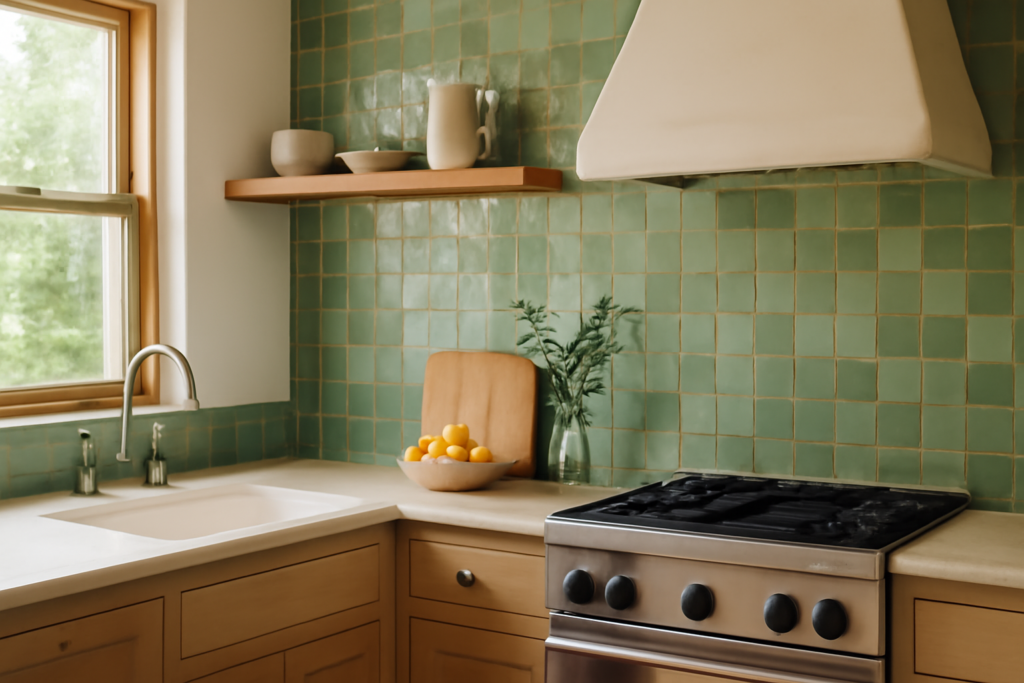
Zellige shines as a wall surface, and the backsplash is its classic home. Run it from the counter to the underside of the upper cabinets, or take it all the way to the ceiling behind a range for a dramatic statement. It also works on a hood surround, an island side, or a full accent wall in an open kitchen.
Zellige is most commonly used on walls and vertical surfaces rather than floors. Its glazed surface and irregular profile are not intended for the wear and traction demands of a kitchen floor, so plan it as a backsplash or feature wall and choose a different, floor-rated tile for the ground.
Popular Colors and Layouts
Color is where zellige gets fun, and the glaze variation means even a single hue looks rich and layered. Common choices include:
- Whites and creams: Versatile and bright, with subtle undertones that keep them from looking flat.
- Greens: From soft sage to deep emerald, a signature zellige look.
- Blues: Coastal and calm, ranging from pale sky to inky navy.
- Earthy neutrals: Terracotta, ochre, and warm grays that suit rustic and modern kitchens alike.
Layout adds another layer of style. A straight stack reads modern, a classic offset brick pattern is timeless, and herringbone or vertical stacking gives the wall movement. Pairing a colored grout that contrasts the tile emphasizes the pattern, while a matching grout lets the glaze and surface variation take center stage.
What a Zellige Tile Kitchen Costs
Zellige is a premium, labor-intensive product, so expect to pay more than for standard ceramic or porcelain. As a rough estimate, the tile itself often runs about $20 to $50 or more per square foot, with imported and specialty colors at the higher end. Installation typically adds to that, and because zellige takes longer to set, labor costs are usually higher than for uniform machine-made tile.
These are general estimates, not quotes, and prices vary by supplier, color, and region. Order extra material, often 15 to 20 percent over your measured square footage, to account for breakage, cutting, and the need to blend tiles for color balance.
Installation Considerations
Zellige rewards careful, experienced installation. The tiles vary in thickness and shape, so they are usually butted close together with very thin grout lines rather than spaced with wide joints. Setting them flat and even takes patience, and an installer unfamiliar with handmade tile may struggle, so it is often worth hiring a pro who has worked with zellige before.
Always follow the tile and setting-material manufacturer’s instructions for the right thinset, grout, and any recommended sealing. Because zellige is glazed, the tile face is fairly easy to wipe, but consult your supplier about whether the specific tile and grout you choose should be sealed for kitchen use.
Cleaning and Daily Care
The glazed surface of zellige makes everyday cleaning straightforward. Wipe the backsplash with a soft cloth and a mild, pH-neutral cleaner, and avoid harsh abrasives or acidic products that can dull glaze or attack grout. For cooking splatters, a prompt wipe keeps grease from settling into the textured surface and grout lines.
Grout is usually the part that needs the most attention in any tiled kitchen, so keep it clean and follow your installer’s advice on resealing grout periodically. Because zellige is fired clay, treat the tiles gently and avoid striking the edges, which are the most fragile part of each piece.
Is a Zellige Tile Kitchen Right for You?
If you are drawn to handmade character, glossy depth, and a surface that looks alive in changing light, zellige is one of the most beautiful choices you can make for a backsplash or feature wall. The trade-offs are a higher price, longer installation, and natural variation that you have to plan for rather than fight.
Go in expecting irregularity and embrace it, hire an installer comfortable with handmade tile, and order extra material. Do that, and a zellige tile kitchen will give you a wall with genuine craftsmanship that keeps drawing the eye for years to come.
Prefer to explore on your own?
See how new flooring looks in your actual room in seconds — free, no signup.
Try the free Floor Studio →