No tile has dominated kitchen design boards over the past several years like zellige — and no tile generates more panicked mid-installation phone calls to suppliers. A zellige tile backsplash kitchen gets its shimmering, watery depth from the exact qualities that make the tile difficult: every handmade piece varies in size, thickness, color, and surface, and the traditional installation embraces imperfection rather than fighting it. Homeowners who understand that going in end up with the most beautiful wall in the house. Homeowners expecting machine-made uniformity end up disappointed at three times the price of subway tile. This guide gives you the honest version: what zellige is, what it truly costs, the installation realities, and how to decide between authentic tile and its growing crowd of lookalikes.
Part of our Kitchen Remodeling guide — explore the full guide →
What Zellige Actually Is
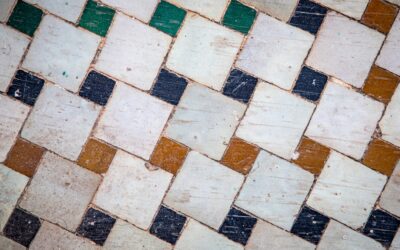
Zellige (pronounced zeh-LEEZH) is a centuries-old Moroccan tradition still practiced largely in and around Fez. Artisans knead unrefined natural clay from the region, hand-form each tile, sun-dry it, kiln-fire it, glaze it, and fire it again — every step by hand. The result is a tile with no two pieces alike: faces undulate, edges wander, corners round off, thickness varies by as much as an eighth of an inch across a batch, and glaze pools and thins to create tonal variation from piece to piece. Light hits those irregular glassy surfaces and scatters, producing the liquid shimmer that flat machine-made tile cannot replicate. The classic format is the 4×4-inch square, with 2×6 rectangles (“bejmat” is the related thicker paver format) increasingly popular for kitchens.
What a Zellige Backsplash Costs
Authentic Moroccan zellige runs $15 to $50 per square foot for material, with most reputable importers clustering between $20 and $35. A typical kitchen backsplash of 30 to 50 square feet therefore carries $600 to $1,750 in tile — before the 15 to 20 percent overage that zellige demands (higher than the standard 10 percent, because you will cull damaged and extreme pieces, break some during cutting, and want leftovers from the same lot). Installation costs more than standard tile too: expect $15 to $30 per square foot in labor from installers who have handled zellige before, versus $10 to $20 for ordinary backsplash tile. A realistic all-in range for a 40-square-foot authentic zellige backsplash is $1,800 to $3,500. It is a luxury product, and the budget should treat it as one.
The Beauty Case: Why People Pay It
Zellige delivers what design language calls “depth” better than any mass-produced tile. The glaze variation means a single color name — say, a celadon green or weathered white — arrives as a spectrum of tones that shifts across the wall through the day as light moves. Installed nearly joint-to-joint in the traditional manner, the wall reads as a continuous, hand-crafted surface rather than a grid. It flatters every kitchen style currently in favor: warm minimalist, European farmhouse, organic modern, and traditional alike. And because each batch is genuinely unique, your backsplash is unrepeatable — which, in an era of identical white-subway kitchens, is much of the point.
The Honest Challenges — Every One of Them Real
- Dimensional chaos: Tiles vary in size and thickness batch-wide. Perfectly aligned grid lines are impossible and lippage — edges sitting proud of neighbors — is inherent, not an installer failure.
- Skill-dependent installation: Setting zellige means constantly adjusting mortar depth behind each tile to average out the surface, hand-selecting piece order, and blending from multiple boxes. An installer who has never touched it will either quote defensively high or underestimate and struggle.
- Culling is part of the process: A portion of every shipment — often 5 to 10 percent — shows chips, cracks, or extreme warping. Traditional practice treats some chipping as character; you decide your tolerance and order accordingly.
- Tight joints, real crumbs: The traditional look uses hairline 1/16-inch joints or tighter. Those thin joints are less forgiving of movement and demand careful grouting technique with unsanded grout.
- Cutting losses: The dense double-fired body chips at cut edges more readily than porcelain; plan cuts at corners and edges where trim or caulk hides them.
- Glaze crazing: Fine crackle lines can develop in the glaze over time. Aficionados call it patina; if it would bother you, this is not your tile.
Living With Zellige Behind a Range
Day to day, zellige is friendlier than its fragile reputation suggests — glazed surfaces wipe clean with dish soap and a soft cloth or a pH-neutral cleaner. Avoid abrasive pads and harsh acids, which can dull glaze and attack the fine joints. Grease behind a range wipes off the glassy faces easily, though it lingers in the surface undulations more than on flat tile, so a monthly warmer-water degrease keeps the shimmer honest. Sealing needs are modest: the glaze itself needs nothing, but many installers seal the exposed clay edges and the grout, and some apply a penetrating sealer before grouting to ease cleanup. Water exposure is fine — zellige has lined Moroccan hammams for centuries — but for kitchen backsplashes specifically, silicone the counter-to-tile joint and any range-side vertical joints.
Authentic Zellige vs. the Lookalikes
The market now offers three tiers. Authentic Moroccan zellige delivers full irregularity and depth at $15 to $50 per square foot plus specialist labor. “Zellige-style” handmade or hand-finished ceramic — often from Spain, Portugal, or Mexico — offers genuine glaze variation with tamer dimensions at $8 to $20 per square foot, installable by any good tile setter. Machine-made zellige-look porcelain and ceramic reproduces the wavy-glaze appearance photographically at $4 to $12 per square foot with perfect dimensional consistency. The honest guidance: if what draws you is the shimmering variation in photos, the middle tier captures most of it with half the installation risk. If you want the real, imperfect, luminous thing — and accept everything this article has warned — nothing imitates the original convincingly at arm’s length.
Buying and Installation Checklist
Order all tile from a single lot with 15 to 20 percent overage, and ask the supplier for their culling guidance in writing. Dry-lay and blend tiles from all boxes before setting. Hire an installer who can show you photos of their own zellige work and agree in advance on joint size, lippage expectations, and how chipped-edge pieces will be used. Specify unsanded grout in a tone matched to the tile body for near-invisible joints, request full mortar coverage (voids behind thin spots crack later), and walk the layout together before the first tile sets. Go in with those expectations set, and a zellige backsplash becomes what it has been for eight centuries: an artisan surface that machine tile will spend another century failing to copy.
Prefer to explore on your own?
See how new flooring looks in your actual room in seconds — free, no signup.
Try the free Floor Studio →