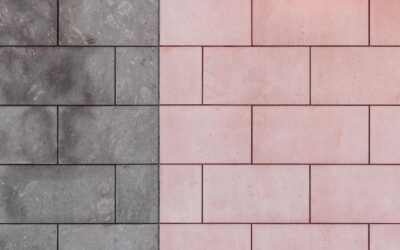
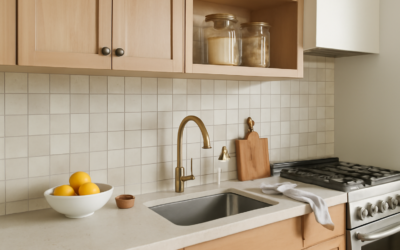
If you have scrolled through kitchen and bath inspiration lately, you have seen it: a wall that seems to shimmer and ripple with light, each tile slightly different from the next. That is zellige subway tile, a centuries-old Moroccan handmade tile shaped into the familiar rectangular subway format. Unlike the flat, uniform ceramic most people know, zellige is celebrated precisely for its imperfections, and understanding those quirks is essential before you fall for the look.
Part of our Tile & Grout guide — explore the full guide →
What Makes Zellige Different
True zellige is made in Fez, Morocco, from natural clay that is hand-shaped, sun-dried, glazed with a mineral enamel, and kiln-fired using traditional methods. Every tile is cut and finished by hand, so no two are identical. The result is a surface full of tonal variation, slight warps, uneven edges, and a glossy glaze that pools and pits in a way no machine tile can replicate.
Formed into a subway shape, roughly 2 by 6 inches or similar, zellige marries an ancient craft with a familiar modern layout. You get the clean lines of subway tile with the soul and depth of handmade ceramic.
The Glossy Glaze and Living Finish
The signature of zellige is its luminous, glassy glaze. Because it is applied and fired by hand, the glaze varies in thickness, creating a surface that catches light differently across the wall. You will see subtle crazing, tiny bubbles, and pinholes that many first-time buyers mistake for defects. They are not; they are the whole point.
This is often called a “living finish.” The color shifts depending on the light and the angle, so a wall of zellige looks different in morning sun than under evening lamplight. Order a solid white and you will actually receive tiles ranging from bright white to soft cream with hints of gray, all reading as one cohesive, shimmering field.
Embracing Natural Variation
Zellige demands a shift in mindset. If you want perfectly uniform, ruler-straight tile, this is not your material. The beauty comes from the variation, and buyers who expect factory precision are always disappointed.
- Color variation: tiles arrive in a range of tones within your chosen color; blending from multiple boxes is essential
- Size and shape variation: edges are irregular and dimensions vary slightly tile to tile
- Surface variation: crazing, pitting, and glaze pooling are expected, not flaws
Order 15 to 20 percent extra to account for breakage and to give your installer room to cull the occasional tile that is too far off.
Installation Challenges
Here is the honest part: zellige is harder to install than standard subway tile, and not every tile setter has experience with it. The irregular edges mean you cannot rely on tile spacers for perfectly even grout lines. Experienced installers set zellige tight, butting tiles almost edge to edge with minimal grout, which suits the handmade look.
A few realities to plan for:
- Slower setting: each tile is placed by eye and often adjusted, so labor takes longer and costs more
- Warp and lippage: slightly curved tiles need a skilled hand to keep the wall plane looking intentional
- Cutting care: the glaze can chip, so a good wet saw and patience are non-negotiable
- Blending from boxes: pull from several boxes at once to distribute color naturally across the wall
Hire someone who has installed zellige before, or at least handmade tile. The material rewards experience.
Sealing and Maintenance
Because zellige is made from natural clay with a hand-applied glaze, it is more porous than commercial ceramic and should be sealed. Seal the tiles before grouting to keep grout from staining the porous body and hazing the glaze, then seal again after grouting for full protection. A quality penetrating sealer is the usual choice.
Once sealed, zellige is durable and easy to live with. It works beautifully as a kitchen backsplash, a bathroom wall, a shower surround, or a fireplace accent. Clean it with mild soap and water and avoid harsh abrasives that could dull the glaze over time.
Where It Works Best and What It Costs
Zellige is a wall material first. It excels on backsplashes, feature walls, and vertical shower surfaces where its light-catching glaze can shine. On floors it is less common because the handmade surface and glaze wear faster underfoot. Expect to pay a premium: authentic zellige typically runs $25 to $50 per square foot for material alone, plus higher labor for the specialized install.
Color Choices and Design Styles
Zellige comes in an enormous range of hand-glazed colors, and the shade you choose sets the entire mood of the room. The glaze’s variation means every color reads as a living, shifting field rather than a flat block.
- Classic white and cream deliver a bright, timeless look with subtle tonal shimmer, perfect for a versatile backsplash
- Soft greens and sages are hugely popular right now, bringing organic warmth to kitchens and baths
- Deep blues and teals make a bold, jewel-like statement on a feature wall or shower
- Earthy terracotta and blush tones lend Mediterranean and Moroccan-inspired warmth
- Charcoal and black create moody, dramatic surfaces that show the glaze’s depth beautifully
Zellige suits a surprising range of styles. It anchors Mediterranean and Moroccan schemes naturally, but the subway shape also lets it work in modern, transitional, and even farmhouse kitchens, where its handmade character warms up otherwise clean lines.
How It Compares to Standard Subway Tile
It is worth being clear-eyed about the trade you are making versus ordinary ceramic subway tile. Standard subway is cheap, perfectly uniform, fast to install, and utterly predictable. Zellige is the opposite on every count: more expensive, gloriously irregular, slower to set, and full of character.
If your priority is budget, speed, and a crisp uniform grid, standard subway tile is the practical winner. If you want a wall with soul, depth, and the unmistakable look of handcrafted ceramic, zellige justifies its premium. Many homeowners split the difference by using zellige on one high-impact feature area, a backsplash or a niche, and saving standard tile for larger utilitarian surfaces, getting the handmade look where it matters most without tiling the whole house in it.
The Bottom Line
A wall of zellige subway tile brings warmth, movement, and genuine craftsmanship that mass-produced tile simply cannot match. The tradeoff is embracing its variation, budgeting for skilled installation, and sealing it properly. Go in expecting handmade character rather than machine perfection, and you will end up with a surface that feels alive and looks like nothing else in the house. Order plenty of extra, hire someone who has worked with handmade tile, and let the natural variation do the heavy lifting. The reward is a wall with genuine depth and craftsmanship that no printed or machine-pressed tile can ever replicate, a detail guests will remember long after they leave.
Prefer to explore on your own?
See how new flooring looks in your actual room in seconds — free, no signup.
Try the free Floor Studio →