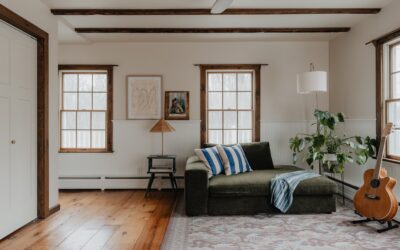
The most common decorating mistake is buying a rug that is too small. A big rug grounds the furniture, defines the space, and makes a room feel larger and more intentional, while an undersized one floats awkwardly and shrinks the whole layout. Get the dimensions right, and a single oversized area rug can transform a living room or dining room more than a fresh coat of paint. The trick is matching the rug to the room and the furniture arrangement.
Why Bigger Usually Looks Better
Designers lean toward large rugs because they unify a seating group instead of isolating a coffee table on a tiny island. When a rug is big enough to slide under the front legs of every major piece, the eye reads the whole arrangement as one connected zone. A small rug, by contrast, chops the room into disconnected parts and emphasizes empty floor.
A big rug also makes a room feel more spacious, which is counterintuitive. By covering more floor and pushing the visual boundary toward the walls, it stretches the perceived footprint. The exposed border of bare floor around any rug should be roughly even, typically 8 to 24 inches, to frame the rug cleanly.
Common Large Rug Sizes
Oversized rugs come in standard dimensions, so knowing the options helps you shop. Typical big-rug sizes include:
- 8 by 10 feet: A solid choice for many living rooms and smaller dining areas.
- 9 by 12 feet: The workhorse size for medium to large living rooms.
- 10 by 14 feet: Great for large open spaces and big dining tables.
- 12 by 15 feet and up: True statement rugs for great rooms and open-plan layouts.
If your room falls between sizes, go up rather than down. You can also have a rug custom cut and bound from broadloom carpet to fit an unusual room exactly, often for a reasonable price compared with a premium woven rug.
Sizing a Big Rug for the Living Room
There are three accepted approaches, and any of them looks polished when executed with a properly large rug. The all-on approach places every piece of furniture fully on the rug, which demands the largest size and feels luxurious. The front-legs-on approach, the most popular, lets the front legs of the sofa and chairs rest on the rug while the backs sit on the floor.
The third option floats the seating around the edges with only the coffee table fully on the rug, which works for very large or open spaces. Whatever you choose, the rug should extend past the sides of the sofa, not stop short of it. A good rule: the rug should be at least as wide as your sofa plus a foot on each side.
Sizing for Dining Rooms and Bedrooms
In a dining room, the cardinal rule is that all four legs of every chair stay on the rug even when pulled out to sit. Measure your table, then add at least 24 inches on every side. A 6-foot table usually needs a rug around 8 by 10 feet, and a larger table pushes you to 9 by 12 or beyond.
In the bedroom, a big rug under the bed creates a soft landing and frames the space. Position it so it extends 18 to 24 inches beyond the sides and foot of the bed, often starting under the lower two-thirds of the mattress. For a king bed, a 9 by 12 rug typically gives the right proportions.
Materials and Durability
A large rug is an investment, so the material should match the room’s traffic. Wool is the classic choice, soft, resilient, and naturally stain resistant, though pricier. Synthetic fibers like polypropylene and polyester clean easily and resist fading, making them smart for high-traffic and homes with kids or pets. Natural fibers such as jute and sisal add texture but feel rougher underfoot and stain more readily.
Pile height affects both comfort and upkeep. Low-pile and flatweave rugs hide dirt, vacuum easily, and let chairs slide, which is ideal under dining tables. Plush high-pile rugs feel wonderful in a bedroom or low-traffic living room but trap more debris and crush over time in busy spots.
Handling and Care for Oversized Rugs
Big rugs are heavy and unwieldy, so plan the logistics. Always use a quality rug pad sized slightly smaller than the rug; it prevents slipping, cushions the pile, protects the floor, and extends the rug’s life. When a new rug arrives rolled, let it relax flat for a day or two and reverse-roll any stubborn curls rather than forcing them flat.
Vacuum regularly, rotate the rug a couple of times a year to even out wear and sun fading, and blot spills immediately. For deep cleaning, smaller rugs can go to a cleaner, but a 9 by 12 or larger usually needs on-site professional cleaning or a careful at-home extraction. Check the care label, since wool and natural fibers have specific requirements.
Final Buying Tips
Before you commit, tape out the rug’s footprint on the floor with painter’s tape so you can see it against your furniture. Confirm doorways and walkways still flow and that no rug edge lands in a high-traffic pinch point where it will curl. Buy the rug pad at the same time, and measure twice. With the right oversized rug pulling the room together, the space will finally feel complete instead of cobbled together.
Big Rugs in Open-Concept Spaces
Open floor plans are where large rugs do their most important work. Without walls to define rooms, a big rug visually separates the living area from the dining or kitchen zone, telling the eye where one function ends and another begins. Use two coordinated large rugs in a great room, one anchoring the seating and another under the dining table, to create distinct yet connected areas.
Keep the rugs in the same color family or complementary tones so the space reads as cohesive rather than chopped up. Leave a consistent band of bare floor between zones, and make sure each rug is genuinely large enough for its furniture group, since two undersized rugs in an open plan look even more awkward than one.
Budgeting for a Large Rug
Price climbs quickly with size, so set expectations early. A 9 by 12 synthetic rug can be quite affordable, while the same size in hand-knotted wool runs into the thousands. To stretch a budget, consider a high-quality machine-made wool blend or a durable synthetic that mimics natural fibers, or have broadloom carpet bound to size for a custom fit at a lower cost.
Think about lifespan too. A cheap rug in a busy room may need replacing in a few years, while a quality piece can last decades and even gain character. Spend more on rugs in rooms you use daily and look at constantly, and economize in low-traffic or transitional spaces where wear and visibility are lower.